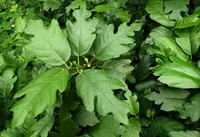
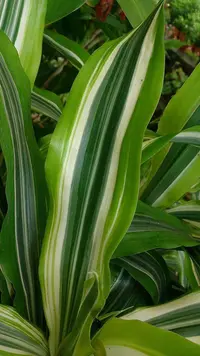
twisted airplant Care (Tillandsia flexuosa)

twisted airplant

About twisted airplant

Twisted airplant, Tillandsia flexuosa, is an epiphytic bromeliad that naturally grows on trees and rocks in tropical and subtropical regions of the Americas. It absorbs water and nutrients through its leaves rather than roots.

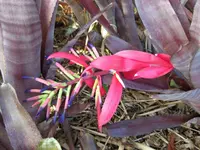
This species forms tall, arching rosettes of narrow, curling leaves that can appear silvery or green depending on light and humidity. Mature plants may produce a tall, colorful flower spike that attracts pollinators.

It is considered moderately easy to grow for those who learn how to care for twisted airplant, as it tolerates a range of indoor conditions but needs regular moisture on its leaves and good air movement. Bright, indirect light and quick drying after watering support healthy growth.

Main Plant Requirements

Care Difficulty

Moderate Care

Light Preference

Partial Sun

Water Requirements

Low Water

Temperature Preference

Tropical / Frost Sensitive

Hardiness Zone

10–12

Soil Texture

Sandy, Rocky, Organic-rich

Soil pH

Acidic (5.5–6.5)

Soil Drainage

Well-drained

Fertilization

Light (every 4–6 weeks)

Get Personalized Care Plan

Scan your plant to receive care tips personalized for your specific plant

Available on iOS and Android

How to Care for the twisted airplant

Tillandsia flexuosa prefers bright, indirect light with some gentle direct sun each day.

  • Provide 4–6 hours of bright, filtered light daily, such as dappled shade under a tree or sheer-curtained window light.
  • Allow soft morning sun but protect the twisted airplant from harsh midday or afternoon sun, which can scorch leaves and cause bleaching.
  • In summer, shift plants to brighter spots slowly; in winter, move closer to windows or use supplemental light to prevent weak, stretched growth.

This epiphytic species absorbs water through its leaves, so watering focuses on thorough wetting and complete drying.

  • Mist or soak the plant until fully wet, then allow leaves to dry within 3–4 hours; do not leave standing water trapped in the leaf bases.
  • Increase watering during hot, dry periods when leaf edges curl or feel brittle, and reduce when humidity is high or drying time slows.
  • Signs of overwatering include soft, darkened bases and a sour smell, while underwatered Tillandsia flexuosa shows persistent curling and dull, grayish foliage.

This species prefers warm, frost-free conditions with stable temperatures.

  • Aim for 65–85°F (18–29°C) for steady growth, with the strongest growth typically near 70–80°F (21–27°C).
  • Avoid temperatures below 45°F (7°C); brief dips to 40°F (4°C) may be tolerated but can stress the plant, especially when wet.
  • In hot spells above 90°F (32°C), increase air movement and humidity while protecting from intense direct sun to limit heat stress and leaf scorch.

This species benefits from moderate to high humidity for stable growth.

  • Aim for 50–70% humidity, with regular air movement to prevent rot on leaves and base.
  • It tolerates short dry spells, but twisted airplant tips may brown and curl more tightly in very dry air.
  • Soft, drooping leaves or persistent leaf-curl signal low humidity stress and justify misting or humidifier use.
  • Increase humidity by grouping plants, placing them above (not in) a pebble tray, or misting early in the day.

Tillandsia flexuosa is an epiphyte and should not be planted in regular potting soil.

  • Mount on inert, airy materials such as cork bark, driftwood, or large-grade orchid bark that allow free air flow around the base.
  • If a decorative container is used, keep the plant sitting above a layer of dry pebbles or gravel, never buried or packed into substrate.
  • Avoid any mix that holds moisture against the base, including peat-heavy potting mixes or compact moss plugs that stay wet for more than 24 hours.
  • Use a very loose combination of chunky bark, lava rock, and a small amount of sphagnum only as a cradle, ensuring water drains and dries rapidly.

This air plant is suitable for container display if kept above, not in, any substrate.

  • Choose wide, low, and weighty containers to prevent tipping, since the arching rosette is often top-heavy.
  • Use open-sided containers or bowls with large gaps to keep air moving freely around the leaves and base.
  • If using glass vessels, keep the plant positioned near the rim so excess moisture can escape quickly after misting or soaking.

Tillandsia flexuosa benefits from light, diluted feeding during active growth rather than heavy fertilization.

  • Use a balanced water‑soluble orchid or air plant fertilizer (low to moderate NPK) diluted to 1/4–1/2 strength.
  • Mist or soak with fertilizer solution every 4–6 weeks in spring–summer for healthy twisted airplant foliage.
  • During fall–winter, reduce feeding to once every 8–10 weeks or pause if light and growth are very low.
  • Always rinse with plain water between feedings to limit salt buildup on leaves and support normal trichome function.

Pruning Tillandsia flexuosa is minimal and focuses on hygiene rather than shaping.

  • Best timing is after flowering or in late spring, when the plant is actively growing and recovers faster.
  • Gently remove dead, brown, or damaged leaves at the base, pulling by hand or trimming with clean, sharp scissors.
  • Cut spent flower spikes close to their base to improve appearance and direct energy to offsets (pups).
  • Avoid removing healthy green leaves, as this reduces photosynthesis and can slow pup development.

Tillandsia flexuosa is usually mounted rather than potted, so transplanting focuses on remounting rather than root disturbance.

  • Transplant or remount every 2–3 years or when the clump outgrows its support, shades itself, or dries too slowly.
  • Choose late spring to early summer so warmer temperatures and brighter light support recovery.
  • Gently detach the plant, keeping any small roots intact, and tie or glue it to new bark, cork, or a wire frame.
  • After remounting, provide bright indirect light, good airflow, and slightly increased misting for 2–3 weeks to limit stress.

New Tillandsia flexuosa plants are most reliably produced from offsets (pups) that form around the mother plant.

  • Wait until pups reach about 1/3–1/2 the size of the parent, usually in late spring–summer, before separating.
  • Support the base with one hand and gently twist pups away, or cut with sterilized scissors to keep each offset intact.
  • Place separated pups in bright indirect light with strong airflow and maintain consistent moisture through regular misting.
  • Seed propagation is possible but slow, requiring fine-mist moisture, high humidity, and bright filtered light for many months.

Tillandsia flexuosa is frost sensitive and needs protection wherever temperatures drop near or below freezing.

  • Move outdoor plants indoors before temperatures fall below 40°F, using bright indirect light and strong airflow.
  • Avoid exposure to frost, ice, or cold drafts, which can damage leaf tissues and trichomes.
  • Reduce watering in winter, allowing plants to dry quickly between light misting sessions to prevent rot in cool conditions.
  • Keep indoor temperatures around 60–75°F and avoid placing plants directly against cold window glass.

Care Tips

Mounting orientation

Mount plants at a slight downward angle so water naturally drains off the leaf bases, which helps prevent rot in the tight twists where moisture can sit.

Air circulation boost

Place the plant near a gently moving air source, such as an oscillating fan on low, to dry leaves within 2–3 hours after soaking and reduce fungal issues.

Salt and mineral check

If leaf tips brown quickly, rotate to distilled or rainwater for 4–6 weeks to flush out built-up salts that often accumulate in hard tap water and damage trichomes.

Secure but flexible mounting

Use soft-coated wire, cotton string, or plastic plant ties to fix the plant to driftwood or cork, leaving room for offsets to expand so new rosettes are not constricted over time.

Seasonal light repositioning

Shift the plant farther from windows or add a sheer curtain in summer, then move it slightly closer in winter, to keep leaf color even and avoid scorched or bleached patches when growing twisted airplant.

Common Pests and Diseases

Scale insects

This pest attaches firmly to the leaf bases and sheaths, sucking sap and causing yellowing, stunted growth, and sticky honeydew deposits. Symptoms include small dome-shaped bumps that may look like part of the leaf surface.

Solution

Isolate the plant, then remove visible scale by gently rubbing with a cotton swab dipped in isopropyl alcohol, taking care around the tight leaf curls. Rinse the foliage thoroughly, improve air movement, and repeat spot treatment weekly until no new insects appear; heavily infested plants are best discarded to protect nearby air plants when following twisted airplant care instructions.

Mealybugs

These insects hide in the curls and inner leaf axils, leaving white cottony clusters and sticky residue. This pest weakens the plant by feeding on sap and can encourage sooty mold growth on the honeydew.

Solution

Rinse the plant under a firm but gentle stream of lukewarm water, spreading the leaves slightly to reach inner spaces. After rinsing, dab remaining clusters with isopropyl alcohol on a cotton swab, then keep the plant in bright, airy conditions and inspect weekly until the infestation is gone.

Fungal leaf spot

This disease appears as small brown or black spots that may enlarge and merge, often starting where water sits longest in leaf curls and bases. Symptoms include slow tissue breakdown and, in severe cases, localized softening of affected areas.

Solution

Improve air circulation, shorten soaking times, and always let the plant dry fully within 3–4 hours after watering by placing it in bright, indirect light with good airflow. Trim out badly spotted leaves with clean scissors, avoid overhead misting in cool or dim conditions, and allow the plant to dry completely between waterings to prevent recurrence.

Bacterial rot

This disease usually starts in the central whorl or tight leaf bases as a soft, water-soaked area with a sour or unpleasant odor. Symptoms include rapid tissue collapse that spreads from the wet area outward, often following prolonged wetting or poor air movement.

Solution

At the first sign, remove the plant from any decorative container, shake off excess water, and cut away all soft, affected tissue with sterilized tools. Allow the plant to dry upside down in a warm, airy spot, avoid soaking until it stabilizes, and discard any plant that continues to collapse to protect nearby Tillandsia from infection.

Interesting Facts

Twisted leaf adaptation

This species has stiff, spiraling leaves that naturally twist as they grow, which helps channel rain and dew toward the plant’s central axis where water is absorbed.

Myrmecophytic growth form

In parts of its range, this air plant often forms associations with ants that use its leaf bases and cavities as shelter, benefiting from debris and nutrients that accumulate in these microhabitats.

Wide habitat tolerance

It occurs from coastal lowlands up into drier, more exposed inland habitats in the Caribbean and northern South America, showing high tolerance for intense sun, wind, and intermittent drought compared with many other Tillandsia species.

Botan icon

Did you know?

Some populations of this species develop a noticeably more robust, columnar rosette on very exposed sites, creating a striking, almost candelabra-like silhouette that makes it one of the more architecturally dramatic air plants in its native habitats.

FAQs about twisted airplant

Lack of bright, indirect light, too little air movement, or irregular watering often delays flowering. Consistent warmth, good airflow, and a slight increase in light usually help trigger a bloom on a mature plant.

Grow Healthy Plants with Botan Care

Keep your plants happy and healthy with plant identification, disease detection, and easy care guidance.

Botan plant care app — identify plants on mobile

Explore More Plants