Controlled cold rest
After foliage dies back, keep the pot just barely moist and move it to a cool, frost-free space at 40–50°F for 3–4 months to ensure proper dormancy and reliable flowering the next season.

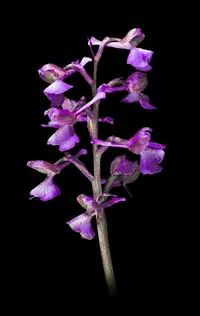
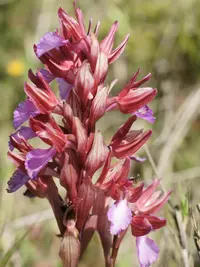
The green-winged orchid (Anacamptis morio) is a small, tuberous terrestrial orchid native to meadows and grasslands across Europe and parts of western Asia. It is usually found in unimproved pastures and light, open habitats. Its flowers form loose spikes, with purple, pink, or occasionally white blooms marked by darker spots and greenish veins on the hooded petals. Plants stay compact, forming a few narrow leaves from the base. This orchid depends on specific soil fungi and prefers low-fertility, well-drained soils, which makes it less suited to typical garden beds. Understanding how to care for Green-winged Orchid starts with providing cool conditions, good drainage, and no heavy fertilizing.

Care Difficulty
Hard Care

Light Preference
Partial Sun

Water Requirements
Moderate Water

Temperature Preference
Cold Hardy

Hardiness Zone
4–8

Soil Texture
Sandy, Loamy, Rocky

Soil pH
Slightly acidic (6.5–7.0), Neutral (7.0)

Soil Drainage
Well-drained

Fertilization
Minimal (feed rarely)
Scan your plant to receive care tips personalized for your specific plant
Available on iOS and Android
This small terrestrial orchid prefers bright, open conditions that mimic sunny meadows and light grassland.
This species needs moist but not saturated soil during active growth, then drier conditions in dormancy.
This hardy terrestrial orchid is adapted to cool to mild climates with distinct seasons.
This species prefers relatively dry, airy conditions and usually does not need elevated humidity indoors.
Provide a lean, well-drained, mineral-rich mix that mimics short grassland or meadow soils.
This terrestrial orchid can be grown in containers if drainage and a shallow, airy root zone are carefully managed.
This wild terrestrial orchid is adapted to low-nutrient soils, so fertilizer use should be light and carefully controlled when caring for Green-winged Orchid.
Pruning needs for Anacamptis morio are minimal and focus mainly on hygiene rather than shaping.
Anacamptis morio is better suited to permanent outdoor positions than frequent repotting, so any transplanting should be infrequent and gentle.
Propagation of Anacamptis morio is specialized, as this orchid relies on symbiotic soil fungi for successful growth from seed.
This hardy terrestrial orchid tolerates typical winters in much of its range and usually requires only light winter care outdoors.

Plant Health Check
Not sure what's wrong with your plant? Check your plant's health inside the app.
This species is one of the earliest orchids to flower in many European grasslands, often blooming from early April when night temperatures are still low, which helps it avoid competition with later-flowering plants for pollinators.
Its upper petals and sepals form a distinctive closed hood or helmet over the column, creating a sheltered entrance that guides small bees and other insects toward the reproductive structures.
The plant typically grows in low-nutrient calcareous or neutral grasslands and depends on a specific mycorrhizal fungus in the soil for seed germination, which is why it is very hard to grow from seed without specialized techniques.

In many European regions, this orchid has declined sharply due to loss of traditional hay meadows and changes in grazing, so it now serves as an indicator species for long-established, unimproved grassland with high conservation value.
Lack of flowers is often linked to insufficient winter chill, plants being too young, or depleted energy reserves. Allow a cool, drier rest in winter, avoid heavy feeding, and never remove healthy leaves before they die back naturally.
Keep your plants happy and healthy with plant identification, disease detection, and easy care guidance.