Wind protection strategy
Plant in a position sheltered from strong, drying winds or use temporary windbreak fabric during establishment, as young plants with thin bark and large leaves are prone to mechanical damage and rapid moisture loss.

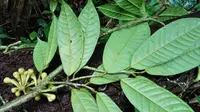
Anaxagorea phaeocarpa is a small tree or large shrub in the Annonaceae, a family that includes many tropical forest species. It forms a woody framework with simple, evergreen leaves and small, often inconspicuous flowers.
This species is native to tropical regions of South America, where it grows in warm, humid lowland forests. It usually prefers filtered light under taller trees rather than full, open sun.
In cultivation it can be slow and somewhat demanding, as it reacts poorly to cold, drought, and major root disturbance. Those who want to learn how to care for Anaxagorea phaeocarpa should be prepared to provide stable warmth, regular moisture, and well-drained, organic-rich soil.

Care Difficulty
Moderate Care

Light Preference
Partial Shade

Water Requirements
Moderate Water

Temperature Preference
Tropical / Frost Sensitive

Hardiness Zone
Unknown

Soil Texture
Loamy, Sandy, Organic-rich

Soil pH
Acidic (5.5–6.5)

Soil Drainage
Moist but well-drained

Fertilization
Minimal (feed rarely)
Scan your plant to receive care tips personalized for your specific plant
Available on iOS and Android
This understory shrub prefers bright shade similar to a lightly wooded habitat.
Moist but not waterlogged soil supports healthiest growth for this species.
This plant is a true tropical species and reacts quickly to cold extremes.
This species prefers consistently humid air similar to its tropical forest habitat.
Anaxagorea phaeocarpa grows best in deep, loose, organic-rich soil that drains freely yet stays evenly moist.
This species can be grown in large containers if given enough root volume and stable moisture.
This species is typically a forest tree that manages with minimal feeding in the ground, but light fertilization benefits container-grown Anaxagorea phaeocarpa.
Pruning needs are modest and focus on maintaining a healthy, well-shaped canopy on Anaxagorea phaeocarpa.
This tree is most often grown in the ground, so focus on careful transplanting rather than frequent repotting.
Propagation of Anaxagorea phaeocarpa is usually done by seed and is slow, requiring warm, stable conditions.
This is a tropical to subtropical tree that does poorly in prolonged cold and is not frost tolerant.

Plant Health Check
Not sure what's wrong with your plant? Check your plant's health inside the app.
This species belongs to one of the most basal lineages of the custard apple family (Annonaceae), so its floral structure is often studied to understand early evolutionary stages of flowering plants.
Its flowers have a distinct arrangement of petals and numerous stamens that create a chamber-like structure, which helps guide small insects involved in pollination.
This tree has a slow to moderate growth rate. In suitable warm, humid conditions it may add roughly 20–40 cm of height per year, slowing noticeably once the main framework of branches has formed.
Keep your plants happy and healthy with plant identification, disease detection, and easy care guidance.