Early leader training
In the first 3–5 years, select a single strong central leader and remove or shorten competing uprights to build a stable, storm-resistant structure for long-term growth.

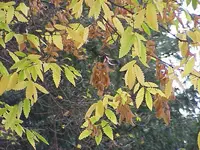
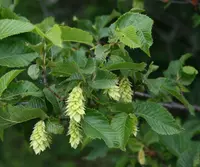
Caucasian zelkova (Zelkova carpinifolia) is a deciduous tree from the elm family, valued mainly as a landscape and street tree. It typically develops a tall, upright trunk with a broad, rounded crown and fine, serrated leaves that turn yellow to brown in autumn.
This species is native to the Caucasus region and parts of western Asia, where it grows in mixed forests and river valleys. It is considered relatively tough once established but needs space, light, and well-drained soil, so planning how to care for Caucasian zelkova starts with choosing a suitable outdoor site.
The tree generally prefers full sun, moderate moisture, and fertile, deep soil, and it responds well to formative pruning when young.

Care Difficulty
Moderate Care

Light Preference
Full Sun

Water Requirements
Moderate Water

Temperature Preference
Cold Hardy

Hardiness Zone
5–8

Soil Texture
Loamy, Clay, Organic-rich

Soil pH
Acidic (5.5–6.5), Slightly acidic (6.5–7.0)

Soil Drainage
Moist but well-drained

Fertilization
Minimal (feed rarely)
Scan your plant to receive care tips personalized for your specific plant
Available on iOS and Android
This deciduous tree prefers bright conditions with direct sun for strong structure and dense foliage.
This species prefers consistently moist but not saturated soil, supported by deep, infrequent watering.
This hardy tree tolerates a wide temperature range but has clear limits for long-term health.
This species handles a wide humidity range and usually does not need special humidity management outdoors.
Soil preparation for Zelkova carpinifolia focuses on a deep, well-aerated, moderately moist substrate.
This tree can be grown in containers for a limited time, mainly as a young specimen or bonsai.
Mature Zelkova carpinifolia in the ground usually grows well without heavy feeding, but young or container trees benefit from light, targeted fertilization.
Pruning Zelkova carpinifolia focuses on structural strength and canopy clarity rather than frequent shaping.
Transplanting is more common than repotting for this large tree, which is rarely kept long term in containers.
Propagation of Zelkova carpinifolia is usually done by seed or semi-hardwood cuttings under controlled conditions.
This species is cold hardy in many temperate regions and usually needs only minimal winter care once established.

Plant Health Check
Not sure what's wrong with your plant? Check your plant's health inside the app.
This tree is considered a Tertiary relict, meaning it survived from ancient forest flora that covered much of Eurasia before the Ice Ages, and today remains naturally concentrated around the eastern Black Sea and Caucasus region.
Mature trunks develop smooth gray bark that peels in small, irregular patches, exposing lighter inner layers and creating a mottled pattern that helps distinguish it from elm species it can resemble.
In parts of the Caucasus and neighboring regions it is valued as a durable hardwood and is also planted as a street and park tree because it tolerates urban air pollution and compacted soils better than many native broadleaf species.

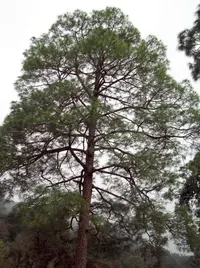
This species can reach over 30 m in height with a broad, high crown, and in its native range some old specimens form landmark shade trees in village centers and monastery grounds, where they are often associated with local cultural and historical traditions.
Brown, crispy leaf edges usually indicate moisture stress, wind scorch, or high soil salts. Check soil moisture, mulch the root zone, reduce reflected heat, and avoid heavy fertilizer or de-icing salts near the root area.
Keep your plants happy and healthy with plant identification, disease detection, and easy care guidance.