Bugloss Care (Anchusa arvensis)

Also known as: small bugloss
Bugloss

About Bugloss

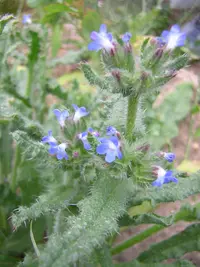
Bugloss, Anchusa arvensis, is a low-growing annual wildflower in the borage family. It forms a rough, bristly mound with clusters of small, bright blue, star-like flowers. Plants typically appear in disturbed soils, field margins, and dry grasslands across Europe and parts of temperate North America as an introduced species. The coarse, hairy leaves and self-seeding habit give it a somewhat weedy character. It is generally easy to grow where winters are cool and soils are not overly wet. Those who care for Bugloss should note that it prefers full sun, relatively dry, well-drained soil, and minimal disturbance once established.

Main Plant Requirements

Care Difficulty

Easy Care

Light Preference

Full Sun

Water Requirements

Low Water

Temperature Preference

Cold Hardy

Hardiness Zone

3–8

Soil Texture

Sandy, Loamy, Rocky

Soil pH

Slightly acidic (6.5–7.0), Neutral (7.0)

Soil Drainage

Well-drained

Fertilization

Minimal (feed rarely)

Get Personalized Care Plan

Scan your plant to receive care tips personalized for your specific plant

Available on iOS and Android

How to Care for the Bugloss

Anchusa arvensis thrives in open, bright sites with strong direct light for reliable flowering.

  • Provide 6–8 hours of direct sun daily; morning and midday sun are ideal, with light afternoon shade in very hot climates.
  • Tolerates light partial shade (3–4 hours sun), but Bugloss will produce fewer, weaker flowers and may grow leggy.
  • In summer, monitor for leaf scorch in reflected heat; in early spring and autumn, ensure plants are not shaded by taller growth or structures.

Anchusa arvensis prefers slightly dry, free-draining conditions rather than constant moisture.

  • Water when the top 3–5 cm of soil is dry, using a deep soak that moistens the root zone, then allow the soil to dry again.
  • Use sandy or loamy soil with sharp drainage; standing water or heavy clay greatly increases the risk of root rot and yellowing leaves.
  • In cooler seasons reduce watering, watching for wilting, dull leaves, or crisp edges as signs of underwatering, and limp, yellowing foliage as signs of excess moisture.

This species is adapted to cooler temperate climates and tolerates a fair range of outdoor temperatures.

  • Optimal growth occurs around 55–70°F (13–21°C), typical of mild spring and early summer conditions in many temperate regions.
  • Plants tolerate light frost down to about 25°F (-4°C); harder freezes may damage foliage but often spare seeds for next season.
  • Anchusa arvensis handles summer warmth up to about 85°F (29°C) if soil does not dry out completely, but growth can slow in prolonged, extreme heat.

Anchusa arvensis handles a wide humidity range and rarely needs special humidity management indoors or outdoors.

  • Aim for 30–60% humidity, similar to typical indoor air in heated and cooled homes.
  • Plants tolerate dry air but may show humidity stress as crisp leaf edges and faster wilting in hot, windy conditions.
  • Increase humidity only during extreme dryness by grouping plants or placing a shallow water tray nearby, without waterlogging roots.

Anchusa arvensis prefers lean, well-drained mineral soil that mimics dry meadows or field margins.

  • Use sandy or sandy-loam soil with low to moderate organic matter to prevent excessive moisture retention around the roots.
  • Aim for slightly alkaline to neutral pH, roughly 6.8–7.8, which supports nutrient availability and typical field conditions.
  • Blend garden soil with coarse sand or fine gravel to improve drainage and aeration, especially in heavier native soils.
  • Avoid compacted clay, peat-heavy mixes, or sites that stay wet after rain, as these encourage root rot and winter losses in Anchusa arvensis.

This species can be grown in containers for short-term display, but long-term performance is usually better in open ground.

  • Choose a deep, narrow container that allows the taproot to extend downward without circling tightly.
  • Use a heavy clay or ceramic pot when placed outdoors to reduce tipping from the tall, branching stems in wind.
  • Set the container on pot feet or bricks so water drains freely and the drainage holes never sit directly on a solid surface.

Anchusa arvensis, often called Bugloss, grows in modest soils and only benefits from light feeding in poor ground or containers.

  • Use a balanced, low-dose granular or liquid fertilizer (for example 10-10-10) diluted to 1/2 strength for container plants.
  • Feed every 4–6 weeks during active spring–summer growth if foliage looks pale or flowering is weak.
  • In garden soil, work a thin layer of compost into the top 2–3 in in early spring instead of frequent synthetic feeding.
  • Stop feeding in late summer and avoid fertilization in fall–winter to prevent soft, frost-prone growth.

Pruning Anchusa arvensis is mainly done to keep plants tidy and extend flowering.

  • Cut back spent flower stems in late spring and summer using clean scissors or hand pruners to encourage more blooms.
  • Remove dead, damaged, or diseased foliage whenever noticed to limit fungal problems and improve airflow.
  • Lightly trim crowded or sprawling stems to maintain shape and prevent shading of nearby seedlings or plants.
  • At season’s end, shear back dry top growth close to ground level once frost has blackened the foliage.

Anchusa arvensis is usually grown outdoors and is more often transplanted than repotted.

  • Transplant in early spring or early fall so roots can establish in cool, moist soil before heat or hard frost.
  • Move seedlings or young plants when roots just fill the plug or small pot, before circling and becoming rootbound.
  • Choose a sunny, well-drained site; plant at the same depth, then water thoroughly to settle soil around the root zone.
  • Reduce stress by transplanting on a cool, cloudy day, shading for 2–3 days afterward, and keeping soil evenly moist.

Anchusa arvensis is most commonly propagated from seed rather than vegetative methods.

  • Sow fresh seed in late summer or early fall outdoors, or in early spring under cover for controlled germination.
  • Use a free-draining seed mix, cover seeds very lightly, and keep evenly moist at 60–68°F until germination.
  • Provide bright light after emergence and thin seedlings so remaining plants have 10–15 cm spacing for strong growth.
  • Allow some plants to flower and set seed; self-sown seedlings can be lifted and transplanted while still small.

Anchusa arvensis is cold hardy in most temperate climates and usually needs minimal winter care.

  • In regions with severe freezes, apply a light mulch layer (2–5 cm) over the root area after the ground cools.
  • Leave some dried stems standing in mild climates to help catch insulating snow and protect crowns.
  • Container-grown plants in very cold zones can be moved into an unheated garage or cold frame to avoid root freeze.

Care Tips

Early weed control

Hoe or hand-weed around young plants weekly during the first 4–6 weeks so this small annual is not outcompeted by faster-growing grasses and broadleaf weeds.

Light soil firming

After sowing or transplanting, gently firm the soil surface with a board or the flat back of a rake to improve seed-to-soil contact and root anchoring without compacting the whole bed.

Staggered sowing

Make 2–3 small sowings spaced 2–3 weeks apart in spring to extend the flowering window and ensure replacement plants if an early flush is lost to slugs or late frosts.

Targeted slug protection

Use narrow rings of sharp grit or diatomaceous earth around small clumps in damp springs, and place a few beer traps just outside the bed to intercept slugs before they reach the plants.

Wildlife-friendly deadheading

Deadhead lightly by removing only a portion of spent flower spikes to encourage more blooms while still allowing some seed to mature for self-sowing and wildlife food when growing Bugloss.

Common Pests and Diseases

Powdery mildew

This disease causes whitish, powdery patches on leaves and young stems, often leading to distorted growth and reduced vigor.

Solution

Remove heavily infected leaves, avoid overhead watering, and thin nearby vegetation to improve airflow; for valuable plantings, apply a sulfur or potassium bicarbonate fungicide labeled for powdery mildew, following label directions carefully.

Rust

This disease produces orange-brown pustules on the undersides of leaves, with yellowing and early leaf drop in severe cases.

Solution

Remove and dispose of affected leaves, avoid wetting foliage when watering, and increase spacing or mowing height in field margins to improve air circulation; in persistent cases on ornamental plantings, use a labeled rust fungicide as a preventative spray during humid periods.

Leaf spot

This disease causes small brown to dark spots on leaves that can merge into larger lesions, reducing photosynthesis and overall plant health.

Solution

Cut back and discard heavily spotted foliage, keep surrounding area free of dense weeds and plant debris, and water at soil level to keep leaves dry; if growing Anchusa arvensis in a monitored planting, a broad-spectrum fungicide for leaf spots can be used early in disease development.

Aphids

These insects cluster on soft stems and leaf undersides, sucking sap and causing curling leaves, sticky honeydew, and sometimes sooty mold.

Solution

Wash colonies off with a firm stream of water, encourage natural predators such as lady beetles, and, if needed on ornamental stands, use insecticidal soap or a light horticultural oil, making sure to coat the undersides of leaves.

Leaf-mining larvae

This pest creates pale, winding tunnels inside the leaves that can cause blotchy, discolored foliage and reduced photosynthetic area.

Solution

Remove and destroy mined leaves to reduce larval numbers, keep plants vigorous through appropriate watering, and, if damage is extensive in a managed bed, use a systemic or translaminar insecticide specifically labeled for leaf miners, applied according to label instructions.

Interesting Facts

Distinct bristly hairs

This species has stiff, downward-pointing bristles on its stems and leaves, which likely help reduce herbivory and limit water loss by trapping a thin layer of still air around the plant surface.

Early-season nectar source

Its small blue flowers open in late spring to early summer and provide nectar and pollen for bees and other pollinators at a time when some arable fields have relatively few wild blooms available.

Arable field specialist

This plant is closely associated with disturbed, nutrient-rich soils such as cereal fields, field margins, and waste ground, and its presence is often linked to traditional, less-intensive farming practices.

FAQs about Bugloss

Lack of blooms usually comes from too much shade, nutrient‑rich or waterlogged soil, or plants that are too crowded. This species flowers best in open, relatively poor, well‑drained ground and often needs a cool period before flowering.

Grow Healthy Plants with Botan Care

Keep your plants happy and healthy with plant identification, disease detection, and easy care guidance.

Botan plant care app — identify plants on mobile

Explore More Plants