Italian bugloss Care (Anchusa azurea)

Also known as: Garden Alkanet, Large blue alkanet, Ox Tongue
Italian bugloss

About Italian bugloss

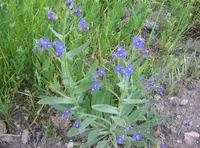
Italian bugloss (Anchusa azurea) is a short-lived perennial often grown as a hardy biennial, valued for its intense deep blue flowers. It forms an upright clump with rough, bristly leaves and tall flowering stems that stand out in mixed borders and wildflower-style plantings.

This species is native to southern Europe and western Asia, where it grows in open, sunny, and often dry places. It suits gardeners who accept a somewhat untidy habit but want strong color and pollinator interest.

Anchusa azurea prefers sun, moderately fertile, well-drained soil, and regular moisture while establishing. Once the basic needs are understood, it is straightforward to care for Italian bugloss in typical garden conditions.

Main Plant Requirements

Care Difficulty

Moderate Care

Light Preference

Full Sun

Water Requirements

Moderate Water

Temperature Preference

Cool Climate

Hardiness Zone

3–8

Soil Texture

Sandy, Loamy, Rocky

Soil pH

Slightly acidic (6.5–7.0), Neutral (7.0)

Soil Drainage

Well-drained

Fertilization

Minimal (feed rarely)

Get Personalized Care Plan

Scan your plant to receive care tips personalized for your specific plant

Available on iOS and Android

How to Care for the Italian bugloss

Anchusa azurea performs best in full sun in most temperate gardens.

  • Provide 6–8 hours of direct sun daily; morning to mid-afternoon sun produces the strongest flowering and compact growth.
  • Plant in an open, unshaded position; light afternoon shade is tolerated in hot summer regions but can slightly reduce flower density.
  • In cool or coastal climates it can handle all-day sun, but in intense heat watch for leaf scorch and move new Italian bugloss plants gradually into brighter exposures.

This species prefers evenly moist but not saturated soil once established outdoors.

  • Allow the top 3–5 cm of soil to dry before deep watering, aiming for thorough soakings rather than frequent light splashes.
  • During hot, dry periods, increase watering when leaves droop midday and do not recover by evening; reduce in cool or rainy weather to avoid soggy soil.
  • Use well-drained, gritty or loamy ground; yellowing, soft stems indicate overwatering, while crisp, browning leaf edges signal underwatering in Anchusa azurea.

This plant thrives in temperate climates with cool to warm conditions.

  • Optimal growth occurs around 60–75°F (16–24°C), supporting strong vegetative growth and abundant flowering in late spring to early summer.
  • Established plants tolerate down to about 10–15°F (-12 to -9°C) with good drainage, but young plants and autumn seedlings are more vulnerable to hard freezes.
  • In summer, it handles 80–90°F (27–32°C) if soil does not dry out completely; prolonged heat above 95°F (35°C) can reduce flowering and stress foliage.

Anchusa azurea prefers relatively dry air and does not require elevated humidity.

  • Aim for 30–50% humidity; typical outdoor and indoor levels in most homes are acceptable.
  • Plants tolerate dry air well, but persistent leaf crisping at edges can indicate combined drought and heat stress rather than low humidity alone.
  • Increase humidity slightly only in very hot, arid conditions by placing nearby water trays or grouping plants, while still prioritizing soil moisture and airflow.

Anchusa azurea needs lean, well-drained soil to avoid root problems and lodging.

  • Use a sandy or sandy-loam mix with moderate organic matter; combine roughly 50–60% garden soil, 20–30% coarse sand, and 10–20% compost.
  • Ensure rapid drainage; water should percolate through within seconds, not sit on the surface or in the saucer.
  • Keep pH slightly alkaline to neutral, around 7.0–7.8; in acidic soils, lightly mix in garden lime before planting.
  • Avoid heavy clay, compacted areas, or peat-heavy mixes that stay wet, and loosen soil 20–30 cm deep to improve aeration around the taproot.

This species can be grown in containers if the pot is deep, stable, and drains quickly.

  • Select a tall, heavy pot to support the deep taproot and prevent the top-heavy plant from tipping in wind.
  • Use a very fast-draining mix and elevate the container so drainage holes never sit directly on a solid surface.
  • Position the container where strong sun and wind will not dry the substrate faster than you can maintain consistent moisture.

Anchusa azurea benefits from light feeding but grows acceptably in lean soils.

  • Apply a balanced slow-release fertilizer (around 10-10-10) at half strength once in early spring to support new growth.
  • In poorer soils, top-dress with a thin layer of compost in spring to improve nutrient availability and soil structure.
  • During the main growing season, avoid additional high-nitrogen feeding to prevent floppy, weak stems and reduced flowering.
  • Stop feeding Italian bugloss in late summer and do not fertilize in winter, when growth is minimal.

Anchusa azurea responds well to modest, timely pruning to maintain vigor and flowering.

  • In late spring to early summer, shear back spent flower spikes to encourage a lighter repeat bloom and neater shape.
  • Remove dead, damaged, or diseased stems whenever noticed, using clean, sharp hand pruners for precise cuts.
  • Thin congested growth at the base to improve air movement and reduce risk of foliar diseases.
  • In late autumn, cut back dry top growth to a few cm above soil level in colder climates.

Anchusa azurea is usually grown in-ground and dislikes frequent disturbance, so transplant only when necessary.

  • Transplant in early spring or early autumn so roots can establish in mild conditions before heat or hard frost.
  • Choose a sunny, well-drained site and loosen soil 20–30 cm deep to accommodate the long taproot with minimal bending.
  • Move plants only every few years, when overcrowded or failing, lifting with a wide root ball to reduce taproot damage.
  • Water deeply after transplanting, then keep soil lightly moist but not waterlogged for several weeks to limit transplant shock.

Anchusa azurea is most often propagated by seed, with some success from basal cuttings.

  • Sow fresh seeds in late summer or early spring in a gritty, well-drained mix, barely covering them and keeping at 60–70°F until germination.
  • Provide bright light and good air circulation for seedlings, then transplant to final positions once roots fill small cells or plugs.
  • Take non-flowering basal cuttings in spring, insert into moist, free-draining medium, and maintain high humidity but avoid waterlogging.
  • Allow some flower spikes to set seed if self-sowing is desired, thinning unwanted seedlings to prevent overcrowding.

Anchusa azurea is generally cold hardy in temperate climates and needs only modest winter attention.

  • In regions with freezing winters, apply a 5–7 cm mulch layer around the crown after soil cools, keeping mulch slightly away from stems.
  • Leave some top growth standing in mild areas to shield the crown, cutting it back in late winter or early spring.
  • For container plants in colder zones, move pots to a sheltered, unheated but frost-sheltered spot and water sparingly.

Care Tips

Staking tall stems

Install discreet stakes or a low support ring early in the season so the tall, brittle flowering stems stay upright and do not snap in wind or heavy rain.

Pinch first shoots

Lightly pinch or cut back the first 5–8 cm of new growth on young plants to encourage a bushier form and more flowering stems later in the season.

Gravel collar mulching

Apply a 2–3 cm collar of coarse grit or gravel around the crown to improve drainage at the base, reduce crown rot risk, and keep foliage cleaner from soil splash.

Self-seeding management

Mark preferred plants and deadhead only those you do not want so you can selectively allow self-sown seedlings in good spots while preventing unwanted spread.

Targeted slug control

Protect emerging rosettes in early spring with physical barriers or focused slug control, since early damage to young leaves can significantly reduce flowering when growing Italian bugloss.

Common Pests and Diseases

Powdery mildew

This disease causes a white, powdery coating on leaves and stems, often in warm, dry conditions with poor air movement. Symptoms include distorted foliage and reduced flowering if the infection is heavy.

Solution

Remove and discard heavily infected leaves, then improve spacing and airflow around plants by thinning crowded clumps. Water at soil level, avoid overhead watering, and apply a sulfur or potassium bicarbonate-based fungicide according to label directions if conditions favor continued spread as part of Anchusa azurea care instructions.

Downy mildew

This disease produces yellow or pale patches on upper leaf surfaces with gray or violet fuzz on the undersides, especially in cool, humid weather. Symptoms include leaf drop and general loss of vigor in badly affected plants.

Solution

Remove and destroy affected leaves promptly and avoid wetting the foliage when watering. Improve drainage and air circulation, and if needed use a phosphonate or copper-based fungicide labeled for downy mildew, applying during extended humid periods to protect new growth.

Leaf spot

This disease causes small brown, tan, or black spots on leaves that may merge into larger blotches, sometimes with a yellow halo. Symptoms include premature leaf drop on lower, older leaves, especially in dense plantings.

Solution

Cut off and dispose of spotted leaves and any fallen debris around the base to reduce reinfection. Water early in the day at soil level, increase spacing between plants, and if outbreaks recur, use a labeled broad-spectrum fungicide such as chlorothalonil or copper on new foliage according to instructions.

Aphids

These insects cluster on young stems and flower spikes, sucking sap and causing curled, sticky, or distorted growth. This pest also excretes honeydew that can attract sooty mold and ants.

Solution

Spray stems and flower spikes with a strong stream of water to dislodge colonies, repeating as needed. For persistent infestations, treat with insecticidal soap or a light horticultural oil, fully wetting the undersides of leaves and new growth while avoiding spraying during high heat or direct midday sun.

Leaf-mining larvae

This pest creates winding, pale tunnels inside leaves as larvae feed between the leaf surfaces. Symptoms include disfigured foliage and reduced photosynthesis, though flowering may still occur on lightly affected plants.

Solution

Remove and discard mined leaves as soon as tunnels appear to physically reduce the larval population. Encourage beneficial insects that parasitize miners and, if damage is heavy, use a systemic product containing spinosad, applied according to label directions and timed to target the young larvae inside the leaves.

Interesting Facts

Intense blue pigments

The flowers owe their vivid cobalt color to high concentrations of delphinidin-based anthocyanins, which strongly absorb light in the yellow–red spectrum and make the plant very attractive to bee pollinators.

Coarse bristly hairs

Leaves and stems are covered with stiff, rough hairs that reduce herbivory and limit water loss by trapping a thin layer of air at the plant surface.

Mediterranean dry-adapted biennial

Native mainly to the eastern Mediterranean, this species often behaves as a biennial or short-lived perennial, forming a rosette in its first year and then sending up tall flowering stems in its second year when moisture and temperature conditions are favorable.

Botan icon

Did you know?

In some Mediterranean regions, archaeobotanical studies have found Anchusa azurea seeds and plant remains in historical agricultural sites, suggesting it has long persisted as a characteristic wild companion of traditional dryland farming systems rather than as a deliberately cultivated crop.

FAQs about Italian bugloss

Lack of flowers often comes from insufficient light, poor soil fertility, or plants that are still too young. Overfertilizing with high-nitrogen products encourages leaves instead of buds. Deadheading old blooms and avoiding waterlogged soil helps improve flowering.

Grow Healthy Plants with Botan Care

Keep your plants happy and healthy with plant identification, disease detection, and easy care guidance.

Botan plant care app — identify plants on mobile

Explore More Plants