
big bluestem Identification (Andropogon gerardi)

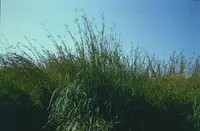
Recognize big bluestem by its tall, upright clumps, flat blue-green leaves along solid stems, and the distinctive three-part seed head that looks like a turkey foot. Mature plants often stand 4 to 8 feet (1.2 to 2.4 m) tall.

Leaves are long and narrow, and the flowering stems rise above the foliage.

Andropogon gerardi Identification

Check Your Plant ID

Upload a clear photo to check your plant identification with Botan.

Clear images work best. Avoid photos taken too close or too far away

Check the flowering stems and leaf shape first on Andropogon gerardi.

  • Forms upright clumps, with stems often 4 to 8 feet (1.2 to 2.4 m) tall.
  • Leaf blades are long, narrow, and arching, usually about 1/4 to 1/2 inch (6 to 13 mm) wide.
  • Flowering stems end in 3 slender, finger-like spikes that spread from one point.
  • Nodes on the stem are often noticeably bent, giving the stem a kinked look.

The 3-part seed head is the quickest visual clue.

Big bluestem shows clear structural changes from tufted vegetative growth to distinctive flowering stems.

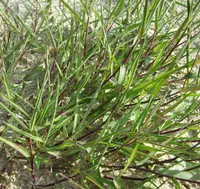
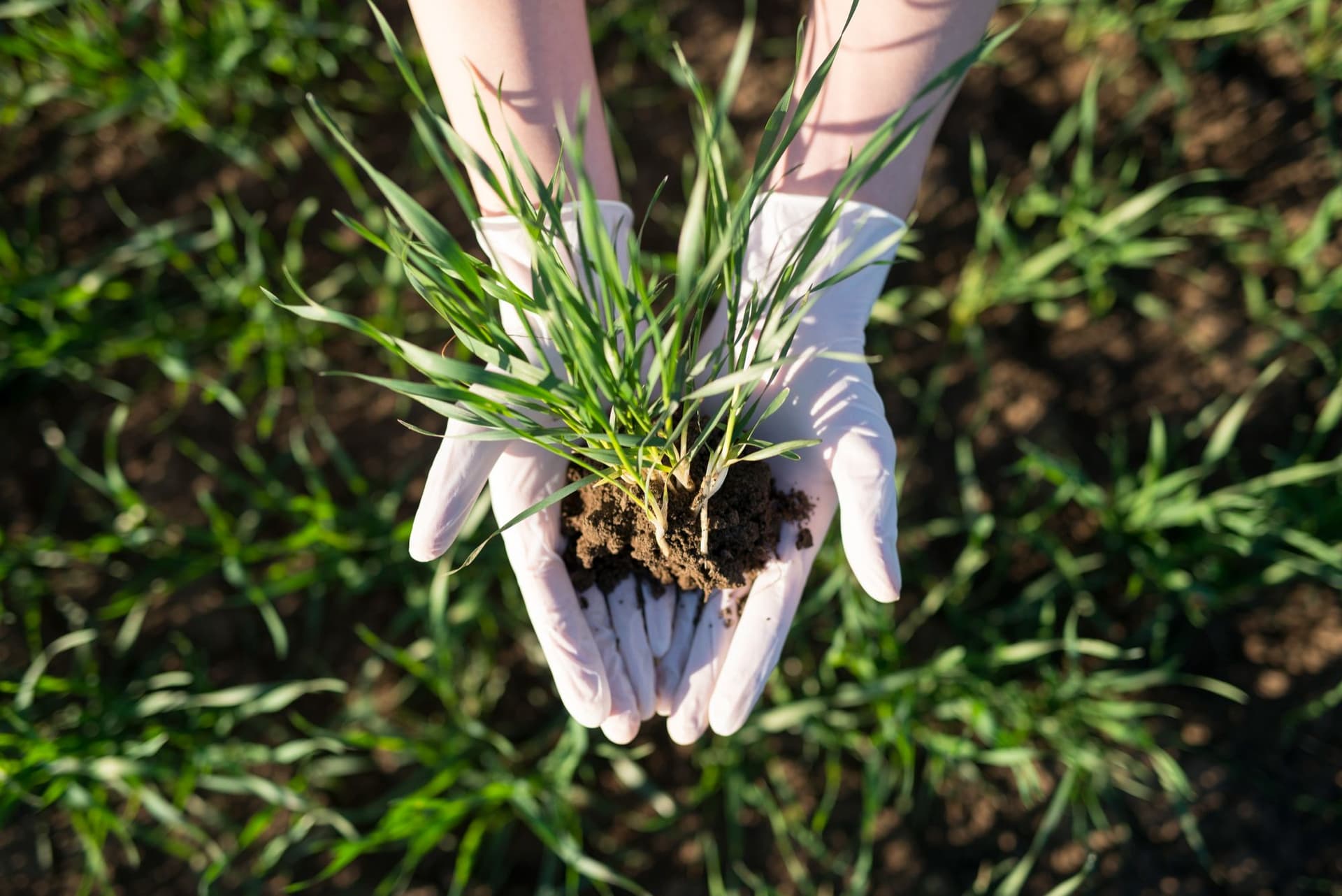
  • Juvenile plant: Young clumps stay low and leafy, with narrow upright blades arising from the base and no obvious tall culms or branched upper structure.
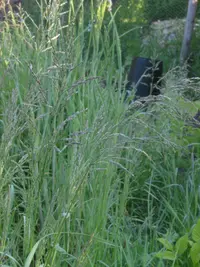
  • Mature plant: Established plants form a dense upright clump, often 4-8 feet (1.2-2.4 m) tall, with stout culms and leaves spaced along the stems.
  • Flowering stage: Upper stems end in 3-part, fingerlike flowering branches that spread from one point, creating the characteristic turkey-foot outline absent earlier.
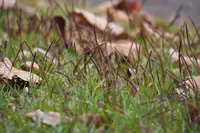
  • Fruiting stage: After flowering, the branched heads look fuller and fuzzier as paired spikelets mature, giving the top a softer, seed-bearing texture.

In late summer to fall, big bluestem is easiest to recognize when the flowering stems show the familiar three-part seedhead, often called a turkey foot. By fall, leaves and stems usually turn reddish bronze to coppery tones. In winter, the plant stands as a tan clump with upright dry stems and persistent seedheads.

A few prairie grasses are regularly mistaken for big bluestem.

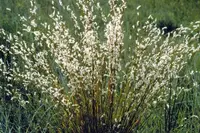
silver bluestem(Bothriochloa laguroides)

It can resemble it from a distance because both form upright clumps with paired, fuzzy seed branches. Silver bluestem is usually shorter and has conspicuously silvery white, silky seed heads rather than the darker, turkey-foot-like clusters.

yellow indiangrass(Sorghastrum nutans)

This is often confused in mixed prairie plantings because both are tall warm-season grasses. Indiangrass has a narrow, plume-like golden flower head, not 2-3 spreading finger-like branches, and its leaves usually show a small claw-like ligule where the blade meets the stem.

Andropogon gerardii is native to much of central and eastern North America, especially the Great Plains and tallgrass prairie region, from southern Canada into the central and eastern United States. It is most often found in prairies, open grasslands, savannas, and roadsides, usually in full sun. Seeing it in broad native grassland settings helps narrow identification, since it is a signature species of tallgrass prairie rather than woodland or wetland understory.

Does Your Plant Match?

Use Botan to compare a photo and help identify or confirm the plant before you label it.

FAQ

The flowering stems usually end in 3 narrow, finger-like branches that spread from one point, often described as a turkey-foot shape. Each branch carries paired spikelets, making this one of the clearest big bluestem identification traits.

More Plant Identification Guides

Identify the Plant and Get Its Profile

Use Botan to identify a plant from a photo, then review plant details, care information, and common problems.

Botan app identifying a plant from a photo
Planting Grass Seed in Summer – What Works and What Fails

7 min read · 6 Aug 2026

Planting Grass Seed in Summer – What Works and What Fails

Summer seeding succeeds when the grass type suits the season, and the soil stays moist. Find out how to prepare the seedbed and choose a safe window for planting.

Plant Care
Planting Grass Seed in Summer – What Works and What Fails
How to Mist Plants – Proper Technique and Common Mistakes

7 min read · 30 Jul 2026

How to Mist Plants – Proper Technique and Common Mistakes

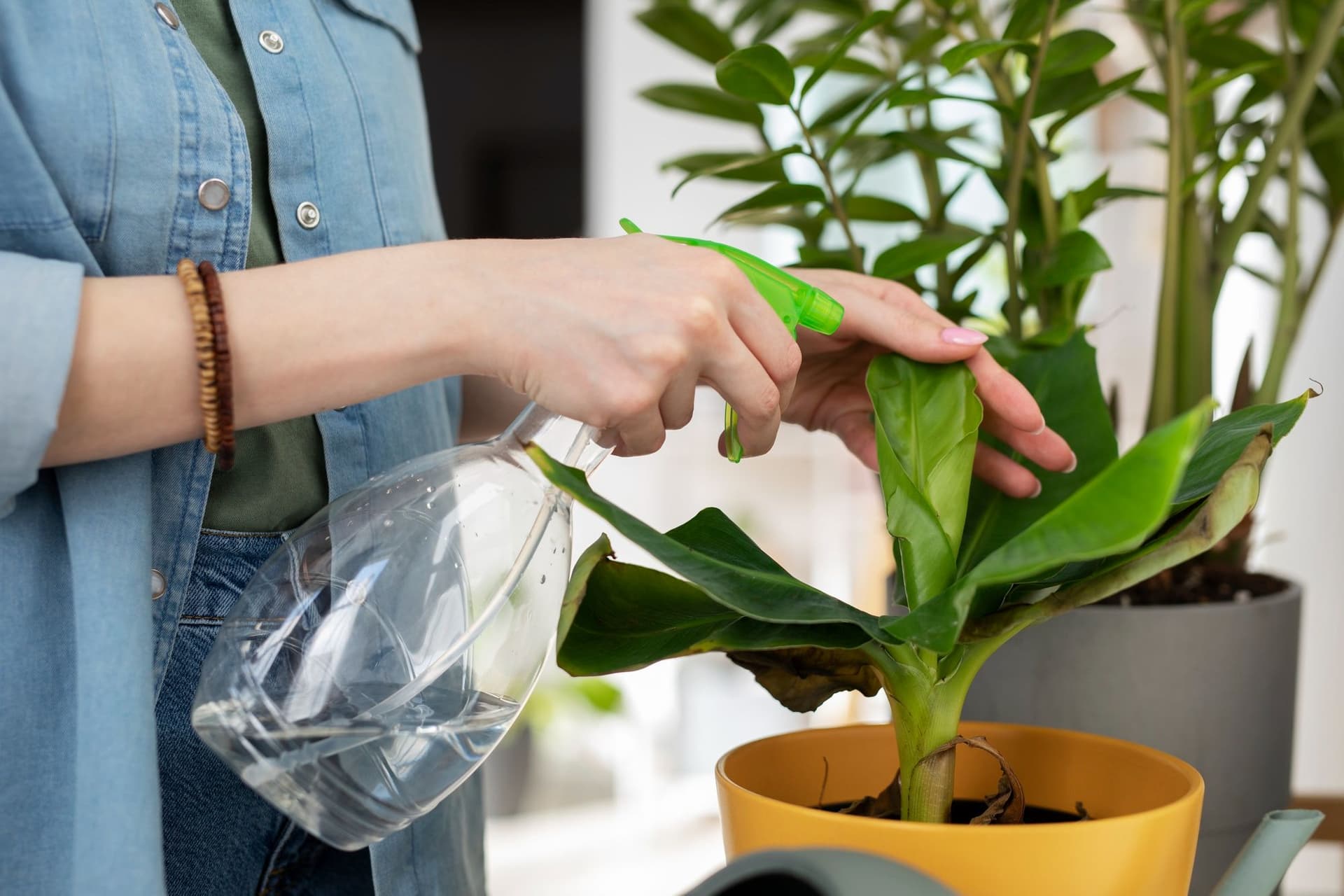
Find out when misting works well and when to avoid it. Here, you’ll find detailed information about compatible and incompatible species, tips on how often to mist plants and do it correctly, and some great alternatives for raising humidity.

Beginner Guides
How to Mist Plants – Proper Technique and Common Mistakes
Top 15 Plants That Don’t Need Sunlight

8 min read · 17 Sept 2026

Top 15 Plants That Don’t Need Sunlight

Some plants thrive in dim rooms, shaded corners, and places with indirect light. In this guide, you’ll explore the top 15 species best suited to low-light conditions and how to care for them.

Plant Recommendations
Top 15 Plants That Don’t Need Sunlight