
little bluestem Identification (Schizachyrium scoparium)

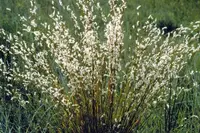
Recognize little bluestem by its tight clumps of upright, slender stems, usually about 2 to 4 feet (0.6 to 1.2 m) tall, with narrow leaf blades attached alternately along the stems.

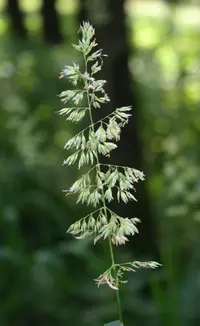
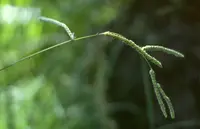
Look for fine, branched flower stalks held above the leaves, each with paired spikelets, one stalked and one stalkless, along the branches.

Schizachyrium scoparium Identification

Is This little bluestem?

Take or upload a photo to confirm your plant ID with Botan.

Clear images work best. Avoid photos taken too close or too far away

Check the plant’s upright, clumping grass form first.

  • Stems grow in tight bunches rather than from a spreading sod.
  • Leaf blades are narrow and flat, usually about 6-12 inches (15-30 cm) long.
  • Blue-green leaves rise mostly from the lower part of the stems, leaving upper stems more open.
  • Flowering stems carry narrow, silvery seed clusters held close along the upper stem branches.
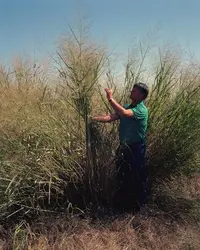
  • A mature clump of Schizachyrium scoparium is often about 2-4 feet (0.6-1.2 m) tall.

Use the clumping habit, narrow leaves, and tight seed clusters together for a quick check.

Little bluestem shows clear visual shifts from a small tuft to a flowering clump.

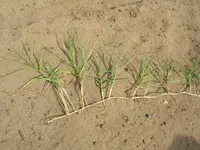
  • Seedling: Begins as a few narrow, upright grass blades from the base, with no obvious branching and a sparse tuft unlike later dense clumps.
  • Young plant: Forms a tighter bunch of slender blue-green leaves and short stems, usually under 2 feet (60 cm) tall, with a more defined upright outline.
  • Mature plant: Develops into a dense, upright bunchgrass with many wiry stems and narrow leaves, creating a fuller vertical clump about 2-4 feet (60-120 cm) tall.
  • Flowering stage: Stem tips carry narrow, branched flowering clusters with small paired spikelets, giving the upper plant a finer, feathery look than vegetative plants.

Several cultivated selections of little bluestem are distinct enough to recognize by habit and foliage color.

  • 'Standing Ovation': Keeps a very upright, columnar clump through the season, usually about 3 to 4 feet (0.9 to 1.2 m) tall, with blue-green leaves that turn red-orange to purple in fall.
  • 'The Blues': Shows a stronger blue cast to the leaves than the typical form and develops rich purple to burgundy fall color on arching stems.
  • 'Prairie Blues': Has notably glaucous, blue-gray foliage, giving the plant a silvery-blue look through summer before turning reddish in fall.
  • 'Carousel': Forms a broader, more rounded clump, often 2 to 3 feet (0.6 to 0.9 m) tall, with red to mahogany fall color.

In late summer into fall, little bluestem becomes much easier to recognize. The narrow blue-green foliage often shifts to copper, orange, or reddish tones, and the stems can take on a noticeably bronzy cast. By fall, the fluffy white seed heads are conspicuous above the foliage. Through winter, those pale tufted heads and the standing tan to reddish clumps remain visible after the leaves dry.

A few prairie grasses are regularly mistaken for little bluestem.

broomsedge bluestem(Andropogon virginicus)

Often confused because both form upright blue-green to coppery clumps. Broomsedge usually has more branched flowering stems and a looser, more tufted top. Its basal clump is less neat, and mature stems often look strawier earlier.

yellow indiangrass(Sorghastrum nutans)

Can be mistaken at a glance when not in full flower because both are narrow-leaved warm-season bunchgrasses. Indiangrass grows much taller, often 3 to 7 feet (0.9 to 2.1 m), and shows a distinct claw-like ligule, the small membrane where leaf meets stem.

Schizachyrium scoparium is native across much of the continental United States, southern Canada, and into northern Mexico. Its range matters because it is a characteristic grass of the North American prairie and open barrens. It typically grows in dry to mesic prairies, old fields, glades, dunes, and open roadsides, often on sandy or rocky ground. Finding it in sunny, open grassland settings helps separate it from similar grasses of wetter sites or shaded woods.

Not Sure About the ID?

Use Botan to identify or confirm the plant from a photo so you can make better decisions before buying, planting, or removing it.

FAQ

The clearest feature is its narrow blue-green stems and leaves that form upright clumps, then turn copper, orange, or reddish in fall. Seed heads are soft and silvery, giving a fine, fuzzy look.

More Plant Identification Guides

Identify It. Learn More About It.

Identify a plant from a photo with Botan, then get species-specific care information, safety notes, and common problems.

Botan app identifying a plant from a photo
Frozen vs Fresh Vegetable Nutrients: Which Option Is Healthier?

6 min read · 8 Sept 2026

Frozen vs Fresh Vegetable Nutrients: Which Option Is Healthier?

Frozen and fresh vegetables are nutritionally comparable: frozen produce often retains vitamins just as well as fresh and may sometimes contain more. Here’s how blanching and storage affect nutrients—and when to choose each.

Plant Recommendations
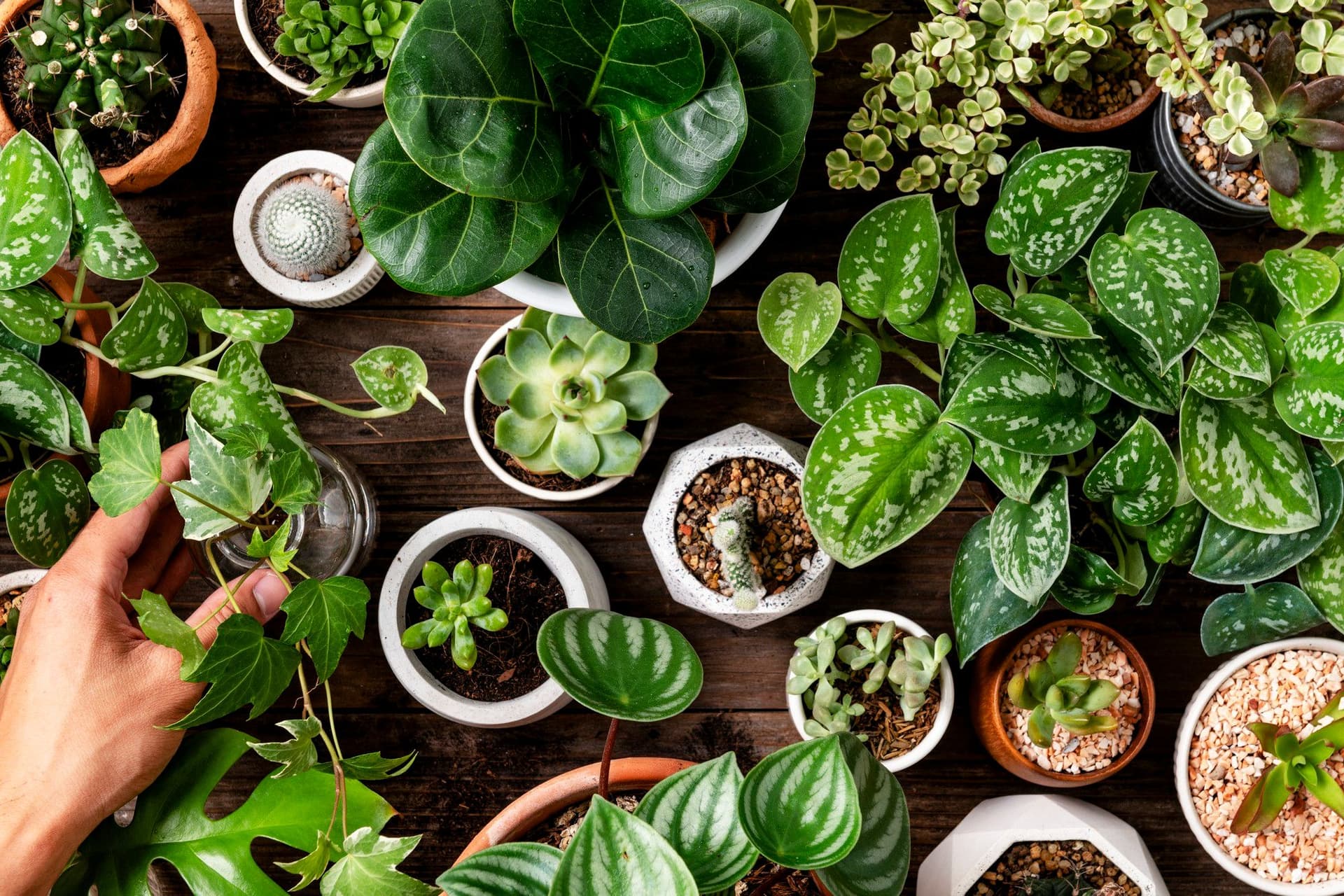
Frozen vs Fresh Vegetable Nutrients: Which Option Is Healthier?
What Do Plants Need to Grow – 5 Things Every Greenery Can't Live Without

8 min read · 31 Jul 2026

What Do Plants Need to Grow – 5 Things Every Greenery Can't Live Without

To keep plants healthy and thriving, provide the right balance of light, humidity, nutrients, airflow, and quality soil. This guide covers the essentials of year-round plant care.

Beginner Guides
What Do Plants Need to Grow – 5 Things Every Greenery Can't Live Without
Best Fertilizer for Vegetable Gardens – What to Use for Each Plant

11 min read · 20 Jul 2026

Best Fertilizer for Vegetable Gardens – What to Use for Each Plant

Here, you’ll find the right fertilizer formula for vegetables in your garden. Learn how to adjust feeding correctly throughout the growing cycle, spot nutrient deficiencies by their symptoms, and keep your plants healthy and prolific.

Plant Recommendations
Best Fertilizer for Vegetable Gardens – What to Use for Each Plant