


switchgrass Identification (Panicum virgatum)

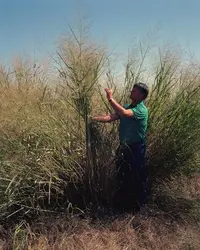
To recognize switchgrass, look for an upright, clumping grass that typically reaches 3 to 7 feet (0.9 to 2.1 m) tall, with straight, slender stems and flat leaves arranged alternately along the stems.

Its flower heads form broad, open, airy panicles held above the foliage, creating a distinct loose, branching outline.

Panicum virgatum Identification

Check Your Plant with Botan

Upload a clear image to check whether your plant ID is correct.

Clear images work best. Avoid photos taken too close or too far away

Check the plant’s upright, airy grass form first when assessing Panicum virgatum.

  • Grows in dense, upright clumps, often 3 to 7 feet (0.9 to 2.1 m) tall.
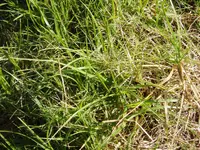
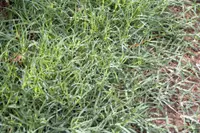
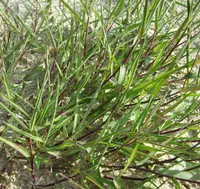
  • Leaves are narrow, flat, and arching, usually about 12 to 30 inches (30 to 76 cm) long.
  • Stems stand stiff and mostly vertical, giving the clump a straight, columnar outline.
  • Flower heads form open, branching panicles that look loose and cloudlike above the leaves.

The tall clump and airy panicles are the quickest visual clues.

Panicum virgatum shows clear, useful visual changes from tufted shoots to open flowering stems.

  • Young plant: Begins as a tight basal clump of narrow, upright leaves, with few stems and a compact outline compared with later airy growth.
  • Mature plant: Forms a dense fountain-like bunch, often 3-6 feet (0.9-1.8 m) tall, with many vertical stems and longer arching leaves from the base.
  • Flowering stage: Upper stems branch into broad, open panicles, a loose many-branched flower cluster, creating a see-through cloud above the leafy clump.
  • Fruiting stage: Panicles keep their open framework but carry small rounded grains along fine branchlets, giving the top a slightly fuller, bead-like texture.

Several switchgrass cultivars are easy to separate by foliage color, stem color, and overall height.

  • 'Heavy Metal': Blue-green leaves stay notably upright in a narrow clump, usually around 4 to 5 feet tall (1.2 to 1.5 m).
  • 'Shenandoah': Leaf tips turn deep red by summer, with wine-red fall color on plants often 3 to 4 feet tall (0.9 to 1.2 m).
  • 'Dallas Blues': Broader, powdery blue leaves and a taller habit, often reaching 6 to 8 feet (1.8 to 2.4 m).
  • 'Northwind': Forms a very rigid, vertical column with green leaves, typically 4 to 6 feet tall (1.2 to 1.8 m).
  • 'Prairie Fire': Blue-green summer foliage develops strong red to burgundy tones across much of the plant in late season.

In spring, switchgrass sends up fresh green blades from the base, forming upright clumps. By late summer to early fall, airy flower panicles rise above the leaves, creating a hazy, open look. In fall, foliage often turns yellow to tan. Through winter, the plant stands as a stiff clump of dry stems and seedheads.

A few prairie grasses are often mistaken for switchgrass.

big bluestem(Andropogon gerardii)

Both are tall, upright warm-season grasses. Big bluestem usually shows distinctive three-part seed heads shaped like a turkey foot, while Panicum virgatum has a more open, airy branching panicle.

indiangrass(Sorghastrum nutans)

It can match the same height and clumping habit. Indiangrass has narrower, plume-like flower clusters and a noticeable pointed ligule, a small membrane where the leaf meets the stem.

prairie cordgrass(Spartina pectinata)

This one also forms tall clumps with long leaves. Prairie cordgrass spreads more strongly by rhizomes and has comb-like flower spikes arranged along one side, not a loose panicle.

Panicum virgatum is native to much of North America, from southern Canada through most of the United States and into northern Mexico. It is especially characteristic of prairies, open grasslands, roadsides, and open woodland edges. Habitat can help narrow identification because this species is often found in sunny, natural grassland settings and also in moist places such as low prairies, ditches, and along stream margins. A tall warm-season grass growing naturally in those habitats is more likely to be switchgrass.

Not Sure About the ID?

Use Botan to identify or verify it from a photo, which helps reduce mix-ups before you label or buy the plant.

FAQ

The most reliable clue is its open, airy flower panicle held above upright stems. For switchgrass identification, also check the smooth, hairless leaf blades and a distinct fringe of hairs where the blade meets the sheath.

More Plant Identification Guides

Know Your Plant Better

Identify it from a photo with Botan, then review plant details, care information, and common problems for that species.

Botan app identifying a plant from a photo
13 Best Front Yard Trees for Every Home and Yard

12 min read · 7 Aug 2026

13 Best Front Yard Trees for Every Home and Yard

A front yard tree can stay for decades. Therefore, choosing one deserves serious consideration. Here are 13 trees that have proven themselves, sorted by their purpose. You'll also find five species to avoid and basic planting information.

Plant Recommendations

13 Best Front Yard Trees for Every Home and Yard
Best Time to Water Grass in Summer – Lawn Watering Tips

5 min read · 21 Jul 2026

Best Time to Water Grass in Summer – Lawn Watering Tips

Summer watering is easy to get wrong. This guide explains when to turn on your sprinkler, how much liquid your grass needs each week, and how to tell if you're overwatering or underwatering.

Plant Care
Best Time to Water Grass in Summer – Lawn Watering Tips
Rice Water for Plants – Which Plants Love It and How to Make It

8 min read · 14 Jul 2026

Rice Water for Plants – Which Plants Love It and How to Make It

Rice water can be an ideal DIY solution for orchids, roses, or fruiting plants. It supports growth, leaf count, and height. We’ll share how to make and apply it correctly for your plant.

Plant Care
Rice Water for Plants – Which Plants Love It and How to Make It