

centipede grass Identification (Eremochloa ophiuroides)

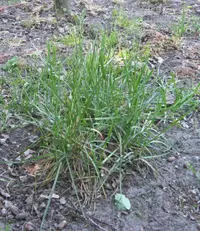
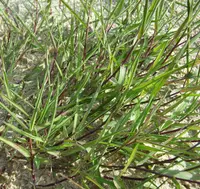
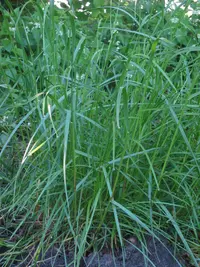
Recognize centipede grass by its low, creeping mat of above-ground runners that root at the nodes, forming a dense lawn-like cover. Leaves are short, narrow, and alternately spaced along the stolons, not in clumps.

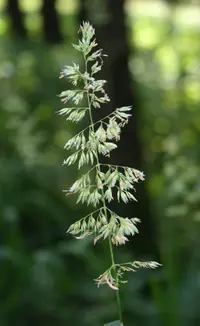
Its flower stems carry a single, slender spike at the tip, usually held above the foliage.

Eremochloa ophiuroides Identification

Is This centipede grass?

Check your plant ID by uploading a clear photo to Botan.

Clear images work best. Avoid photos taken too close or too far away

Check Eremochloa ophiuroides for its low, creeping lawn-forming habit and blunt-tipped blades.

  • Forms a dense, slow-spreading mat with wiry above-ground runners that root at the nodes.
  • Leaf blades are short and fairly broad for a turf grass, about 1-4 inches (2.5-10 cm) long, with rounded or blunt tips.
  • Leaves appear alternately along the stolons, not in tight upright bunches.
  • Seedheads are simple, narrow spikes, usually with 2 finger-like branches held at the stem tip.

The creeping stolons and blunt leaf tips are the quickest field clues.

Eremochloa ophiuroides shows clear visual shifts from sparse seedlings to stolon-forming turf.

  • Seedling: Seedlings appear as a few narrow, upright blades emerging singly, without creeping runners, so growth stays tufted rather than mat-forming at first.
  • Young plant: Young plants begin sending short stolons across the surface; nodes root and produce spaced leaf clusters, creating a low, spreading patch.
  • Mature plant: Mature turf forms a dense, coarse-textured carpet usually 4-10 inches (10-25 cm) tall, with obvious aboveground stolons and broader, arching blades.
  • Flowering stage: Flowering stems rise above the leaves and carry a distinctive single, slender spike, making the usually lawn-like plant look briefly more open and upright.

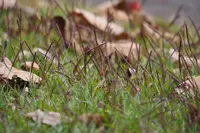
During the warm growing season, centipede grass forms a dense mat of light to medium green blades. In summer, short upright seed stalks may rise above the lawn, adding a slightly tufted look that helps confirm identification. In late fall and winter, especially where frost occurs, the turf often turns tan to brown and looks dormant rather than remaining bright green year-round.

A few warm-season lawn grasses are often mistaken for centipede grass.

St. Augustinegrass(Stenotaphrum secundatum)

Both form coarse, creeping lawns. St. Augustinegrass has much broader blades, often 1/5 to 2/5 inch (5-10 mm) wide, and thicker above-ground stolons. Eremochloa ophiuroides usually has narrower blades and a finer texture.

carpetgrass(Axonopus fissifolius)

Both make low, spreading turf with blunt-tipped leaves. Carpetgrass usually shows wider leaves in small clusters from the nodes and sends up more obvious seed stalks with 2 to 3 finger-like branches. Centipede grass typically has a single, slender spike.

Eremochloa ophiuroides is native to southern China and parts of Southeast Asia. In the wild it occurs in open, grassy places and disturbed ground rather than forest. That setting helps with identification because plants found naturalized in lawns, roadsides, or other low, sunny sites fit the species better than lookalikes from shade or wetland habitats.

Scan. Check. Confirm.

Use Botan to compare a photo and confirm the plant quickly when similar grasses are easy to mix up.

FAQ

The clearest clue is its creeping growth with aboveground stolons, which are horizontal stems. Leaves are light green, fairly coarse, and spaced along the stolons, forming a low, dense lawn rather than upright clumps.

More Plant Identification Guides

From Plant ID to Plant Info

Identify a plant from a photo with Botan, then review species details, care information, and common problems.

Botan app identifying a plant from a photo
12 Most Wanted Rare Houseplants to Grow at Home

6 min read · 21 Sept 2026

12 Most Wanted Rare Houseplants to Grow at Home

Rare houseplants can turn an ordinary corner in your apartment into a living botanical collection. This guide covers 12 most admired picks, what makes them special, and how to grow them successfully at home.

Plant Recommendations

12 Most Wanted Rare Houseplants to Grow at Home
How To Revive a Dying Plant: 6 Steps To Bring A Plant Back To Life

6 min read · 1 Sept 2026

How To Revive a Dying Plant: 6 Steps To Bring A Plant Back To Life

Drooping leaves and brown tips don't always mean the end, and a weakened plant can often recover with a little help. These six simple steps will help you revive a dying plant and restore its health.

Plant Care
How To Revive a Dying Plant: 6 Steps To Bring A Plant Back To Life
Best Time to Water Grass in Summer – Lawn Watering Tips

5 min read · 21 Jul 2026

Best Time to Water Grass in Summer – Lawn Watering Tips

Summer watering is easy to get wrong. This guide explains when to turn on your sprinkler, how much liquid your grass needs each week, and how to tell if you're overwatering or underwatering.

Plant Care
Best Time to Water Grass in Summer – Lawn Watering Tips