
corn Identification (Zea mays)

Recognize corn by its single, upright cane-like stalk, broad strap-shaped leaves that alternate in two ranks along the stem, and the distinct flower arrangement: a branched tassel at the top with ears forming from leaf axils lower on the stalk.

Plants are tall and unbranched, often several feet high.

Zea mays Identification

Scan to Confirm corn

Check your plant ID by uploading a clear photo to Botan.

Clear images work best. Avoid photos taken too close or too far away

Check the plant’s overall form first.

  • It grows as a single upright grass with a thick, solid stem and obvious joints.
  • Leaves are long, strap-shaped, and alternate up the stem, often 2–4 feet (0.6–1.2 m) long.
  • Each leaf wraps the stem at the base, then extends outward with a strong central midrib.
  • A branched tassel sits at the stem tip, while thick ears form lower down in the leaf axils.
  • The ears are enclosed by husks, with long threadlike silks emerging from the tip.

Visible tassels, ears, and stem-wrapping leaves together are strong signs of Zea mays.

Zea mays shows clear visual shifts from grasslike seedlings to tasseling, ear-bearing mature plants.

  • Seedling: A single upright shoot emerges with narrow, smooth-edged leaves in a flat fan, looking distinctly grasslike before the stem begins to thicken.
  • Young plant: Leaves broaden and arch from a sturdier central stalk, and the plant forms obvious nodes and overlapping leaf sheaths as height approaches 2-4 feet (0.6-1.2 m).
  • Flowering stage: The top ends in a branched tassel with many small pollen-bearing spikelets, while thicker side shoots midway up the stalk carry silky female flower clusters.
  • Fruiting stage: After pollination, the silky clusters become husked ears pressed against the stalk, with layered green bracts enclosing rows of developing kernels.

Corn includes several forms that are easy to separate by ear and kernel appearance.

  • var. everta: Popcorn has small, hard kernels on relatively slender ears, unlike the larger kernels of typical field corn.
  • var. indurata: Flint corn bears rounded, hard outer kernels, often in many colors, giving ears a smooth, glassy look.
  • var. indentata: Dent corn has broad kernels with a distinct sunken tip that forms a dent as the ear matures.
  • var. saccharata: Sweet corn has plump, glossy kernels when fresh; mature dry kernels become wrinkled rather than staying smooth.

In late spring to early summer, Zea mays quickly shifts from a grasslike seedling to a tall plant with broad arching leaves arranged along a thick stalk. By midsummer, the pollen-bearing tassel appears at the top and silks emerge from the ears. As the plant matures, ears enlarge and the foliage often turns tan and dry before harvest.

A few grasses can be mistaken for corn, especially before ears form.

johnsongrass(Sorghum halepense)

Both are tall, broad-leaved grasses. Johnsongrass usually has a loose, branched flower panicle at the top, not the separate tassel and ear structure of Zea mays. Leaves also show a distinct white midrib.

grain sorghum(Sorghum bicolor)

Young plants can look similar because both have upright cane-like stems and long strap-shaped leaves. Grain sorghum keeps a dense seed head at the stem tip, while corn produces tassels above and ears from the leaf axils along the stem.

Scan. Check. Confirm.

Use Botan to identify or verify a plant from a photo, which helps avoid mix-ups before you label it or compare sources.

FAQ

Mature plants develop separate male and female flower structures: a tassel at the stem tip and ears from leaf axils with long silk strands. These features are central for identifying corn and are absent in seedlings.

More Plant Identification Guides

From Plant ID to Plant Info

Identify a plant from a photo with Botan, then review species-specific care information, safety notes, and common problems.

Botan app identifying a plant from a photo
How Long Can Flowers Go Without Water? Everything You Need to Know

6 min read · 10 Jul 2026

How Long Can Flowers Go Without Water? Everything You Need to Know

Flowers can survive without water anywhere from 1-2 hours to several months, depending on the plant type, species, and growing conditions. Some strong-looking flowers are drought-sensitive, while delicate-looking plants may tolerate long dry periods surprisingly well.

Plant Care
How Long Can Flowers Go Without Water? Everything You Need to Know
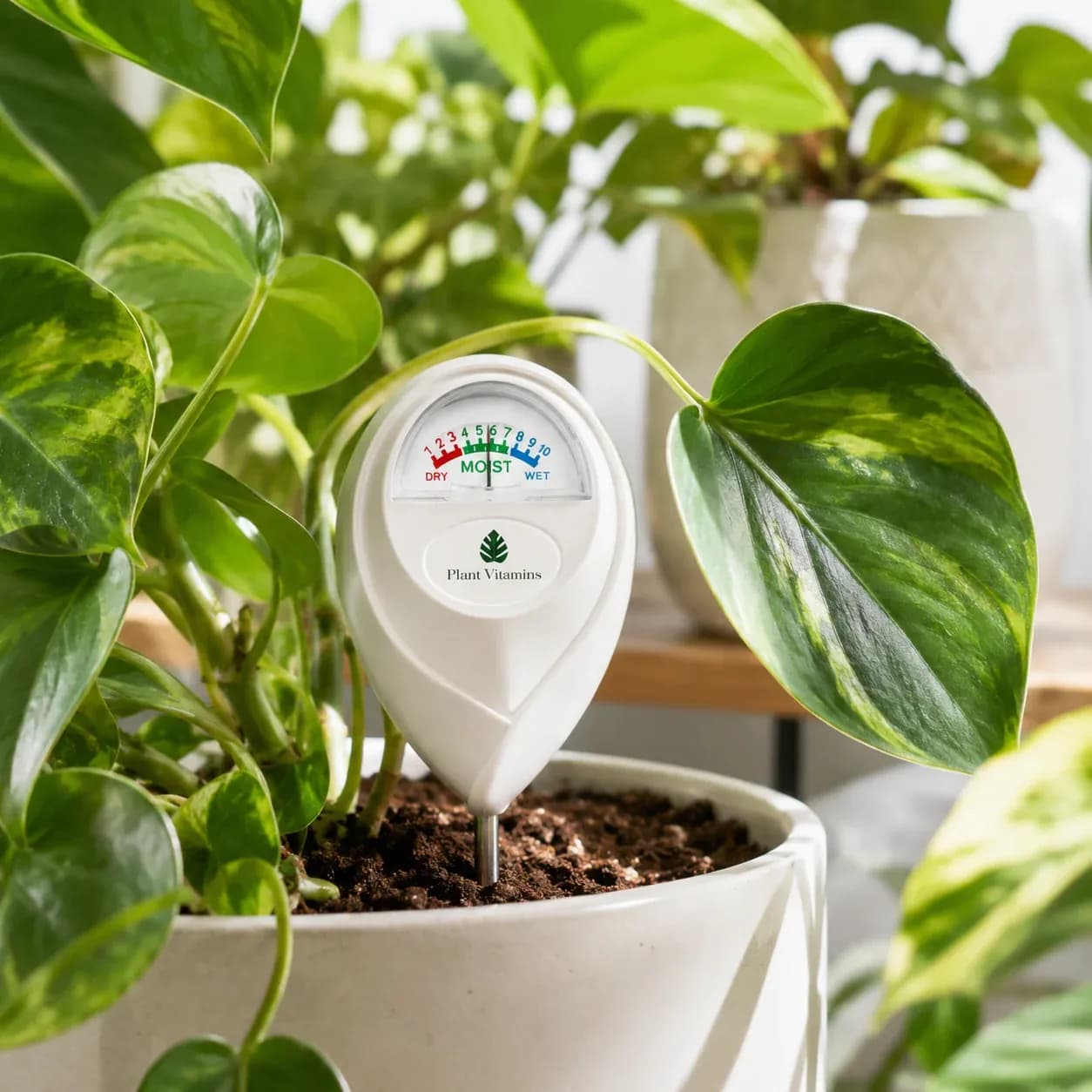
How to Use a Moisture Meter for Plants

5 min read · 4 Sept 2026

How to Use a Moisture Meter for Plants

Watering by feel kills plenty of houseplants. A moisture meter checks the soil for you, and takes the guesswork out of it. This guide will show you how to use it correctly, from the first touch to the final reading.

Beginner Guides
How to Use a Moisture Meter for Plants
12 Best Plants That Repel Spiders For Your Home and Garden

8 min read · 24 Jul 2026

12 Best Plants That Repel Spiders For Your Home and Garden

Spiders constantly appear in places you don't want them. A few common plants can help repel them using scent alone. Here are 12 options suitable for both indoors and outdoors, plus care tips for each.

Plant Recommendations
12 Best Plants That Repel Spiders For Your Home and Garden