Rock crevice planting
Tuck plants into narrow rock crevices or gaps between stable stones to mimic their alpine niche, which protects crowns from winter wet and stabilizes roots in sharp drainage.

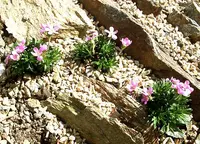
Androsace halleri is a compact alpine perennial in the primrose family, forming tight, low cushions of small rosettes. In spring it produces short stems topped with delicate white to pale pink flowers.
This species is native to rocky, high-mountain habitats in parts of Europe, where it grows in crevices and well-drained scree. Its slow growth and need for sharp drainage make it better suited to rock gardens, troughs, and specialist collections than to general borders.
It prefers cool conditions, bright light, and moist but never waterlogged soil. Understanding its natural alpine environment helps gardeners care for Androsace halleri successfully in cultivation.

Care Difficulty
Hard Care

Light Preference
Full Sun

Water Requirements
Moderate Water

Temperature Preference
Cold Hardy

Hardiness Zone
4–7

Soil Texture
Sandy, Loamy, Rocky

Soil pH
Acidic (5.5–6.5), Slightly acidic (6.5–7.0)

Soil Drainage
Well-drained

Fertilization
Minimal (feed rarely)
Scan your plant to receive care tips personalized for your specific plant
Available on iOS and Android
This alpine perennial prefers bright, cool conditions that mimic open mountain habitats.
This species prefers evenly moist but sharply drained conditions that never stay saturated.
This alpine cushion plant is adapted to cool climates with cold winters and mild summers.
This alpine species prefers relatively dry air, so indoor humidity management is rarely critical.
This species needs sharply drained, gritty soil that mimics rocky alpine conditions.
This species is suitable for container growing, especially in shallow alpine troughs or rock garden pots.
Feeding needs are modest for Androsace halleri grown in rock gardens or containers.
Pruning for Androsace halleri focuses on tidying spent material rather than reshaping the plant.
This alpine species dislikes disturbance, so repotting or transplanting Androsace halleri should be infrequent and careful.
Propagation of Androsace halleri is possible but requires precise conditions and patience.
This alpine perennial is cold hardy but benefits from thoughtful winter care, especially in wet climates.

Plant Health Check
Not sure what's wrong with your plant? Check your plant's health inside the app.
This species naturally forms dense cushion-like mats on siliceous scree and rock ledges in the European Alps, often above the treeline where conditions are windy, nutrient-poor, and cold.
It tends to flower soon after snowmelt in late spring to early summer, taking advantage of the short alpine growing season when moisture from melting snow is still available.
In nature it usually grows on acidic to slightly acidic substrates such as gneiss or granite, unlike several close relatives that prefer calcareous (lime-rich) rocks.

Androsace halleri is considered a strict alpine element and can be used as an indicator of high-mountain habitats, since it rarely occurs outside cold, high-elevation environments in its native central and southern European range.
This alpine cushion plant spreads slowly by short stems, forming tight mats rather than running. It is not considered aggressive. Growth is usually limited to a small, well-defined clump under typical rock garden conditions.
Keep your plants happy and healthy with plant identification, disease detection, and easy care guidance.