Gentle clump division
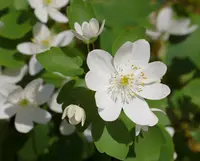
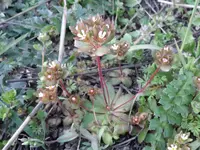
Lift and divide mature clumps every 3–4 years in early autumn, replanting small sections with at least 3–5 tuberous roots to maintain flowering density and prevent overcrowding.

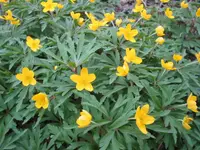
Yellow anemone, Anemonoides ranunculoides, is a small woodland perennial grown mainly for its bright yellow, early spring flowers. It forms low, spreading patches that emerge before many trees leaf out, then often die back in summer. Native to European and western Asian forests, it thrives in cool, humus-rich, lightly shaded sites that mimic deciduous woodland floors. Its rhizomes slowly create wider clumps, making it useful for naturalistic groundcover in suitable climates. Once established, it is relatively undemanding but dislikes very dry or compacted soil, so care for Yellow Anemone focuses on providing consistent moisture and good organic matter. It suits gardeners who appreciate subtle, seasonal plants rather than long-flowering displays.

Care Difficulty
Moderate Care

Light Preference
Partial Shade

Water Requirements
Moderate Water

Temperature Preference
Cold Hardy

Hardiness Zone
4–8

Soil Texture
Loamy, Silty, Organic-rich

Soil pH
Acidic (5.5–6.5), Slightly acidic (6.5–7.0)

Soil Drainage
Moist but well-drained

Fertilization
Minimal (feed rarely)
Scan your plant to receive care tips personalized for your specific plant
Available on iOS and Android
This woodland perennial prefers soft, filtered light similar to a light forest canopy.
This species prefers consistently moist but not saturated soil during its active growth period.
This spring ephemeral is adapted to cool to mild outdoor conditions with a marked winter rest.
This woodland perennial tolerates a wide humidity range and rarely needs special humidity control.
This species prefers loose, humus-rich woodland soil that stays evenly moist but never waterlogged.
This species can grow in containers if the potting setup mimics cool, moist woodland conditions.
Anemonoides ranunculoides is a woodland perennial that needs only light feeding when soil is poor or plants appear weak.
Anemonoides ranunculoides needs minimal pruning, mainly cleanup after flowering to keep the clump healthy.
This small woodland species is usually grown in the ground; transplant clumps only when crowding or poor flowering becomes clear.
This rhizomatous perennial is most commonly propagated by division, with seed used less often in gardens.
This hardy woodland plant tolerates typical winters in most temperate climates and needs little special attention once established.

Plant Health Check
Not sure what's wrong with your plant? Check your plant's health inside the app.
This species is a classic spring ephemeral, completing most of its growth and flowering before the tree canopy fully leafs out, which allows it to exploit high early-season light levels in deciduous forests.
It spreads mainly through slender, creeping rhizomes, forming dense yellow carpets that can dominate the spring ground layer in suitable European woodlands without behaving as an aggressive invader in its native range.
The flowers have 5–8 petal-like sepals rather than true petals, a typical trait of the buttercup family Ranunculaceae, and lack nectar, attracting early pollinators mainly with pollen and color instead.

In parts of Central and Eastern Europe, this species naturally hybridizes with the closely related Anemonoides nemorosa, producing the intermediate hybrid Anemonoides × lipsiensis, which often shows pale yellow to cream flowers and a mix of traits from both parents.
This species spreads slowly to moderately by rhizomes, forming small colonies over several years. It is not usually aggressive in temperate gardens and is often used as a gentle woodland ground-cover under shrubs and deciduous trees.
Keep your plants happy and healthy with plant identification, disease detection, and easy care guidance.