Coolabah apple Care (Angophora melanoxylon)

Coolabah apple

About Coolabah apple

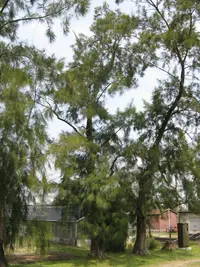
Coolabah apple, Angophora melanoxylon, is a small to medium tree from eastern Australia, related to eucalypts and adapted to dry woodland environments. It is mainly found on shallow, often rocky soils, where it forms part of open forest and woodland communities.

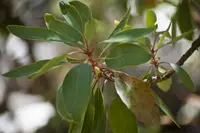
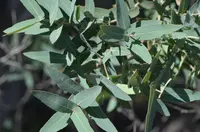
This species has a rounded crown, rough patterned bark, and narrow leaves, with creamy white flowers that attract insects. Growth is generally moderate and the tree becomes quite resilient once established.

It prefers sun, well-drained soil, and periods of dryness rather than constant moisture, which shapes how to care for Coolabah apple in gardens or restoration sites.

Main Plant Requirements

Care Difficulty

Moderate Care

Light Preference

Full Sun

Water Requirements

Low Water

Temperature Preference

Warm Climate

Hardiness Zone

9–11

Soil Texture

Sandy, Loamy, Rocky

Soil pH

Acidic (5.5–6.5), Slightly acidic (6.5–7.0)

Soil Drainage

Well-drained

Fertilization

Minimal (feed rarely)

Get Personalized Care Plan

Scan your plant to receive care tips personalized for your specific plant

Available on iOS and Android

How to Care for the Coolabah apple

Angophora melanoxylon thrives in open, bright conditions similar to its native woodland habitat.

  • Provide 6–8 hours of direct sun daily, ideally with morning sun and light afternoon shade in hotter inland areas.
  • Young Coolabah apple trees tolerate light partial shade, but prolonged shade reduces growth, leaf density, and flowering potential.
  • In summer, protect from reflected heat off walls or pavement to avoid leaf scorch, and in winter ensure access to as much direct sun as possible.

This species prefers deep, infrequent watering once established, with time for the soil to dry between soakings.

  • For in-ground trees, water deeply, then allow the top 5–8 cm of soil to dry before watering again, using longer intervals as roots mature.
  • In hot, dry seasons, watch for dull, slightly curling leaves as a sign to water; in cool or rainy periods, reduce or skip irrigation entirely.
  • Use well-drained, sandy or loamy soil; persistent wetness, algae growth, or sour smell around roots suggests overwatering and poor drainage.

This tree is adapted to warm temperate to subtropical climates with mild winters and hot summers.

  • Optimal growth occurs around 65–85°F (18–29°C), with steady warmth encouraging stronger shoots and root development.
  • It usually tolerates brief drops to about 25–28°F (-4 to -2°C), but young plants are more frost sensitive and benefit from wind and frost protection.
  • Mature trees handle summer heat up to 100–105°F (38–41°C) if soil moisture is adequate, but prolonged heat plus drought can cause leaf scorch and tip dieback.

This species copes well with dry conditions and usually does not need special humidity management.

  • Target 30–50% relative humidity, similar to most indoor and outdoor settings in temperate, low-humidity regions.
  • Coolabah apple tolerates brief drops below 30% without damage if soil moisture is kept stable.
  • Watch for crisp leaf edges and slow new growth as possible low-humidity stress combined with underwatering.
  • Increase local humidity only if air is very dry by grouping plants or placing a water tray nearby, without misting foliage.

This species prefers freely draining mineral soils that mimic its native dry woodland conditions.

  • Use a sandy or sandy-loam mix with low to moderate organic matter, such as 50% coarse sand, 30% loam, 20% composted bark or fine gravel.
  • Ensure very fast drainage; water should pass through the profile within seconds, not sit on the surface or in the pot saucer.
  • Aim for slightly acidic to neutral pH, roughly 6.0–7.0, avoiding strongly alkaline or saline conditions that limit nutrient availability.
  • Improve aeration by blending in coarse sand or fine gravel rather than peat-heavy mixes, and avoid compacted, waterlogged, or clay-rich substrates that suffocate roots.

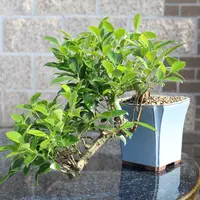
This tree is only moderately suitable for container growing and is best kept in a pot for limited years or as a small specimen.

  • Choose a deep, heavy container that resists tipping to support the developing woody trunk and broad canopy leverage.
  • Select a pot width that allows lateral root spread while still drying within 3–5 days after thorough watering.
  • Elevate the pot on feet or spacers so all drainage holes stay clear, preventing perched water that encourages root stress.

Angophora melanoxylon usually thrives in low‑nutrient soils, so use fertilizer sparingly for container or landscape specimens.

  • Apply a light dressing of well-rotted compost or a low-dose, balanced slow-release fertilizer (around 8-8-8 to 12-12-12) once at the start of spring.
  • During the active growing season, avoid additional high-nitrogen feeds that can cause weak, sappy growth and reduce stress tolerance.
  • If using liquid fertilizer on potted Coolabah apple, dilute to 25–50% strength and apply no more than every 6–8 weeks.
  • Stop feeding in late summer to early fall so new growth hardens before winter and the tree maintains a natural growth rhythm.

Pruning Angophora melanoxylon is mainly for safety, structure, and clearance rather than heavy shaping.

  • Carry out any structural pruning in late winter to early spring, before vigorous new growth starts.
  • Remove dead, diseased, crossing, or storm-damaged branches first, cutting back to a healthy lateral or the branch collar.
  • Thin congested interior shoots slightly to improve light penetration and airflow, maintaining the tree’s natural form.
  • Use sharp, clean bypass pruners or loppers for small branches and a pruning saw for larger limbs, making smooth, angled cuts.

This species is usually grown in the ground, so focus on careful transplanting of young trees rather than frequent repotting.

  • Transplant in late winter to early spring, when growth is just about to start and temperatures are mild.
  • Look for roots circling the container, poor drainage, or slowed growth as signs a nursery plant needs a larger planting space.
  • Move up 1 container size only, or plant into the ground at the same depth, gently loosening outer roots without tearing the root ball.
  • Water thoroughly after planting, then keep soil evenly moist but not waterlogged for several weeks to limit transplant shock.

Angophora melanoxylon is most reliably propagated from seed, with cuttings less commonly used and more variable in success.

  • Collect ripe seed from mature capsules in late summer to fall, then store dry and cool until sowing.
  • Sow seed in late winter to early spring in a free-draining, low-nutrient mix, barely covering the seed and keeping it just moist.
  • Maintain warmth around 68–75°F and bright, indirect light; germination may be staggered over several weeks.
  • For semi-hardwood cuttings, use a rooting hormone, very sharp tools, high humidity, and bottom heat, accepting lower strike rates.

This species is moderately frost tolerant in mild-winter climates and usually needs minimal winter care once established.

  • Young trees benefit from 5–8 cm of organic mulch around (but not touching) the trunk to buffer soil temperature and moisture.
  • In areas with harder frosts, use a breathable tree guard or frost cloth on small trunks and leading shoots during cold snaps.
  • Potted specimens in marginal climates can be moved into a cold, bright, sheltered space where temperatures stay above about 28–30°F.

Care Tips

Early structural training

In the first 3–5 years, select a single dominant leader and remove competing upright stems gradually to reduce future branch failures and create a stable tree form.

Wind-hardening young trees

In exposed sites, lightly stake only for the first 1–2 years and allow some trunk movement so the wood strengthens naturally against wind rather than becoming dependent on supports.

Mulch for root cooling

Apply a 5–8 cm layer of coarse organic mulch out to the drip line, keeping it 5–10 cm away from the trunk, to keep roots cooler, reduce soil compaction, and improve establishment in hot summers.

Low-phosphorus management

Use low-phosphorus products and avoid high-P lawn fertilizers within the root zone, as this Australian species is adapted to nutrient-poor soils and can be stressed by excess phosphorus.

Seasonal pest monitoring

From late spring through early autumn, inspect new shoots and bark crevices every 2–3 weeks for sap-suckers or borers and treat early with targeted, label-approved products to maintain long-term health when growing Coolabah apple.

Common Pests and Diseases

Myrtle rust

This disease causes bright yellow to orange powdery pustules on young leaves, shoots, and sometimes stems, often leading to leaf distortion and dieback of new growth.

Solution

Prune out and destroy affected shoots well below visible symptoms, disinfect tools after cutting, and avoid overhead watering. In garden or landscape settings, improve airflow around the canopy and, where legally permitted, use a registered myrtle rust fungicide on nearby Myrtaceae to reduce local spore pressure; in natural settings, follow local biosecurity and reporting guidelines rather than spraying.

Longicorn borers

These insects tunnel into stems and branches, leading to frass (sawdust-like material), wilting of affected branches, and structural weakness that can cause limb dieback or breakage.

Solution

Remove and dispose of heavily infested branches to physically remove larvae and reduce breeding sites, sealing large pruning cuts properly. Keep the tree vigorous with appropriate watering and avoid mechanical injuries to bark, as stressed or damaged Angophora plants are more attractive to borers.

Leaf beetle defoliation

These insects chew irregular holes and notches in foliage, and heavy feeding can thin the canopy, especially on young or stressed trees.

Solution

Inspect foliage regularly and hand-remove beetles and larvae from reachable branches, dropping them into soapy water. Encourage natural predators by maintaining plant diversity nearby, and protect new plantings from severe stress so they can replace lost foliage more quickly.

Scale insects

This pest appears as small, immobile bumps on stems and leaves, excreting honeydew that can lead to sooty mold on the bark and foliage.

Solution

Prune out badly infested twigs and wipe accessible stems with a cloth dampened in mild soapy water to remove scales and honeydew. Improve light and airflow, and where suitable in outdoor plantings, encourage beneficial insects such as lady beetles and parasitic wasps that naturally suppress scale populations.

Interesting Facts

Limited sandstone specialist

This species has a very restricted natural range in eastern New South Wales, where it grows almost exclusively on shallow, nutrient-poor sandstone soils in dry sclerophyll woodland.

Hard, dark heartwood

The tree develops notably dark, dense heartwood that led to the name melanoxylon, meaning black wood, and this timber has been valued locally for its hardness and durability in small-scale uses.

Rough bark, smooth relatives

Unlike the better-known smooth-barked Angophora species, this tree keeps rough, fibrous bark along the trunk and larger branches, which provides shelter for invertebrates and small fauna in its native habitat.

Botan icon

Did you know?

The species is considered regionally uncommon and has attracted conservation interest because many of its known populations occur in a relatively small area that is vulnerable to habitat loss and fragmentation near the New South Wales coast.

FAQs about Coolabah apple

The flowers are rich in nectar and pollen and strongly attract native bees, honeybees, and many butterflies. This makes the tree valuable for supporting local pollinators and increasing biodiversity in coastal and dry woodland gardens.

Grow Healthy Plants with Botan Care

Keep your plants happy and healthy with plant identification, disease detection, and easy care guidance.

Botan plant care app — identify plants on mobile

Explore More Plants