Formative wind training
Expose young trees to moderate, consistent wind rather than staking tightly so they develop stronger trunks and root systems that better support the broad canopy.

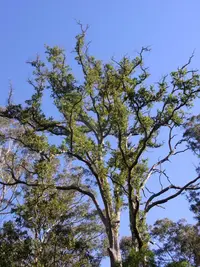
Angophora subvelutina, commonly called broad-leaved apple, is a medium to large Australian native tree in the myrtle family. It is related to eucalypts but has broader, softer leaves. The tree typically develops a rounded crown with dense foliage and rough, fibrous bark, making it useful for shade and habitat plantings in mild climates. It naturally occurs in coastal and subcoastal regions of eastern Australia, often on heavier soils along watercourses and lowlands. Growth is fairly fast in the ground where light is high and soil stays moderately moist but not waterlogged. For anyone learning how to care for broad-leaved apple, its main needs are full sun, well-drained soil, and space for roots and branches to expand.

Care Difficulty
Moderate Care

Light Preference
Full Sun

Water Requirements
Moderate Water

Temperature Preference
Warm Climate

Hardiness Zone
9–11

Soil Texture
Sandy, Loamy, Clay

Soil pH
Slightly acidic (6.5–7.0), Neutral (7.0)

Soil Drainage
Moist but well-drained

Fertilization
Minimal (feed rarely)
Scan your plant to receive care tips personalized for your specific plant
Available on iOS and Android
Angophora subvelutina grows best in bright outdoor conditions with ample direct sun.
This species prefers deep, infrequent watering once established, supported by well-drained soil.
This species prefers warm, mild climates and does not tolerate hard frost.
This species tolerates a wide humidity range and rarely needs special humidity management outdoors.
This Australian tree prefers freely draining, moderately fertile, mineral-based soil.
This species is only moderately suitable for large, outdoor containers, mainly for temporary or juvenile-stage cultivation.
This Australian native tree generally needs minimal feeding in garden soil but benefits from light support in poor or container media when caring for broad-leaved apple.
Pruning Angophora subvelutina is mainly for structure, safety, and removal of problem wood rather than size control.
This species is usually grown in the ground, so transplanting young trees correctly is more important than repotting.
Propagation of Angophora subvelutina is most reliable from seed, while vegetative methods are less common and more technical.
This Australian tree favors mild, frost-free climates and needs winter attention only where hard freezes occur.

Plant Health Check
Not sure what's wrong with your plant? Check your plant's health inside the app.
Young stems of this species often have a noticeably velvety texture due to fine hairs, which is reflected in the epithet subvelutina meaning somewhat velvety. As the tree ages, the bark becomes rough and fibrous but the hairy new growth can still help distinguish it from similar eucalypts in the field.
This tree commonly grows on alluvial soils along rivers and floodplains in eastern Australia, where it tolerates periodic flooding. Its distribution is closely linked to these moist lowland habitats, making it an important component of riparian woodland communities.
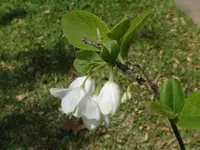
The creamy white flowers are produced in clusters and provide abundant nectar for insects, birds, and other pollinators. In its native range, it contributes significantly to local nectar flows that support insects such as native bees and beetles.

This species often forms natural hybrids with related Angophora and Corymbia species, and these hybrid zones have been used by botanists to study evolutionary relationships and gene flow within the eucalypt group.
This species produces creamy white, nectar-rich blossoms that are very attractive to bees, butterflies, and other insects. Dense flowering in summer provides an important food source and supports local pollinator diversity in suitable climates.
Keep your plants happy and healthy with plant identification, disease detection, and easy care guidance.