


Mounting strategy
Consider mounting the plant on cork or hardwood with a thin pad of sphagnum so roots dry quickly between waterings, and angle the mount slightly downward so water does not sit in the crown after misting or irrigation.

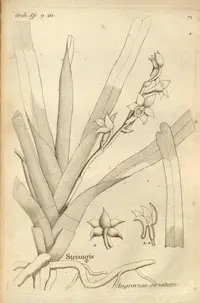
Angraecum striatum is a small to medium epiphytic orchid, usually growing on tree branches rather than in soil. It forms slender, upright stems with narrow, strap-like leaves. Flowers are typically pale, often white to greenish, with a long nectar spur and a delicate, star-like shape. This species is native to Madagascar, where it grows in warm, humid forests with moving air and filtered light. It is considered moderately challenging, mainly because it dislikes stale conditions, sudden temperature swings, and staying wet for long periods. Those who learn how to care for Angraecum striatum usually focus on bright, indirect light, airy orchid media, and consistent but careful watering.

Care Difficulty
Hard Care

Light Preference
Bright Indirect Light

Water Requirements
Keep Soil Moist

Temperature Preference
Tropical / Frost Sensitive

Hardiness Zone
Unknown

Soil Texture
Sandy, Organic-rich

Soil pH
Acidic (5.5–6.5)

Soil Drainage
Well-drained

Fertilization
Light (every 4–6 weeks)
Scan your plant to receive care tips personalized for your specific plant
Available on iOS and Android
This orchid prefers bright, filtered light that mimics its native forest canopy conditions.
Watering should balance consistent moisture with rapid drainage to protect the roots.
This species prefers intermediate to warm conditions with stable, gentle temperature shifts.
This orchid prefers fairly moist air and reacts quickly to dry indoor conditions.
This species grows best in a very airy, fast-draining, organic medium rather than dense potting soil.
This orchid is well suited to container growing when the pot supports its fine, airy root system.
This orchid benefits from light, steady feeding during active growth but is sensitive to excess salts.
This species needs only minimal pruning focused on plant health and hygiene.
This epiphytic orchid prefers infrequent repotting and reacts poorly to major root disturbance.
Propagation of Angraecum striatum is specialized and usually done by experienced growers or labs.
This orchid is frost sensitive and needs mild, stable conditions over winter.

Plant Health Check
Not sure what's wrong with your plant? Check your plant's health inside the app.
This orchid is naturally restricted to a small area of eastern Madagascar, where it grows as an epiphyte on trees in humid low- to mid‑elevation forests.
The flowers are creamy to greenish white with fine longitudinal stripes on the floral segments and spur, a feature that gives rise to the species name striatum, meaning striped.
Its pale, spurred flowers open mainly at night and release a stronger fragrance in the dark, an adaptation linked to pollination by nocturnal moths with long proboscises.

This species, like many Malagasy Angraecum orchids, is considered rare in the wild due to habitat loss in Madagascar, and cultivated material is typically derived from nursery propagation rather than wild collection, which supports more sustainable Angraecum striatum care instructions overall.
This species usually blooms in the warmer months, often late spring to early autumn, depending on conditions. It produces small, star-shaped, pale flowers with a delicate spur. Individual blooms are modest but can appear in succession.
Keep your plants happy and healthy with plant identification, disease detection, and easy care guidance.


Bomarea distichifolia
Bomarea distichifolia
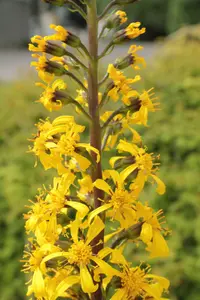
Ligularia wilsoniana
Ligularia wilsoniana
pygmyflower rockjasmine
Androsace septentrionalis
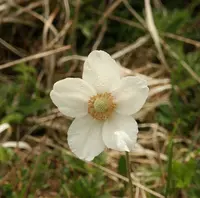
Snowdrop Anemone
Anemonoides sylvestris
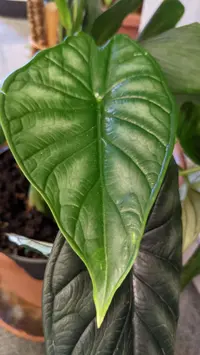
Dragon Scale plant
Alocasia baginda
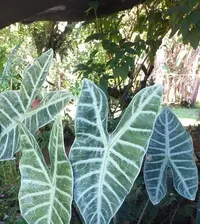
Alocasia × mortfontanensis
Alocasia × mortfontanensis

Pineapple
Ananas comosus
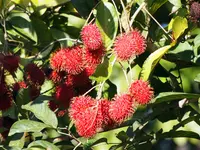
rambutan
Nephelium lappaceum