Encourage Dense Mats
Shear back spent flower stems and any leggy runners after blooming to encourage tighter, denser groundcover that suppresses weeds more effectively when growing raceme pussytoes.

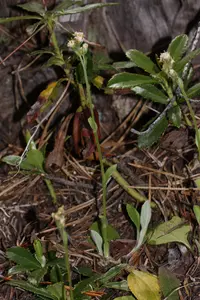
Raceme pussytoes (Antennaria racemosa) is a low-growing perennial wildflower in the aster family, forming small, mat-like clumps of silvery foliage. Short flowering stems hold clusters of soft, fuzzy white flower heads that resemble tiny cat paws, giving the plant its common name.
This species is native to western North America, where it typically grows in open woods, mountain meadows, and dry, rocky slopes. It is valued as a tough groundcover, especially in sunny, lean sites, and handles cold and drought quite well once established.
Gardeners who care for raceme pussytoes usually find it undemanding if given well-drained soil and good light, making it suited to rock gardens, informal borders, and naturalistic plantings.

Care Difficulty
Easy Care

Light Preference
Full Sun

Water Requirements
Low Water

Temperature Preference
Cold Hardy

Hardiness Zone
3–9

Soil Texture
Sandy, Loamy, Rocky

Soil pH
Acidic (5.5–6.5), Slightly acidic (6.5–7.0)

Soil Drainage
Well-drained

Fertilization
Minimal (feed rarely)
Scan your plant to receive care tips personalized for your specific plant
Available on iOS and Android
This alpine perennial prefers bright, cool conditions that mimic open mountain slopes.
This species prefers dry, well-drained conditions and is sensitive to prolonged moisture.
This hardy perennial is adapted to cool, exposed sites and tolerates a wide temperature range outdoors.
Antennaria racemosa handles a wide humidity range and usually does not need adjustment in typical outdoor conditions.
Antennaria racemosa prefers lean, well-drained, mineral soils that do not stay wet.
This species can grow in containers if the pot mimics its naturally dry, fast-draining conditions.
This nutrient-efficient native requires minimal feeding, so focus on light support rather than heavy fertilization for raceme pussytoes.
Pruning Antennaria racemosa is light and mainly cosmetic, aimed at keeping the mat tidy and encouraging fresh foliage.
This species is typically grown in the ground, so focus on careful transplanting rather than frequent repotting.
Antennaria racemosa is commonly propagated by division or seed to expand groundcover patches.
This cold-hardy perennial usually needs little special winter care in typical temperate climates.

Plant Health Check
Not sure what's wrong with your plant? Check your plant's health inside the app.
This species is native to interior western North America and is strongly associated with dry montane meadows, open coniferous forest clearings, and steppe-like slopes, often on well-drained, sandy or rocky soils.
The plant is functionally dioecious, with separate male and female flower heads on different plants, a relatively uncommon trait among many Asteraceae, which affects how populations reproduce and set seed.
Its seeds carry a pappus, a tuft of fine hairs that acts like a parachute, allowing wind to disperse them across open mountain and steppe habitats and helping the species colonize disturbed or sparsely vegetated ground.
This species forms low, slowly expanding mats via short stolons. It spreads enough to make a loose ground cover but usually stays well behaved, especially in lean, dry soils. Edging or dividing clumps keeps it neatly contained.
Keep your plants happy and healthy with plant identification, disease detection, and easy care guidance.