Staggered Planting
Plant in small groups at slightly different heights and spacings along a streambank or shaded border to create a naturalistic colony and encourage self-seeding into suitable moist pockets.

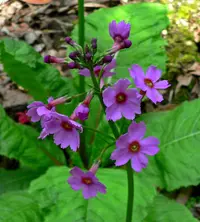
Japanese primrose (Primula japonica) is a hardy, herbaceous perennial grown mainly for its colorful, tiered flower whorls and neat rosette of leaves. It typically forms clumps that expand slowly, making it suitable for damp borders and woodland-style plantings.
In nature, it occurs along streams and moist meadows in parts of Japan, so it prefers cool conditions, consistent moisture, and humus-rich soil. Flowers range from white to deep magenta and appear on upright stems above the foliage, giving a structured, layered look.
These traits make it moderately easy to grow if moisture needs are met and summer heat is not extreme. Gardeners who understand how to care for Japanese primrose often find it long-lived and reliable in the right spot.

Care Difficulty
Moderate Care

Light Preference
Partial Shade

Water Requirements
Keep Soil Moist

Temperature Preference
Cool Climate

Hardiness Zone
4–8

Soil Texture
Loamy, Silty, Organic-rich

Soil pH
Acidic (5.5–6.5), Slightly acidic (6.5–7.0)

Soil Drainage
Moist but well-drained

Fertilization
Light (every 4–6 weeks)
Scan your plant to receive care tips personalized for your specific plant
Available on iOS and Android
This moisture-loving perennial prefers bright conditions without harsh, direct midday sun.
This species needs consistently moist soil without becoming waterlogged.
Cool, temperate conditions support strong growth and flowering.
This species prefers consistently moist air and benefits from moderate humidity management in most homes.
Primula japonica thrives in evenly moist, humus-rich soil that mimics a cool, streamside habitat.
This species can grow well in containers if moisture and drainage are closely controlled.
This moisture-loving perennial benefits from light, consistent feeding during active growth.
Primula japonica needs simple, light pruning to stay tidy and flowering well.
This primula is most often grown in the ground, with transplanting more common than frequent repotting.
This species is commonly multiplied by division or seed under cool, moist conditions.
This primula is cold hardy in many temperate gardens and usually needs only modest winter care.

Plant Health Check
Not sure what's wrong with your plant? Check your plant's health inside the app.
The flowers of Primula japonica are arranged in distinct tiers or whorls up the stem, often forming 3–6 clear layers that give rise to the common name candelabra primrose.
In its native habitats of Japan, this species naturally grows along stream edges, in damp meadows, and in wet woodland clearings, showing a strong adaptation to consistently moist, cool soils.
Populations of Primula japonica show natural variation in flower color, typically producing red, pink, rose, and white forms, which has allowed breeders to select and stabilize a range of ornamental cultivars.

Primula japonica has been widely used in breeding programs with other candelabra primroses, contributing its strong moisture tolerance and tiered flower structure to modern hybrid strains grown in shade and bog gardens.
Lack of flowers often comes from insufficient winter chill, too much shade, or nutrient-poor soil. Division that is too frequent, or heavy summer heat and dryness, can also reduce buds. Consistent moisture and cool conditions usually restore flowering.
Keep your plants happy and healthy with plant identification, disease detection, and easy care guidance.