Staggered Succession Sowing
Sow small patches every 2–3 weeks in early spring to keep foliage young and tender, rather than letting a single dense sowing race to flowering and decline all at once.

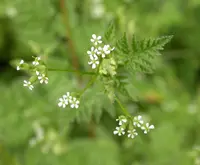
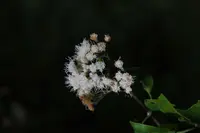
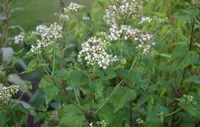
Bur chervil (Anthriscus caucalis) is a small, delicate annual herb in the carrot family, often found in meadows, field margins, and disturbed ground. It has finely divided, fern-like leaves and airy clusters of tiny white flowers held on slender, branching stems. Plants usually form loose, upright clumps and can self-seed readily where conditions suit them. This species is native to parts of Europe and western Asia but has naturalized in many temperate regions, including parts of North America. It generally prefers moderately moist, well-drained soil and open to lightly shaded sites. In home gardens, understanding how to care for bur chervil starts with recognizing its fast growth and tendency to spread by seed.

Care Difficulty
Easy Care

Light Preference
Partial Sun

Water Requirements
Moderate Water

Temperature Preference
Cool Climate

Hardiness Zone
5–9

Soil Texture
Sandy, Loamy, Silty

Soil pH
Acidic (5.5–6.5), Slightly acidic (6.5–7.0)

Soil Drainage
Well-drained

Fertilization
Minimal (feed rarely)
Scan your plant to receive care tips personalized for your specific plant
Available on iOS and Android
This annual umbellifer prefers bright, gentle light that mimics open woodland edges.
This plant prefers steadily moist, well-drained soil rather than alternating drought and saturation.
This species is adapted to cool, temperate conditions and grows best in mild spring weather.
Anthriscus caucalis handles a wide humidity range and rarely needs special humidity management.
Anthriscus caucalis prefers loose, moderately fertile soil that stays evenly moist but not saturated.
This species can be grown in containers if moisture and root depth are managed carefully.
This wild annual typically manages in average soil, so fertilizing bur chervil is optional rather than essential.
Pruning Anthriscus caucalis is mainly about tidiness and limiting self-seeding rather than shaping a long-term plant.
This annual is usually direct-sown outdoors, so transplanting is occasional and should be done gently.
Propagation of Anthriscus caucalis is almost always done by seed, often from self-sown plants.
This annual species has good cold tolerance and usually needs no special winter care once seeds are set.

Plant Health Check
Not sure what's wrong with your plant? Check your plant's health inside the app.
This species produces small, ribbed schizocarps (splitting fruits) covered in hooked bristles that readily cling to animal fur and clothing, making it an efficient hitchhiker for seed dispersal.
It commonly colonizes disturbed, nitrogen-rich ground such as arable field margins, paths, and waste places, where its fast annual life cycle allows it to complete seed set before more competitive perennials dominate.
The leaves are finely divided 2–3 times into narrow segments, giving the plant a delicate, fernlike appearance that distinguishes it from coarser-leaved umbellifers growing in the same habitats.
The foliage and young shoots are considered edible in small amounts and are sometimes used like chervil. Correct identification is critical because similar umbellifer species can be toxic. Avoid eating plants from contaminated sites such as roadsides or sprayed areas.
Keep your plants happy and healthy with plant identification, disease detection, and easy care guidance.