Encourage Compact Growth
Pinch back soft shoot tips in late spring to keep the plant dense and low-growing, which also promotes more flowering points along each stem.

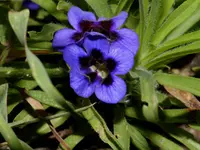
Aptosimum lineare is a small, low-growing perennial subshrub from arid regions of southern Africa. It belongs to the figwort family and is adapted to dry, sunny habitats. The plant forms a compact mat of fine, linear leaves and bears small, tubular flowers that often attract pollinating insects. Its tough, wiry stems and drought tolerance reflect its natural occurrence on rocky, well-drained slopes. In cultivation, it suits rock gardens and dry borders where frost is light and soil does not stay wet. Gardeners who want to care for Aptosimum lineare should provide bright light, occasional deep watering, and gritty, fast-draining soil.

Care Difficulty
Moderate Care

Light Preference
Full Sun

Water Requirements
Low Water

Temperature Preference
Warm Climate

Hardiness Zone
9–11

Soil Texture
Sandy, Loamy, Rocky

Soil pH
Slightly acidic (6.5–7.0), Neutral (7.0)

Soil Drainage
Well-drained

Fertilization
Minimal (feed rarely)
Scan your plant to receive care tips personalized for your specific plant
Available on iOS and Android
This sun-loving shrub thrives in bright, open positions typical of dry, rocky habitats.
This species is adapted to dry conditions and prefers infrequent, deeper watering to constant moisture.
This small shrub prefers warm, dry conditions similar to semi-arid habitats.
This species handles relatively dry air and usually does not need special humidity management indoors.
Aptosimum lineare prefers sharply drained, sandy mineral soil that dries quickly after watering.
This low, spreading species is suitable for container growing in sunny, well-drained spots.
This drought-tolerant shrub from nutrient-poor habitats usually grows well with minimal feeding.
Pruning mainly keeps Aptosimum lineare compact and removes stressed growth.
This species is usually grown in the ground, so focus on careful transplanting rather than frequent repotting.
Propagation is usually done from seeds or semi-ripe cuttings taken in the warmer months.
In mild, dry climates this shrub is fairly cold tolerant and needs little structured winter care.

Plant Health Check
Not sure what's wrong with your plant? Check your plant's health inside the app.
This low, wiry subshrub is naturally restricted to arid parts of South Africa’s Karoo region, where it tolerates intense sun, shallow stony soils, and very low rainfall by keeping a compact, almost cushion-like growth form.
The species has very narrow, almost thread-like leaves that minimize surface area, a common drought-adaptive trait that helps reduce water loss while still allowing efficient photosynthesis in hot, dry conditions.
It produces small, tubular flowers that are adapted to short-tongued insects in its native habitat, offering accessible nectar close to the ground in a sparse, open landscape.
This species has tubular, nectar-rich flowers that draw small native bees and sometimes butterflies. It can support pollinators in dry, open gardens, especially when grouped in sunny, low-competition spots with other drought-tolerant flowering plants.
Keep your plants happy and healthy with plant identification, disease detection, and easy care guidance.