Early weed control
Clear competing weeds before and during spring establishment, as this shallow-rooted ground layer is easily outcompeted in the first season.

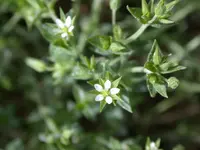
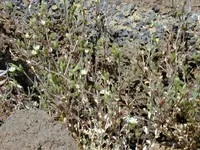
Thyme-leaved sandwort, Arenaria leptoclados, is a small, delicate annual often found in dry, open habitats such as roadsides, fields, and disturbed ground. It forms low, branching mats with very fine stems, tiny opposite leaves, and small white star-like flowers.
This species is native to parts of Europe and western Asia but now appears in many temperate regions, sometimes behaving as a casual weed. It is generally easy to grow where conditions are sunny and soils are light, well-drained, and not overly rich. Gardeners who want to learn how to care for thyme-leaved sandwort usually focus on providing good drainage and avoiding heavy, waterlogged substrates.

Care Difficulty
Easy Care

Light Preference
Full Sun

Water Requirements
Low Water

Temperature Preference
Cold Hardy

Hardiness Zone
5–9

Soil Texture
Sandy, Loamy, Rocky

Soil pH
Slightly acidic (6.5–7.0), Neutral (7.0)

Soil Drainage
Well-drained

Fertilization
Minimal (feed rarely)
Scan your plant to receive care tips personalized for your specific plant
Available on iOS and Android
This low mat-forming annual prefers open, bright conditions without intense, prolonged scorch.
This species prefers slightly dry, free-draining conditions and is sensitive to waterlogged soil.
This plant is adapted to mild, temperate climates with cool to warm conditions rather than extremes.
This species is highly tolerant of dry conditions, so humidity is rarely a concern for thyme-leaved sandwort.
Soil for Arenaria leptoclados should be lean, gritty, and very sharply drained to prevent root problems.
This species can grow well in shallow containers, especially for rock gardens or trough displays.
This low-growing annual needs only modest feeding, as thyme-leaved sandwort is adapted to lean, sandy soils.
Pruning for Arenaria leptoclados is mainly cosmetic and helps maintain a neat, low mat.
This species is usually grown in the ground; focus on careful transplanting rather than frequent repotting.
Most Arenaria leptoclados plants are raised from seed, which suits its fine, mat-forming habit.
Arenaria leptoclados is cool tolerant and usually needs little specific winter care in mild climates.

Plant Health Check
Not sure what's wrong with your plant? Check your plant's health inside the app.
This small annual often completes its life cycle very quickly in late winter–spring, exploiting brief windows of soil moisture before larger, more competitive plants leaf out and shade it.
The species name leptoclados refers to its very slender, much-branched stems bearing tiny opposite leaves, giving mature plants a fine, almost moss-like texture at ground level.
Although native to Eurasia and North Africa, this species has become a casual or locally naturalized alien in several other regions, including parts of Australia and New Zealand, where it is mainly associated with disturbed, open ground rather than intact natural habitats.
This species is usually a short-lived annual or occasionally biennial. It completes its life cycle quickly, setting seed in 1 season. New plants typically appear from self-sown seed rather than from long-lived root systems.
Keep your plants happy and healthy with plant identification, disease detection, and easy care guidance.