Mousetail plant Care (Arisarum proboscideum)

Also known as: Mouse-tail Arum
Mousetail plant

About Mousetail plant

The mousetail plant, Arisarum proboscideum, is a small tuberous perennial from the Mediterranean regions of Italy and Spain. It belongs to the arum family and grows from underground rhizomes, forming low clumps.

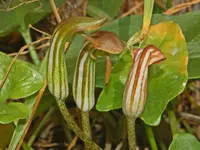
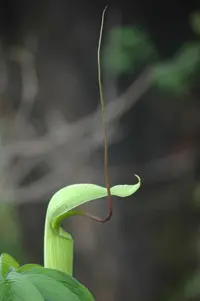
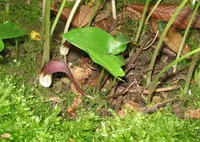
Its distinctive flowers have hooded, brownish-purple spathes with long tail-like tips that give the plant its common name. Leaves are glossy, green, and heart-shaped, creating a dense ground-level canopy.

This species prefers cool, shaded conditions with moist, humus-rich soil and benefits from a sheltered position. It can be long-lived and slowly spreading when conditions are stable, which makes it relatively easy to care for Mousetail plant in suitable climates.

Main Plant Requirements

Care Difficulty

Moderate Care

Light Preference

Partial Shade

Water Requirements

Keep Soil Moist

Temperature Preference

Cold Hardy

Hardiness Zone

6–9

Soil Texture

Loamy, Peaty, Organic-rich

Soil pH

Acidic (5.5–6.5), Slightly acidic (6.5–7.0)

Soil Drainage

Moist but well-drained

Fertilization

Minimal (feed rarely)

Get Personalized Care Plan

Scan your plant to receive care tips personalized for your specific plant

Available on iOS and Android

How to Care for the Mousetail plant

This woodland aroid prefers soft, filtered light rather than direct, intense sun.

  • Provide bright shade or dappled light, such as under deciduous shrubs or trees, with 1–2 hours of gentle morning sun and no harsh midday or afternoon sun.
  • Tolerates full shade but foliage may grow thinner and flowering can decline if light is very low, especially in dense evergreen shade.
  • In hotter summers, protect the Mousetail plant with additional shade cloth or deeper canopy cover to prevent leaf scorch and dried leaf tips.

This rhizomatous plant likes steadily moist but not saturated soil during active growth.

  • In spring and early summer, water when the top 2–3 cm of soil feel barely dry, aiming for consistently moist soil around the rhizomes, especially in lighter or sandy soils.
  • Ensure sharply draining soil or raised beds to avoid waterlogging; signs of overwatering include yellowing, limp leaves and rotting rhizomes with a sour smell.
  • As foliage dies back in late summer or autumn, reduce watering sharply, keeping soil just lightly moist; very dry, curling leaves and stalled growth usually indicate underwatering in the growing season.

This species prefers cool to mild conditions and dislikes extreme heat or deep freezing.

  • Optimal growth occurs around 50–70°F (10–21°C), matching cool woodland spring conditions with steady moisture and shelter from drying winds.
  • The plant tolerates brief drops to about 20–25°F (-6 to -4°C) when dormant, but repeated hard freezes without mulch can damage shallow rhizomes.
  • In hot spells above 80°F (27°C), provide extra shade and mulch to keep soil cool; sustained heat above 86°F (30°C) often triggers early dormancy and weaker foliage the following season.

This woodland aroid prefers moderately moist air but usually adapts to typical home humidity.

  • Aim for 50–70% humidity, especially in warm rooms or near heating vents.
  • Dry air can crisp leaf tips and edges and make flowers abort early, signaling humidity stress.
  • Increase humidity by grouping pots, placing the container on a pebble tray with water below the pot base, or running a nearby humidifier.

This rhizomatous plant grows best in loose, humus-rich soil that stays evenly moist yet drains freely.

  • Use a mix of roughly 50% peat-free compost, 30–40% fine bark or leaf mold, and 10–20% perlite to mimic a woodland loam.
  • Aim for slightly acidic to neutral pH, around 6.0–7.0, which supports nutrient availability and healthy root growth.
  • Ensure strong drainage so water does not pool around the rhizomes, which are prone to rot in waterlogged or compacted soil.
  • For dependable Arisarum proboscideum care, avoid heavy clay or mixes high in unamended garden soil, and loosen dense substrates with extra bark and perlite.

This species is well suited to container growing, especially for patios, shaded balconies, or small gardens.

  • Choose a wide, relatively shallow pot to allow the creeping rhizomes to spread without forcing excess depth that stays wet.
  • Select a sturdy, heavier container material if the mix is light, so the plant mass does not tip when foliage is in full growth.
  • Raise the pot slightly on feet or tiles so drainage holes clear the surface and excess water escapes quickly after rain or watering.

Arisarum proboscideum grows well in modest soils and benefits from light feeding during active growth.

  • Use a balanced, dilute liquid fertilizer (for example 10-10-10 at 1/4–1/2 strength) during spring and early summer.
  • Apply every 4–6 weeks while foliage is actively growing, skipping feeds during flowering decline.
  • Stop feeding once leaves yellow and die back, as the plant enters dormancy.
  • In rich garden soil, a thin layer of compost in early spring is usually enough for the Mousetail plant.

Arisarum proboscideum needs only light pruning focused on tidiness and plant health.

  • Best timing is late winter to early spring, before strong new growth begins.
  • Remove dead, yellowing, or damaged leaves at the base using clean, sharp scissors or pruners.
  • Thin overcrowded clumps by cutting out older, weak shoots to maintain airflow and reduce disease risk.
  • Discard spent flower stems after they fade to keep the clump neat and direct energy back to the rhizomes.

This species is usually grown as a groundcover, with transplanting or dividing clumps more common than frequent repotting.

  • Plan transplanting or division in early spring or early fall, when temperatures are mild.
  • Look for overcrowded clumps, slow vigor, or rhizomes rising to the soil surface as signs it needs more space.
  • Lift the clump carefully with a trowel or fork, keeping as much root and surrounding soil intact as possible.
  • Replant divisions at the same depth in moist, humus-rich soil, then water gently to settle and reduce root stress.

Arisarum proboscideum is most reliably propagated by division of its rhizomatous clumps.

  • Divide mature clumps in early spring or early fall, when the plant is not in peak active growth.
  • Lift the clump and gently tease or cut apart sections, ensuring each division has several healthy rhizomes and buds.
  • Replant divisions into moist, well-drained, humus-rich soil, spacing them to allow future spread.
  • Keep soil evenly moist and shaded after planting to support quick re-establishment and root growth.

This woodland perennial is moderately cold hardy and usually needs only simple winter care in temperate climates.

  • In regions colder than about 10–15°F, container plants are safer overwintered in a cool, frost-free space.
  • Apply a 5–8 cm layer of leaf mold or bark mulch over the root zone after the first frost to insulate rhizomes.
  • Allow foliage to die back naturally, removing mushy or diseased material to reduce rot and fungal problems.

Care Tips

Mulch For Coolth

Apply a 3–5 cm layer of fine bark or leaf mold over the tuber area each spring to keep the root zone cool and evenly moist while also suppressing weed competition.

Mark Dormant Clumps

Place discreet markers where the clumps grow before foliage dies back so you avoid disturbing or damaging the underground rhizomes during summer or fall garden work.

Divide At Leaf-Emergence

If clumps become congested, lift and divide them just as new leaves emerge, replanting divisions at the same depth so the rhizomes do not dry out or rot.

Use Shallow Containers

For Mousetail plant indoor care or patio displays, choose wide, shallow pots and plant in groups to encourage a dense colony and more even moisture around the rhizomes.

Slugs And Rodents

Monitor for slug damage on young leaves and protect tubers from rodents by using physical barriers or fine mesh baskets when planting in areas with heavy pest pressure.

Common Pests and Diseases

Slugs and snails

This pest is strongly attracted to the moist, shady conditions preferred by mousetail and often feeds on young leaves and flower stalks. Symptoms include irregular holes, shredded foliage, and slime trails on soil or pots.

Solution

Hand-pick at dusk or early morning, use iron phosphate slug pellets around clumps, and place physical barriers such as copper tape or gritty mulch. Reduce hiding spots by clearing debris, and avoid overhead evening watering that keeps the area wetter overnight.

Vine weevil

This pest is a particular risk for potted plants, where adults notch leaf edges and the soil-dwelling larvae feed on roots and rhizomes, causing collapse. Symptoms include scalloped leaf margins, wilting despite moist soil, and loose plants that lift easily from the compost.

Solution

Inspect pots for creamy, C-shaped larvae when repotting and destroy any found. Use biological control nematodes in late summer and early autumn, and reduce adult hiding places around containers; in heavy infestations, discard and replace the compost and affected plants.

Botrytis blight

This disease develops in cool, still, and humid conditions around dense clumps, especially in shade. Symptoms include soft, water-soaked patches on leaves or spathes that develop grey, fuzzy mold.

Solution

Remove and discard all affected leaves and spent flowers promptly and keep the soil surface free of decaying material. Improve airflow by thinning congested growth, water at the soil level in the morning, and in severe or recurring cases consider a labeled ornamental fungicide according to Mousetail plant care instructions.

Leaf spot

This disease appears during prolonged cool, wet periods and on crowded plants with poor air movement. Symptoms include small brown or black spots on leaves that may merge into larger blotches and cause premature yellowing.

Solution

Cut off and discard affected foliage and avoid overhead watering that keeps leaves wet for long periods. Space clumps so air can move through them and, if necessary in persistent cases, apply a suitable foliar fungicide following label directions and local regulations.

Interesting Facts

Mouse tail flowers

The inflorescences are tiny hooded cups at soil level with a long, tail-like extension that resembles a mouse’s tail, an adaptation thought to help guide small ground-dwelling insects toward the reproductive structures.

Ant-mediated seed dispersal

The seeds bear small oily appendages called elaiosomes that attract ants, which carry the seeds away, eat the elaiosomes, and leave the viable seeds in new microsites, aiding the plant’s spread in the wild.

Cool woodland specialist

This species is native to shaded, humid woodlands and rocky slopes in southwestern Europe, where it grows among leaf litter and mosses, often forming small colonies in stable, undisturbed habitats.
Botan icon

Did you know?

The flower structure produces a faint fungus-like scent and traps tiny flies temporarily inside the hooded chamber, using them as pollinators before releasing them once pollination has occurred.

FAQs about Mousetail plant

This species spreads slowly by short rhizomes and self-seeding, but it is not usually aggressive. In suitable moist, shaded sites, clumps can expand over several years and form small colonies, yet remain manageable with light division.

Grow Healthy Plants with Botan Care

Keep your plants happy and healthy with plant identification, disease detection, and easy care guidance.

Botan plant care app — identify plants on mobile

Explore More Plants