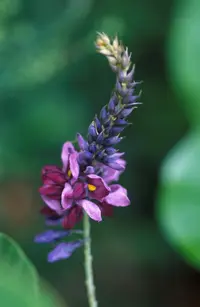
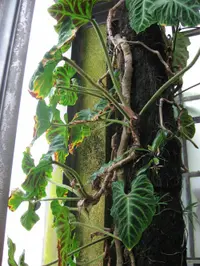
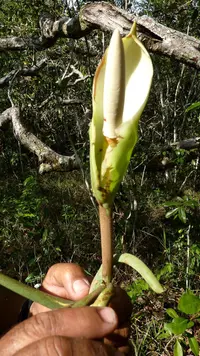
Aristolochia argentina Care

Aristolochia argentina

About Aristolochia argentina

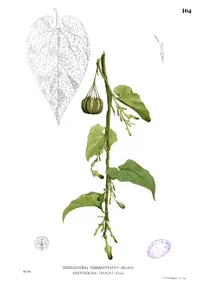
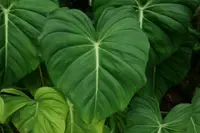
Aristolochia argentina is a twining perennial vine known for its unusual, tubular flowers and heart-shaped leaves. It is often grown as an ornamental climber on trellises or fences.

This species is native to parts of South America, where it grows in warm, relatively humid environments. It can be moderately challenging for beginners, mainly due to its need for consistent warmth and support to climb.

The plant prefers bright light, evenly moist but well-drained soil, and protection from cold. Understanding how to care for Aristolochia argentina starts with providing stable conditions and enough space for its vigorous growth habit.

Main Plant Requirements

Care Difficulty

Moderate Care

Light Preference

Partial Shade

Water Requirements

Regular Water

Temperature Preference

Warm Climate

Hardiness Zone

9–11

Soil Texture

Loamy, Sandy, Organic-rich

Soil pH

Acidic (5.5–6.5), Slightly acidic (6.5–7.0)

Soil Drainage

Moist but well-drained

Fertilization

Minimal (feed rarely)

Get Personalized Care Plan

Scan your plant to receive care tips personalized for your specific plant

Available on iOS and Android

How to Care for the Aristolochia argentina

This vigorous climber prefers bright, gentle light and protection from harsh midday sun.

  • Provide 4–6 hours of morning sun or bright filtered light; east-facing exposure or dappled shade under taller plants suits Aristolochia argentina well.
  • Allow light afternoon shade, especially in hot summers, to prevent leaf scorch, yellowing, and dry, papery leaf edges from excessive sun.
  • In cooler months, ensure it still receives at least 3–4 hours of bright light to maintain growth and flowering, trimming back overhanging shade if needed.

This species prefers evenly moist, well-drained soil that never stays waterlogged.

  • Water when the top 3–5 cm of soil feels dry, soaking the root zone deeply, then allow excess water to drain away fully.
  • Use soil with good drainage; persistent puddling, sour smell, or soft, blackened roots indicate overwatering and risk of rot.
  • In hot growing seasons, monitor more often as leaves droop and soil pulls from the edges when too dry; reduce frequency in cooler months when growth slows.

This vine grows best in warm, frost-free conditions with mild seasonal variation.

  • Aim for 65–80°F (18–27°C) during the main growing season for steady growth and flowering.
  • Protect from cold below 40°F (4°C), as foliage is damaged by light frost and the plant can be killed by hard freezes.
  • In hotter climates, it tolerates brief periods up to 90–95°F (32–35°C) if roots are mulched, soil stays slightly moist, and the plant has partial afternoon shade.

This vine benefits from moderate humidity but usually adapts to typical indoor levels.

  • Aim for 40–60% humidity to support steady growth and reduce leaf edge browning.
  • It tolerates brief dry air, but prolonged humidity below 30% can slow growth and cause crisp leaf tips.
  • Increase humidity with a nearby humidifier or grouped plants rather than misting, which adds only short-term moisture.

Aristolochia argentina prefers loose, well-aerated soil that drains freely yet retains some moisture.

  • Use a mix of 50–60% peat or coco coir, 20–30% compost, and 20–30% perlite or coarse sand for structure and drainage.
  • Aim for slightly acidic to neutral pH around 6.0–7.0 to keep nutrients available and roots active.
  • Ensure the soil feels crumbly, not compacted, so oxygen can reach the roots and excess water can exit quickly.
  • Avoid heavy clay, soggy areas, or pure sand, which either suffocate roots or dry out too fast between waterings.

This species is suitable for container growing when the pot supports its climbing, vigorous root system.

  • Choose a deep, heavy container that resists tipping as vines lengthen and add wind-catching foliage.
  • Provide a trellis or sturdy support fixed inside the pot so root movement does not loosen the structure.
  • Select a pot material with moderate moisture retention, such as thick plastic or glazed ceramic, to buffer rapid drying in warm weather.

Feeding supports steady vine growth and flowering in Aristolochia argentina when grown in garden beds or containers.

  • Use a balanced liquid fertilizer (e.g., 10-10-10) at 1/2 strength every 4–6 weeks in spring and summer.
  • Apply a thin layer of compost around the root zone once each spring to improve soil structure and nutrients.
  • Stop feeding in fall and winter, especially in cold climates, to allow natural dormancy.
  • Water before and after liquid feeding to reduce root burn and help nutrients distribute evenly.

Thoughtful pruning helps keep Aristolochia argentina manageable and encourages healthy flowering wood.

  • Carry out main pruning in late winter or very early spring before new growth begins.
  • Remove dead, damaged, weak, or badly tangled stems with clean, sharp bypass pruners.
  • Shorten excessively long shoots to maintain the desired framework and direct growth along its support.
  • Thin crowded interior stems to improve light and air flow, which reduces disease risk and promotes strong new growth.

This vigorous climber is more often transplanted outdoors than kept in containers, but similar principles apply.

  • Transplant or up-pot in early spring once frost risk has passed and new growth is just starting.
  • Look for roots circling the pot, water draining too quickly, or slowed growth as signs it needs a larger space.
  • Move to a container or ground position 1–2 sizes larger, using free-draining soil and a sturdy support for the vine.
  • Gently loosen circling roots, water thoroughly after planting, and shade for a few days to reduce transplant shock.

Aristolochia argentina is commonly propagated from seeds or semi-ripe cuttings taken in the warm season.

  • Sow fresh seeds in spring in a moist, free-draining seed mix kept at 70–75°F with bright, indirect light.
  • Lightly cover seeds, maintain even moisture, and allow several weeks or longer for germination.
  • Take 8–10 in semi-ripe stem cuttings in late spring or summer, removing lower leaves.
  • Dip cut ends in rooting hormone, place in a humid, warm environment, and avoid waterlogging to encourage rooting.

This species has moderate cold tolerance but benefits from simple winter precautions in cooler regions.

  • In USDA zones near its hardiness limit, add a 5–8 cm mulch layer over the root zone in late fall.
  • Allow top growth to die back naturally, then cut back dead stems in late winter or early spring.
  • Container-grown plants in cold climates should be moved to a sheltered, frost-free but cool spot until spring.

Care Tips

Provide climbing frame

Install a sturdy trellis, wire mesh, or pergola before planting so the vine can attach and climb without damaging nearby structures or tangling with other plants.

Guide young shoots

Gently tie new stems to the support with soft garden ties or jute every 15–20 cm to create an even coverage and prevent stems from kinking or rubbing in strong wind.

Manage root spread

In small gardens, sink a root barrier or plant in a large, heavy container to limit lateral root spread and keep the vine from becoming invasive over time.

Control self-seeding

Remove or bag spent flowers before pods mature if you want to prevent unwanted seedlings, especially in mild climates where the plant can self-sow easily.

Protect local wildlife

Avoid planting close to natural habitats of native swallowtail butterflies, since Aristolochia species can be toxic to some native larvae; consult local extension services when caring for Aristolochia argentina near wild areas.

Common Pests and Diseases

Leaf miner larvae

This pest burrows inside the leaves, creating winding, pale tunnels and distorted foliage. Symptoms include reduced photosynthesis and premature yellowing of affected leaves.

Solution

Remove and discard mined leaves as soon as tunnels appear to break the life cycle. For repeated problems, use a spinosad-based spray directed to young foliage and avoid overfertilizing, which encourages soft, vulnerable new growth when growing Aristolochia argentina outdoors in warm regions.

Spider mites

These insects feed on the undersides of leaves, causing fine stippling, dulling of the leaf surface, and, in severe cases, thin webbing. This pest is favored by hot, dry conditions and can quickly defoliate tender vines.

Solution

Rinse foliage thoroughly with a strong but gentle stream of water, focusing on leaf undersides, then increase humidity and reduce heat stress where possible. If populations persist, apply insecticidal soap or horticultural oil, repeating every 5–7 days until new growth appears clean.

Aphids

These insects cluster on tender shoots and flower stalks, sucking sap and causing curling, distortion, and sticky honeydew that can attract sooty mold. Symptoms include slowed growth and deformed new leaves and flowers.

Solution

Pinch or wash off colonies with water, targeting shoot tips and the backs of leaves. For heavier infestations, use insecticidal soap or neem oil, applying in the early morning or evening to avoid leaf burn and repeating as needed until no new colonies form.

Cercospora leaf spot

This disease produces small, dark, often circular spots on leaves that can enlarge and coalesce, leading to yellowing and premature leaf drop. Symptoms include more intense spotting on older foliage, especially in warm, humid conditions with poor air movement.

Solution

Remove and destroy affected leaves promptly and avoid overhead watering to keep foliage dry. Improve spacing and airflow around the vine, and if the problem recurs in humid climates, use a copper-based fungicide according to label directions at the first sign of new spots.

Powdery mildew

This disease appears as a white to gray powdery film on the upper leaf surfaces, petioles, and young stems. Symptoms include leaf distortion, reduced vigor, and premature yellowing when coverage is heavy.

Solution

Increase light and airflow around the plant and avoid dense, overly shaded growth, which favors this fungus. Prune lightly to open the vine, remove heavily infected leaves, and apply a horticultural oil or potassium bicarbonate product at the first sign of powdery patches to protect new foliage.

Interesting Facts

Specialized fly pollination

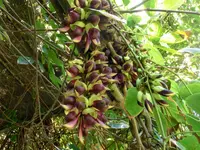
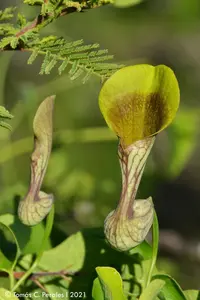
The flowers of this species release a faint scent and use their tubular, curved shape to temporarily trap small flies, which then carry pollen from one flower to another when released.

Native riparian climber

This vine is naturally found climbing on shrubs and small trees along riverbanks and moist forest edges in parts of South America, where it benefits from high light above and cooler, shaded roots below.

Host for butterfly larvae

In its native range, the plant serves as a larval food source for certain swallowtail butterflies, whose caterpillars can tolerate aristolochic acids that make the foliage unpalatable to many other herbivores.

Botan icon

Did you know?

The tubular flowers of this species have inward-pointing hairs that act as a one-way gate, guiding insects into the floral chamber and delaying their escape long enough to ensure effective pollination before the hairs wilt and allow the visitors to leave.

FAQs about Aristolochia argentina

This vine has unusual, tubular flowers that emit a faint scent attracting small flies and other insects. These pollinators are temporarily trapped inside the flower, picking up pollen before being released to visit the next bloom.

Grow Healthy Plants with Botan Care

Keep your plants happy and healthy with plant identification, disease detection, and easy care guidance.

Botan plant care app — identify plants on mobile

Explore More Plants