Secure Climbing Support
Install a sturdy trellis, wire grid, or tensioned fishing line before planting, then gently tie new shoots with soft ties every 10–15 cm to guide the vine and prevent stems from snapping in wind.

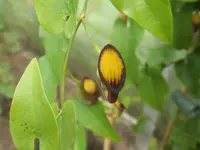
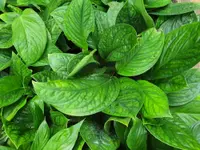
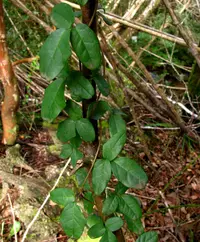
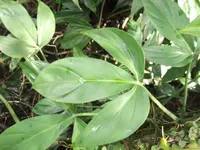
Climbing birthwort (Aristolochia sempervirens) is an evergreen woody vine known for its twisting stems and unusual, pipe-shaped yellow flowers. It often develops dense, glossy foliage that clings to supports.
This species is native to the eastern Mediterranean, where it grows on rocky slopes, scrub, and open woodland edges. It is moderately vigorous but not usually invasive in cooler climates.
The plant prefers a sunny to lightly shaded position with well-drained, slightly alkaline soil and steady moisture. Once established, it tolerates short dry spells but dislikes heavy, waterlogged conditions.
Understanding these natural preferences makes it easier to care for Climbing Birthwort in gardens, courtyards, or trained against walls and fences.

Care Difficulty
Moderate Care

Light Preference
Partial Sun

Water Requirements
Moderate Water

Temperature Preference
Warm Climate

Hardiness Zone
8–10

Soil Texture
Sandy, Loamy, Organic-rich

Soil pH
Acidic (5.5–6.5), Slightly acidic (6.5–7.0)

Soil Drainage
Moist but well-drained

Fertilization
Minimal (feed rarely)
Scan your plant to receive care tips personalized for your specific plant
Available on iOS and Android
This evergreen climber prefers bright conditions with some protection from harsh midday sun.
This vine prefers evenly moist, well-drained soil that never stays soggy for long periods.
This species grows best in mild, Mediterranean-type climates with moderate temperature swings.
This species prefers moderate air moisture but usually adapts well to typical household or outdoor conditions.
Aristolochia sempervirens grows best in loose, well-drained but evenly moist soil that does not stay waterlogged.
This vine is suitable for container growing when given stable support and consistent moisture management.
This Mediterranean climber benefits from light feeding but grows acceptably in average garden soil.
Aristolochia sempervirens responds well to controlled pruning that maintains size and flowering wood.
This twining vine is usually grown in the ground, so management focuses on careful transplanting or occasional container upgrades.
This species is most often propagated by semi-ripe cuttings or layering rather than by seed for garden use.
This evergreen vine is moderately cold hardy but benefits from some winter protection in colder regions.

Plant Health Check
Not sure what's wrong with your plant? Check your plant's health inside the app.
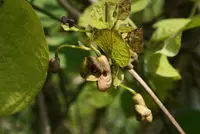
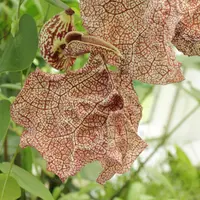
This species has tubular, bent flowers that temporarily trap small flies attracted by scent and color, forcing them to brush against pollen as they move inside and later escape when the flower loosens.
It is a woody, evergreen climber native to eastern Mediterranean coasts, where it scrambles over rocks and shrubs and tolerates hot, dry summers better than many other Aristolochia species.
Its yellow flowers with a purple-brown mouth are strongly curved in an S-shape, which guides insects to the reproductive structures and protects them from rain and direct sun while inside.

In its native range, this vine often grows on limestone cliffs and rocky slopes, where its roots anchor into crevices and allow it to withstand exposure, shallow soils, and intense summer drought better than many neighboring species.
This species can spread steadily by twining stems and self-seeding, but it is not usually aggressively invasive in typical garden settings. Regular pruning and removing unwanted seedlings keep growth contained and protect nearby, slower plants.
Keep your plants happy and healthy with plant identification, disease detection, and easy care guidance.