Boost drainage mound
In heavier soils, plant on a slightly raised mound of gritty mix 5–10 cm high above the surrounding bed to keep crowns dry and reduce winter rot risk when growing Sea thrift.

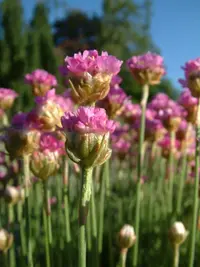
Sea thrift, Armeria maritima, is a compact, evergreen perennial known for its grass-like clumps and round flower heads on slender stems. It forms tidy mounds that suit borders, rock gardens, and containers.
In nature it grows in coastal areas, cliffs, and sandy grasslands, where it tolerates wind, salt spray, and poor soil. These traits make it a resilient garden plant when drainage is good.
It prefers full sun, relatively dry conditions, and lean, well-drained soil. Once established, it needs little intervention, so learning how to care for Sea thrift is straightforward for most gardeners.

Care Difficulty
Easy Care

Light Preference
Full Sun

Water Requirements
Low Water

Temperature Preference
Cold Hardy

Hardiness Zone
4–8

Soil Texture
Sandy, Loamy, Rocky

Soil pH
Acidic (5.5–6.5), Slightly acidic (6.5–7.0)

Soil Drainage
Well-drained

Fertilization
Minimal (feed rarely)
Scan your plant to receive care tips personalized for your specific plant
Available on iOS and Android
This coastal perennial thrives in bright conditions and responds best to stable, strong light exposure.
This plant prefers drier, well-drained conditions and is sensitive to excess moisture around the roots.
This species is naturally adapted to cool, coastal climates but copes with a wide temperature range in gardens.
Humidity is rarely a concern for this coastal species, which thrives in relatively dry air around 30–50%.
Armeria maritima prefers lean, very free-draining, often sandy soil that never stays waterlogged.
This species is well-suited to containers, especially shallow, free-draining pots and troughs.
Sea thrift thrives in lean soil and needs only light fertilization to stay compact and floriferous.
Pruning helps Armeria maritima maintain a dense cushion and extend its flowering period.
This species is usually grown in the ground, but container plants or crowded clumps may need occasional transplanting.
Armeria maritima plant care often includes occasional propagation to refresh old clumps and create new plants.
This coastal perennial is generally cold hardy and needs minimal winter care in most temperate climates.

Plant Health Check
Not sure what's wrong with your plant? Check your plant's health inside the app.
This coastal species tolerates regular salt spray and saline soils, thanks to specialized leaf and root physiology that limits salt uptake and stores excess salts in older tissues that are later shed.
In some European mining districts, local populations have evolved to tolerate high levels of heavy metals in the soil, making these ecotypes useful in research on plant adaptation to metal contamination.
The dense grass-like leaf tufts form low cushions that reduce wind exposure and water loss, an adaptation to the harsh, windy habitats of sea cliffs and coastal rocks.

In parts of Wales, especially Anglesey, this species became an informal cultural symbol of resilience on coastal cliffs, and its likeness has appeared on regional emblems and designs to represent hardy maritime landscapes.
Lack of flowers often comes from too much shade, very rich soil, or old, congested clumps. Deadhead spent blooms, avoid heavy fertilizing, and divide older plants every few years to restore flowering vigor.
Keep your plants happy and healthy with plant identification, disease detection, and easy care guidance.