Armeria welwitschii Care

Armeria welwitschii

About Armeria welwitschii

Armeria welwitschii is a compact, evergreen perennial forming low cushions of grassy, narrow leaves. It produces rounded clusters of pink to purple flowers held on short, upright stems. Native to coastal cliffs of Portugal, it is adapted to windy, exposed conditions and lean, well-drained soils. This background makes it suitable for rock gardens, edging, and containers in similar dry, sunny spots. The plant is generally considered easy to grow if excess moisture around the roots is avoided. Understanding how to care for Armeria welwitschii starts with providing full sun, good drainage, and avoiding heavy, waterlogged soil.

Main Plant Requirements

Care Difficulty

Moderate Care

Light Preference

Full Sun

Water Requirements

Low Water

Temperature Preference

Cool Climate

Hardiness Zone

6–9

Soil Texture

Sandy, Loamy, Rocky

Soil pH

Slightly acidic (6.5–7.0), Neutral (7.0)

Soil Drainage

Well-drained

Fertilization

Minimal (feed rarely)

Get Personalized Care Plan

Scan your plant to receive care tips personalized for your specific plant

Available on iOS and Android

How to Care for the Armeria welwitschii

This coastal perennial thrives in open, bright positions with plenty of direct sun.

  • Provide 6–8 hours of direct sun daily; full sun is ideal in cool to mild climates, while light afternoon shade helps in hotter regions.
  • Plant in an open site with unobstructed exposure; tolerate light partial shade, but flowering and compact growth decline below about 4 hours of direct sun.
  • Watch foliage for signs of stress: pale, floppy leaves and weak flowering indicate too little sun, while crisped leaf tips suggest intense, reflected midday heat.

This species prefers slightly dry, very free-draining conditions and is sensitive to standing moisture.

  • Allow the top 3–5 cm of soil to dry before watering; in typical garden soil this often means waiting several days after rain, especially once the plant is established.
  • Use sharply drained soil or a sandy, gritty mix so water runs through quickly, helping prevent root rot and yellowing, limp foliage from chronic overwatering.
  • Reduce watering in cool or wet seasons and after flowering; wilted, drooping leaves that recover overnight usually signal temporary dryness rather than a need for heavy soaking.

This hardy perennial is adapted to mild coastal climates but tolerates a reasonable range of outdoor temperatures.

  • Aim for active growth in 55–70°F (13–21°C); flowering and foliage stay compact and dense within this range.
  • Mature plants generally withstand short dips to about 15–20°F (-9 to -6°C) in well-drained soil, but young plants benefit from mulch in colder snaps.
  • In hot summers, tolerate up to 85–90°F (29–32°C) if soil does not stay wet and the site offers slight afternoon shade to limit heat stress and leaf scorch.

This coastal species is adapted to dry, breezy air and usually needs no special humidity control indoors or outdoors.

  • Target 30–50% humidity, similar to most heated homes or outdoor summer conditions.
  • Dry indoor air rarely harms Armeria welwitschii unless combined with prolonged heat stress and underwatering.
  • If leaf tips brown and flower stems wilt despite moist soil, increase airflow rather than humidity to reduce stress.

This species prefers lean, fast-draining, sandy soil that never stays waterlogged.

  • Use a sandy or gritty mix, such as 2 parts coarse sand or grit to 1 part loam with a small amount of compost.
  • Ensure very sharp drainage; raised beds, slopes, or rock garden pockets help excess water move away from the root zone.
  • Aim for slightly acidic to neutral pH, around 6.0–7.0, as strongly alkaline soils can reduce nutrient availability.
  • Avoid heavy clay, compacted sites, or mixes high in peat that hold water around the crown, which encourages rot in Armeria welwitschii.

This species is well suited to container or trough growing when excellent drainage is provided.

  • Choose a wide, shallow pot that matches the plant’s clumping root system and keeps the crown near the rim for quick drying after rain or watering.
  • Use a mineral-based mix in containers, with extra grit or small gravel, to prevent water sitting around the roots in cool weather.
  • Place containers where runoff cannot collect under the pot, so the drainage holes stay clear and water exits freely after each watering.

This coastal perennial needs only light feeding, as Armeria welwitschii is adapted to lean, sandy soils.

  • Use a balanced, slow-release fertilizer (around 10-10-10) or a thin layer of compost in early spring.
  • Feed once at the start of the main growing season; avoid repeated doses that cause lush, floppy growth.
  • Apply at half the label strength on moist soil to reduce root burn risk.
  • Do not fertilize in winter or dormancy; allow the plant to rest in low-nutrient conditions.

Thoughtful pruning keeps Armeria welwitschii compact and encourages longer flowering.

  • Cut spent flower stems at the base throughout the blooming period to promote new buds.
  • In late summer or early autumn, lightly shear back untidy foliage and old flower stalks to refresh the mound.
  • Remove dead, damaged, or crowded leaves with clean scissors to improve air flow and reduce disease risk.
  • Avoid cutting into the woody crown; focus on soft, green growth to maintain a natural cushion shape.

This species is usually grown in the ground, so focus on careful transplanting rather than frequent repotting.

  • Transplant in early spring or early autumn when temperatures are mild and soil is workable.
  • Move plants only when clumps become congested or flowering declines, typically every 3–5 years.
  • Lift the clump with a wide soil ball, disturbing roots as little as possible to limit shock.
  • Water thoroughly after planting, then keep soil just moist until new growth shows successful establishment.

Gardeners commonly renew Armeria welwitschii by division or seeds to maintain vigorous, flowering plants.

  • Divide mature clumps in early spring or early autumn, slicing the crown into small sections with roots attached.
  • Replant divisions at the same depth in well-drained, gritty soil, then water lightly to settle roots without waterlogging.
  • Sow seeds in trays with sandy mix at 60–70°F, providing bright light and even, light moisture.
  • Thin or transplant seedlings once they develop true leaves, spacing to allow good air movement and compact growth.

This plant is generally cold hardy in temperate climates and needs only modest winter care.

  • Armeria welwitschii tolerates light to moderate frost when grown in sharply drained soil.
  • In colder zones, add a thin gravel or bark mulch around the crown to insulate roots without trapping moisture.
  • For container plants, shift pots to a sheltered, unheated spot and avoid saturated compost during prolonged freezes.

Care Tips

Improve Winter Drainage

In regions with wet winters, plant on a slight mound or add a narrow gravel strip around the clump so excess water drains away from the crown and reduces rot risk.

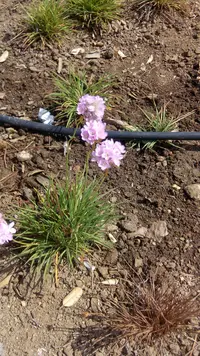
Use Gravel Mulch

Top-dress the planting area with a 1–2 cm layer of coarse grit or small gravel to keep the foliage base dry, limit weed competition, and maintain the sandy conditions this species prefers.

Rejuvenate By Division

Every 3–4 years, lift and gently divide older clumps in early spring, replanting only the firm, healthy outer sections to keep plants compact and flowering well.

Deadhead With Precision

Cut spent flower stems down to just above the foliage cushion rather than pulling them, which protects the dense rosette from mechanical damage and encourages repeat blooming.

Salt-Tolerant Placement

Take advantage of this species’ coastal tolerance by using it near walkways or driveways that receive moderate winter road salt, as a way to grow Armeria welwitschii where less tolerant perennials struggle.

Common Pests and Diseases

Leaf spot

This disease causes small brown, purple, or tan spots on leaves that can merge into larger dead patches, especially in humid or crowded clumps.

Solution

Remove and discard affected leaves, improve air circulation by thinning crowded plants, avoid overhead watering, and apply a copper or chlorothalonil-based fungicide if spotting continues during wet weather as part of broader Armeria welwitschii care instructions.

Crown rot

This disease leads to yellowing, wilting, and collapse of the tuft, often starting at the base where the foliage meets soggy soil.

Solution

Discard severely affected plants, ensure very sharp drainage with gritty soil, raise the crown slightly above surrounding soil, and reduce watering so the top few cm of soil dry fully between waterings, especially in cool or wet climates.

Rust

This disease produces orange, brown, or rust-colored pustules on the undersides of leaves, sometimes causing yellowing and premature leaf drop.

Solution

Remove and destroy infected leaves, space plants to increase airflow, keep foliage dry where possible, and if the problem recurs, use a sulfur or myclobutanil-based fungicide labeled for rust on ornamentals during the early stages of infection.

Aphids

These insects cluster on flower stems and young leaves, sucking sap and causing distortion, sticky honeydew, and sometimes sooty mold growth.

Solution

Spray colonies off with a firm stream of water, encourage or introduce natural predators such as lady beetles, and if needed treat with insecticidal soap or a light horticultural oil, repeating applications until populations are reduced.

Spider mites

This pest is more common in hot, dry conditions and causes fine speckling, dull foliage, and sometimes delicate webbing between leaves.

Solution

Increase humidity around the plant, hose down foliage to remove mites, and use insecticidal soap or a suitable miticide on both leaf surfaces, repeating weekly until new growth appears clean and undamaged.

Interesting Facts

Portuguese coastal endemic

This species occurs naturally only along a limited stretch of the Atlantic coast of Portugal, where it grows on rocky maritime cliffs and coastal outcrops constantly exposed to salt-laden winds.

Salt and wind tolerant

Its thick, grass-like leaves and compact cushion form help reduce water loss and leaf damage, allowing the plant to tolerate saline spray and strong winds better than many other coastal perennials.

Conservation concern status

Armeria welwitschii is considered at risk in parts of its native range due to habitat disturbance, coastal development, and trampling, so wild populations are monitored and sometimes protected in coastal conservation areas.

FAQs about Armeria welwitschii

This species usually has a main flush of blooms in late spring to early summer, then can rebloom lightly if spent flower stalks are removed. Deadheading directs energy into new buds instead of seed, extending the display.

Grow Healthy Plants with Botan Care

Keep your plants happy and healthy with plant identification, disease detection, and easy care guidance.

Botan plant care app — identify plants on mobile

Explore More Plants