Rhizome Division Timing
Lift and divide clumps every 3–4 years in early fall, replanting firm, white rhizomes at the same depth to maintain vigor and prevent overcrowding.

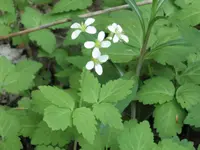
Crinkleroot, Cardamine diphylla, is a small woodland perennial in the mustard family grown mainly for its edible roots and early spring flowers. It forms low clumps of broad, paired leaves topped by clusters of small white blooms. In nature it occurs in rich, moist deciduous forests of eastern North America, often in cool, shaded sites. This plant spreads slowly by rhizomes and can form loose patches where conditions suit it. Crinkleroot is generally easy to maintain if soil stays consistently moist, organic, and lightly acidic to neutral. Shade tolerance and cold hardiness make it a good candidate for naturalistic woodland gardens, and understanding how to care for crinkleroot helps it become a long-lived understory plant.

Care Difficulty
Moderate Care

Light Preference
Partial Shade

Water Requirements
Keep Soil Moist

Temperature Preference
Cold Hardy

Hardiness Zone
3–8

Soil Texture
Loamy, Silty, Organic-rich

Soil pH
Acidic (5.5–6.5), Slightly acidic (6.5–7.0)

Soil Drainage
Moist but well-drained

Fertilization
Minimal (feed rarely)
Scan your plant to receive care tips personalized for your specific plant
Available on iOS and Android
Cardamine diphylla prefers woodland-style light that mimics its native forest-floor habitat.
Cardamine diphylla thrives in consistently moist, cool soil that never dries out completely.
This woodland perennial prefers cool to mild temperatures and tolerates cold winters when planted in the ground.
This woodland perennial prefers moderately moist air but usually adapts to typical home humidity.
This species thrives in moist, humus-rich soil that stays aerated and never waterlogged.
This species can be grown in containers if moisture and root space are managed carefully.
Cardamine diphylla is a woodland native that needs only light, occasional feeding in garden conditions.
Cardamine diphylla needs minimal pruning, mainly to keep planting areas tidy and support healthy foliage.
This woodland perennial is usually grown in the ground, so focus on dividing and transplanting clumps rather than frequent repotting.
Cardamine diphylla is most commonly propagated by division, with seed used mainly for naturalizing or larger projects.
This species is cold hardy in much of its range and usually needs little winter care in the ground.

Plant Health Check
Not sure what's wrong with your plant? Check your plant's health inside the app.
This woodland herb is a classic spring ephemeral, completing most of its growth and flowering before the tree canopy leafs out and then going largely dormant by early summer.
Its seeds bear small, fatty attachments called elaiosomes that attract ants, which carry the seeds to their nests and help spread the plant across the forest floor.
It spreads not only by seed but also via creeping rhizomes, allowing genetically identical shoots to form loose colonies in rich, deciduous forests.

The species is closely associated with older, relatively undisturbed hardwood forests in eastern North America, so botanists sometimes use its presence as one indicator of long-term forest continuity and high-quality woodland habitat.
This woodland perennial spreads slowly by rhizomes, forming loose clumps rather than dense mats. It can naturalize over time in moist, shaded beds but is not considered aggressive or difficult to manage in typical garden conditions.
Keep your plants happy and healthy with plant identification, disease detection, and easy care guidance.