Armeria pubigera Care

Armeria pubigera

About Armeria pubigera

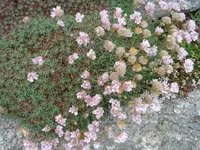
Armeria pubigera is a compact, evergreen perennial that forms dense, grassy clumps topped with small, round flower heads. It is closely related to other sea thrift species and has a similar tufted, cushion-like habit.

This plant is native to coastal or rocky habitats, where it tolerates wind, salt, and poor, shallow soils. Its slow, tidy growth and natural toughness make it relatively low-maintenance once established.

Armeria pubigera prefers sunny, open sites with well-drained, even gritty soil, and does not thrive in heavy, waterlogged ground. Gardeners who learn how to care for Armeria pubigera usually find it long lived and dependable in rock gardens, borders, and containers.

Main Plant Requirements

Care Difficulty

Moderate Care

Light Preference

Full Sun

Water Requirements

Low Water

Temperature Preference

Cold Hardy

Hardiness Zone

4–8

Soil Texture

Sandy, Loamy, Rocky

Soil pH

Acidic (5.5–6.5), Slightly acidic (6.5–7.0)

Soil Drainage

Well-drained

Fertilization

Minimal (feed rarely)

Get Personalized Care Plan

Scan your plant to receive care tips personalized for your specific plant

Available on iOS and Android

How to Care for the Armeria pubigera

This compact perennial thrives in bright conditions that mimic an open, coastal meadow.

  • Provide 6–8 hours of direct sun daily; morning and midday sun are ideal, with light afternoon shade in very hot regions.
  • Plant Armeria pubigera in an open site; it tolerates light partial shade, but flowering and foliage density drop if it receives under 4–5 hours of sun.
  • In summer, protect from reflected heat off walls or paving to prevent leaf scorch; in winter, choose a spot that still receives low-angle sun.

This species prefers slightly dry, very free-draining conditions rather than constant moisture.

  • Allow the top 3–5 cm of soil to dry between waterings; in most climates this means waiting until foliage looks firm but soil feels dry to the touch.
  • Use sharply drained, sandy or gritty soil so water runs through quickly; prolonged puddling or heavy clay greatly increases root rot risk in Armeria pubigera.
  • Reduce watering in cool or wet seasons and after flowering; pale, limp foliage with soft, blackened crowns suggests overwatering, while crisp, browning leaf tips signal underwatering.

This plant is naturally adapted to cool, maritime climates with moderate temperature swings.

  • Optimal growth occurs around 55–70°F (13–21°C), with best flowering in cool springs rather than hot summers.
  • Mature plants tolerate brief drops to about 10–15°F (-12–-9°C) if soil drains well; protect young plants from repeated freeze–thaw cycles that can heave roots.
  • In hotter climates, plants handle up to 85–90°F (29–32°C) if soil stays slightly dry and the site has light afternoon shade to limit heat stress.

This species prefers dry air and typical outdoor humidity, so humidity control is rarely needed.

This coastal perennial needs sharply drained, lean soil to prevent root and crown rot.

  • Use sandy or gritty loam with 30–50% coarse sand or fine gravel to keep the root zone open and fast-draining.
  • Aim for slightly acidic to neutral pH around 6.0–7.0, avoiding strongly alkaline mixes that can limit nutrient uptake.
  • Mix in a small amount of well-matured compost, but avoid rich, heavy organic blends that encourage lush, weak growth.
  • For containers, line the bottom with a thin layer of coarse grit to improve drainage and prevent the mix from clogging the holes.

This species suits container growing in sunny, exposed spots if drainage and root conditions are controlled carefully.

  • Choose a wide, shallow pot to match the plant’s fibrous root system and keep the crown slightly above the rim to shed water from the center.
  • Use a mineral-heavy mix with added grit, and raise the pot on feet so water clears the drainage holes quickly after rain or watering.
  • Select a stable, heavier pot material like ceramic or clay to prevent tipping in windy, exposed positions common to this species’ preferred sites.

This low-maintenance perennial prefers lean soil and only light feeding to support flowering.

  • Apply a light top-dressing of compost or well-rotted manure in early spring to enrich poor soils.
  • Use a balanced, diluted liquid fertilizer (for example 10-10-10 at 1/2 strength) once in early to mid spring if growth seems weak.
  • Avoid frequent or heavy feeding, which reduces flowering and can make Armeria pubigera leggy.
  • Stop fertilizing by late summer and do not feed in winter dormancy.

Light pruning helps maintain compact growth and continuous blooms.

  • Deadhead spent flower stalks throughout late spring and summer to extend blooming and keep plants tidy.
  • In late summer or early fall, trim back dead or damaged foliage with clean, sharp scissors or hand pruners.
  • Thin crowded rosettes lightly to improve air flow and preserve the mound-forming shape of Armeria pubigera.
  • Avoid cutting into the woody crown; focus on removing old flower stems and outer tired leaves.

This plant is usually grown in the ground, with infrequent need for repotting or transplanting.

  • Transplant in early spring or early fall, when temperatures are mild and soil is workable.
  • Look for signs such as clumps splitting apart, bare centers, or poor flowering as an indicator that division or relocation is needed.
  • Lift the clump carefully, keep root balls intact, and replant at the same depth in sharply drained soil.
  • Water in gently, then keep soil just slightly moist for 1–2 weeks to limit root stress while new roots establish.

Armeria pubigera is commonly propagated by division or seeds to renew plantings and maintain vigor.

  • Divide mature clumps in early spring, separating healthy rosettes with roots attached and replanting immediately.
  • Sow fresh seeds in late summer or early fall in gritty, well-drained mix, barely covering the seed.
  • Maintain cool conditions (55–65°F) and even, light moisture for germination, avoiding waterlogged soil.
  • Provide bright light and good air circulation for young plants, then harden off before planting into the garden.

This species is generally cold hardy and needs minimal winter attention in most temperate gardens.

  • Tolerates light to moderate frost when grown in well-drained soil that prevents waterlogging.
  • Apply a thin mulch layer of gravel or coarse sand around the crown to improve drainage, not to insulate heavily.
  • In very cold regions or exposed sites, move container plants into a sheltered, unheated space to avoid root freeze-thaw cycles.

Care Tips

Improve winter drainage

In cold, wet climates, mound the planting area 5–10 cm above surrounding soil or use a rock garden slope to prevent crown rot during winter.

Use gravel mulch

Apply a 1–2 cm layer of coarse grit or small gravel around the crown instead of organic mulch to keep the base dry and reduce rot risk while still limiting weeds.

Deadhead with care

Cut spent flower stalks back to the foliage cushion without damaging the leaf rosette, which encourages repeat blooming and maintains a tight, tidy mound.

Divide aging clumps

Every 3–4 years, lift and divide overcrowded cushions in early spring, replanting only firm outer sections so the plant stays compact, floriferous, and long-lived.

Salt-tolerance advantage

In coastal or roadside sites with light salt exposure, position plants where other perennials struggle, using their natural salt tolerance as part of an overall strategy for growing Armeria pubigera in challenging spots.

Common Pests and Diseases

Leaf spot

This disease causes small brown to dark purple spots on older leaves and can lead to patchy, unattractive foliage in dense mats of plants. Symptoms include slower growth when humidity stays high around the cushion of leaves.

Solution

Remove and dispose of affected leaves, thin crowded clumps to improve air movement, and avoid wetting the foliage when watering. If spotting continues in damp weather, apply a copper-based fungicide or chlorothalonil to the foliage, following label directions and allowing the crown to dry quickly after rain or irrigation.

Crown rot

This disease affects the tight cushion-like crown, causing browning and collapse of central leaves, often starting where water collects at the base. Symptoms include a soft, discolored crown with outer leaves sometimes remaining green for a short time.

Solution

Dig out and discard any plants with mushy crowns to prevent spread, and improve drainage with gritty soil or a raised bed before replanting. Water at soil level, keep the crown slightly elevated above surrounding soil, and avoid organic mulches that hold moisture around the base, which is essential when growing Armeria pubigera in wetter climates.

Aphids

These insects feed on young stems and flower stalks, causing distortion of new growth and sticky honeydew on leaves and nearby surfaces. This pest may attract ants and can promote sooty mold on the foliage.

Solution

Wash colonies off with a strong but controlled stream of water, and pinch off heavily infested flower stalks. If populations persist, use insecticidal soap or a light horticultural oil spray, applied in the early morning and repeated as needed while avoiding application during high heat or direct midday sun.

Spider mites

These pests occur during hot, dry periods, leading to fine webbing between leaves, dull or stippled foliage, and gradual thinning of the cushion. Symptoms include a general faded appearance of the plant rather than distinct spots.

Solution

Increase humidity around the plant by occasionally misting around, not into, the crown, and rinse foliage thoroughly with water to dislodge mites. For ongoing problems, apply insecticidal soap or a light horticultural oil, coating leaf undersides and repeating at 7–10 day intervals while monitoring for renewed webbing.

Powdery mildew

This disease appears as a white, powdery film on leaves and flower stalks, especially in crowded plantings with poor air flow. Symptoms include distorted new growth and premature leaf yellowing when the infection is heavy.

Solution

Improve spacing and airflow by dividing and replanting crowded clumps, remove and discard heavily affected leaves, and water at the base to keep foliage dry. If needed, use a sulfur-based or potassium bicarbonate fungicide labeled for powdery mildew, applied in dry weather and repeated according to label directions until new growth remains clean.

Interesting Facts

Endemic Portuguese coastal specialist

This species is naturally restricted to rocky Atlantic coasts of Portugal, where it grows in crevices and shallow, stony soils close to sea spray exposure.

Adapted to saline winds

Its compact tufted growth and narrow leaves help reduce water loss and tolerate salt-laden winds, allowing stable growth in harsh maritime conditions that damage many other perennials.

Distinct from common thrift

Although related to the widespread sea thrift Armeria maritima, this species differs in details of leaf hairiness and flower morphology, and is treated as a separate taxon by regional floras rather than just a subspecies.

FAQs about Armeria pubigera

This species forms small, slowly expanding clumps rather than running or self-seeding aggressively. Over several years it can create a low mat, but it normally stays well behaved and is easy to keep within bounds.

Grow Healthy Plants with Botan Care

Keep your plants happy and healthy with plant identification, disease detection, and easy care guidance.

Botan plant care app — identify plants on mobile

Explore More Plants