Staggered Planting
Establish small groups of plants 20–30 cm apart in several nearby spots with slightly different light and moisture so at least one patch will thrive if conditions shift year to year.

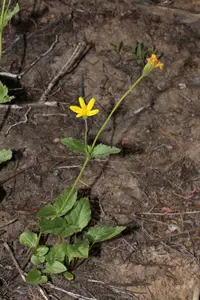
Broadleaf arnica (Arnica latifolia) is a herbaceous perennial wildflower in the aster family, valued for its bright yellow, daisy-like blooms. It typically forms loose clumps with upright stems and broad, softly hairy leaves. In nature it grows in cool, mountainous regions of western North America, often in open forests and moist meadows. The plant prefers cool summers, consistent moisture, and well-drained, humus-rich soil, which can be challenging to provide in hot or very dry climates. Gardeners who learn how to care for broadleaf arnica usually treat it as a specialty plant for woodland or alpine-style beds rather than a general landscape perennial.

Care Difficulty
Moderate Care

Light Preference
Partial Shade

Water Requirements
Regular Water

Temperature Preference
Cold Hardy

Hardiness Zone
3–8

Soil Texture
Loamy, Sandy, Organic-rich

Soil pH
Acidic (5.5–6.5), Slightly acidic (6.5–7.0)

Soil Drainage
Moist but well-drained

Fertilization
Minimal (feed rarely)
Scan your plant to receive care tips personalized for your specific plant
Available on iOS and Android
This mountain perennial prefers bright, cool light that mimics open woodland or subalpine meadow conditions.
This species prefers consistently moist but not waterlogged soil, especially during active growth and flowering.
This cool-climate perennial is adapted to mountain conditions and handles cold better than prolonged heat.
Humidity has little influence on Arnica latifolia growth when soil moisture and light are appropriate.
Arnica latifolia prefers cool, moist but sharply draining soil that mimics open mountain meadow conditions.
This species can be grown in containers if the pot is managed to stay cool, moist, and very well drained.
This mountain wildflower needs only light feeding in poor soils, so focus on modest support rather than heavy fertilization for broadleaf arnica.
Pruning Arnica latifolia is minimal and mainly supports plant health and tidy growth in garden settings.
This species is usually grown in the ground, so care focuses on careful transplanting rather than frequent repotting.
Arnica latifolia is most reliably propagated by division, with seed used when larger numbers are needed.
This cold-hardy native typically needs little winter care in the ground across most temperate climates.

Plant Health Check
Not sure what's wrong with your plant? Check your plant's health inside the app.
This species is closely tied to cool, moist subalpine and montane habitats, often forming bright patches in late-melting snowbeds and near seeps where soils stay damp into summer.
Compared with other North American arnica species, it has noticeably broader, opposite stem leaves with shallow teeth and usually a single flower head per stem, which helps botanists separate it from similar yellow composites in the field.
Its long blooming period in high-elevation meadows provides nectar and pollen for a range of pollinating insects, including solitary bees and syrphid flies, at a time when few other large daisy-like flowers are available.

Genetic and morphological studies indicate that this species forms part of a complex of high-elevation Arnica taxa in western North America, and consistent differences in leaf width, hairiness, and habitat preference have been important for clarifying its taxonomic status as distinct from close relatives such as Arnica cordifolia.
This species spreads slowly by creeping rhizomes and seed, forming loose clumps rather than dense mats. It usually is not aggressive in typical garden conditions, but in ideal, moist mountain-style beds it can gradually colonize open patches.
Keep your plants happy and healthy with plant identification, disease detection, and easy care guidance.