Encourage Bushy Form
Pinch out soft shoot tips in late spring and early summer to promote a denser, more compact mound that flowers more evenly and resists lodging in wind.

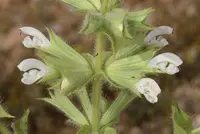
Spiny sage, Salvia spinosa, is a small, aromatic subshrub from dry, rocky regions of the eastern Mediterranean and parts of western Asia. It forms low, branching clumps with woody bases and many short, spiny side shoots.
The plant carries small, gray-green leaves and whorls of pale to violet flowers that attract bees and other pollinators. Its compact, drought-tolerant nature makes it suitable for dry gardens and containers.
Salvia spinosa prefers full sun, well-drained, rather poor soils, and low to moderate moisture, which keeps it relatively easy to manage. Understanding how to care for Spiny Sage mainly involves avoiding excess water and heavy, soggy substrates.

Care Difficulty
Easy Care

Light Preference
Full Sun

Water Requirements
Low Water

Temperature Preference
Warm Climate

Hardiness Zone
7–10

Soil Texture
Sandy, Loamy, Rocky

Soil pH
Slightly acidic (6.5–7.0), Slightly alkaline (7.0–7.5)

Soil Drainage
Well-drained

Fertilization
Minimal (feed rarely)
Scan your plant to receive care tips personalized for your specific plant
Available on iOS and Android
This sun-loving sage thrives in bright, open sites with plenty of direct light.
This drought-tolerant species prefers deep, infrequent watering in fast-draining soil.
This hardy Mediterranean subshrub prefers warm, dry conditions with cool winters.
Dry-adapted Salvia spinosa handles low humidity well and rarely needs special humidity care.
Salvia spinosa prefers lean, well-drained soil that dries between waterings.
This species is suitable for container growing, especially in dry, sunny sites.
Salvia spinosa is modest in nutrient demand but responds well to light feeding in active growth.
Pruning helps maintain compact growth and good flowering in Salvia spinosa.
This species is more often grown in the ground, but container plants or young clumps may need occasional transplanting.
Salvia spinosa can be propagated by seeds and softwood cuttings with basic equipment.
This sage is fairly cold hardy and usually needs only modest winter care in most temperate climates.

Plant Health Check
Not sure what's wrong with your plant? Check your plant's health inside the app.
Salvia spinosa is naturally distributed in arid and semi-arid regions from the eastern Mediterranean through the Middle East, where it is a characteristic shrub of rocky desert steppe and degraded rangelands rather than moist or forested habitats.
This species develops rigid, spine-tipped branches that help protect it from browsing animals in open, overgrazed landscapes, a structural adaptation typical of many drought-tolerant shrubs in dry pastoral areas.
Despite its spines, Salvia spinosa is documented as a useful fodder shrub in some Middle Eastern rangelands, where it provides palatable leaves and seasonal green biomass for livestock under harsh, dry conditions.

In parts of Jordan and surrounding regions, Salvia spinosa is considered a key component of traditional rangeland vegetation and is sometimes included in restoration and rehabilitation projects because it helps stabilize poor, stony soils while withstanding both drought and heavy grazing pressure.
Sparse or absent flowers usually result from insufficient light, low nutrients, or pruning at the wrong time. Ensure strong sun exposure, apply a balanced, low-nitrogen fertilizer, and avoid heavy trimming just before or during the main flowering period.
Keep your plants happy and healthy with plant identification, disease detection, and easy care guidance.