Encourage Deep Roots
During the first growing season, water less often but more deeply so the root system extends downward, which improves drought tolerance and long‑term stability when growing woollypod milkweed.

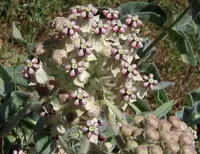
Asclepias eriocarpa, commonly called woollypod milkweed, is a perennial wildflower and host plant for monarch butterfly caterpillars. It forms upright stems with thick, softly hairy leaves and dense clusters of cream to pink flowers followed by fuzzy seed pods.
This species is native to dry slopes, chaparral, and open woodlands in California and parts of the western United States. It is adapted to hot, sunny, low-water conditions and goes dormant after flowering.
Once established, it is fairly tough but can be slow to germinate and resents frequent watering or rich, wet soil. Understanding how to care for woollypod milkweed starts with mimicking its dry, sunny native habitat.

Care Difficulty
Moderate Care

Light Preference
Full Sun

Water Requirements
Low Water

Temperature Preference
Cold Hardy

Hardiness Zone
7–10

Soil Texture
Sandy, Loamy, Rocky

Soil pH
Slightly acidic (6.5–7.0), Neutral (7.0)

Soil Drainage
Well-drained

Fertilization
Minimal (feed rarely)
Scan your plant to receive care tips personalized for your specific plant
Available on iOS and Android
This sun-loving perennial thrives in bright, open sites typical of dry western habitats.
This drought-adapted species prefers deep, infrequent watering once established.
This species is adapted to hot, dry summers and cool to cold winters in its native range.
This species tolerates dry air well and rarely needs special humidity management.
This species prefers dry, well‑drained, mineral soils that mimic its native slopes and open habitats.
This species can be grown in containers, but only when the pot closely matches its deep, drought‑adapted root system.
This drought-adapted native needs little feeding, but light nutrition can support flowering in poor soils.
Pruning Asclepias eriocarpa is minimal and mainly focuses on health, tidiness, and seed control.
This species dislikes root disturbance, so transplant only when necessary and handle the root system gently.
New Asclepias eriocarpa plants are most reliably raised from seed under the right seasonal conditions.
This species is cold hardy in much of its native range and usually needs little specific winter care in the ground.

Plant Health Check
Not sure what's wrong with your plant? Check your plant's health inside the app.
This species forms large, inflated seed pods that are densely covered with long, wool-like hairs, which help the pods blend with dry, pale summer vegetation in its native habitats.
It is adapted to Mediterranean-type climates of California and Baja California, going semi-dormant in the hottest, driest months while surviving on deep roots in rocky, well-drained soils.
Although not the most commonly planted milkweed, it serves as a natural larval host for monarch butterflies in arid and foothill regions where lusher milkweed species are absent.

The flowers of this species use a specialized pollination mechanism called pollinia transfer, where visiting insects can accidentally trap their legs in narrow slits of the flower and carry away waxy pollen masses, sometimes even losing a leg in the process.
This species attracts many native pollinators, especially monarch butterflies, other butterflies, and a range of native bees. Its nectar-rich flowers provide food, while the foliage serves as a larval host plant for monarch caterpillars.
Keep your plants happy and healthy with plant identification, disease detection, and easy care guidance.