Gravel Collar Zone
Create a 5–10 cm wide collar of coarse gravel or grit around the crown to keep leaf bases dry, reduce rot risk, and discourage competing weeds in this naturally xeric species.

-200x150.webp)
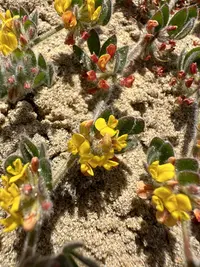
Astragalus longidentatus is a perennial herbaceous legume native to arid and semi-arid regions of the western United States. It typically forms low clumps with slender stems and many small, pinnate leaves.
The plant produces clusters of pea-like flowers, usually in subtle tones, followed by characteristic pod-like fruits. Its deep root system helps it tolerate drought and poor, rocky soils.
This species is adapted to full sun, open habitats, and well-drained, often calcareous or sandy substrates. It is not a typical ornamental, and understanding how to care for Astragalus longidentatus helps improve success when attempting cultivation.
Overall, it suits gardeners interested in native or dryland plantings who can mimic its natural, low-moisture conditions.

Care Difficulty
Moderate Care

Light Preference
Full Sun

Water Requirements
Low Water

Temperature Preference
Cool Climate

Hardiness Zone
4–8

Soil Texture
Sandy, Loamy, Rocky

Soil pH
Slightly acidic (6.5–7.0), Slightly alkaline (7.0–7.5)

Soil Drainage
Well-drained

Fertilization
Minimal (feed rarely)
Scan your plant to receive care tips personalized for your specific plant
Available on iOS and Android
This desert perennial needs abundant sun to form compact, healthy growth.
This species is adapted to dry conditions and is sensitive to excess moisture around the roots.
This plant is adapted to continental climates with cold winters and warm summers.
This xeric species tolerates low humidity and normally does not need special humidity management outdoors.
This species prefers very well-drained, mineral soils that stay on the dry side.
This plant is only moderately suitable for container growing, mainly in dry, open sites where the mix can drain extremely fast.
This drought-adapted legume usually needs little to no supplemental feeding in garden soils.
Astragalus longidentatus needs only light, corrective pruning to maintain a healthy, natural form.
Transplanting is done infrequently, as this deep-rooted species resents disturbance once established.
Propagation of Astragalus longidentatus is usually done from seed by growers with suitable dry conditions.
This species is generally cold hardy in its native range and needs little specialized winter care in the ground.

Plant Health Check
Not sure what's wrong with your plant? Check your plant's health inside the app.
This species is narrowly endemic to the canyonlands of the Uinta Basin region of Utah, where it grows on specific shale and sandstone-derived soils that many other plants cannot tolerate.
It often occurs in very open, sparsely vegetated sites with high clay or shale content, suggesting adaptations to low-nutrient, drought-prone substrates and intense solar exposure.
Because of its small, localized range and habitat vulnerability to energy development and surface disturbance, this species is tracked by conservation agencies as a rare regional endemic, and any effort to grow Astragalus longidentatus should consider its sensitive wild status.
This species is a perennial, returning each year from its root system after winter dormancy. Individual plants may live several years if kept dry, well-drained, and not crowded by taller, more competitive vegetation.
Keep your plants happy and healthy with plant identification, disease detection, and easy care guidance.