Roggeveld Astroloba Care (Astroloba bullulata)

Roggeveld Astroloba

About Roggeveld Astroloba

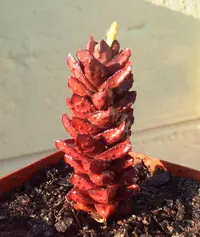
Roggeveld Astroloba (Astroloba bullulata) is a small, slow-growing succulent from the arid Roggeveld region of South Africa. It forms tight clusters of upright stems with glossy, tubercled leaves arranged in neat spirals. Leaves often show a subtle pattern and firm texture, giving the plant a sculptural, geometric look. This species stays compact, which makes it suitable for containers and small indoor displays. It comes from rocky slopes with strong light and very sharp drainage, so it dislikes excess moisture and heavy soils. With careful watering and bright conditions, it is relatively straightforward to care for Roggeveld Astroloba.

Main Plant Requirements

Care Difficulty

Moderate Care

Light Preference

Partial Sun

Water Requirements

Low Water

Temperature Preference

Warm Climate

Hardiness Zone

10–11

Soil Texture

Sandy, Loamy, Rocky

Soil pH

Slightly acidic (6.5–7.0), Neutral (7.0)

Soil Drainage

Well-drained

Fertilization

Minimal (feed rarely)

Get Personalized Care Plan

Scan your plant to receive care tips personalized for your specific plant

Available on iOS and Android

How to Care for the Roggeveld Astroloba

This compact succulent thrives in bright, dry habitats and needs strong light to keep its rosettes dense and compact.

  • Provide 4–6 hours of direct morning sun plus bright, filtered light for the rest of the day; light afternoon shade prevents scorching in hot climates.
  • Tolerates open sun in mild, dry regions, but in very hot summers move Roggeveld Astroloba to a spot with dappled afternoon shade to avoid leaf burn.
  • If stems elongate or leaves turn dull green, increase light exposure gradually over 1–2 weeks, especially in low-sun winter months.

This drought-adapted succulent prefers deep, infrequent watering that allows the roots to dry between soakings.

  • In active growth, water only when the top 3–5 cm of soil are completely dry; drench the root zone, then let excess drain away fully.
  • Use a very fast-draining, gritty mix and avoid any standing water, since Astroloba bullulata is prone to root rot in poorly aerated soils.
  • In cool seasons, reduce watering sharply; wrinkling, slightly soft leaves suggest mild thirst, while yellowing, mushy bases indicate overwatering.

This species comes from semi-arid South African regions and prefers warm, dry conditions with cool but not freezing nights.

  • Aim for 65–80°F (18–27°C) during active growth for steady development and compact rosettes.
  • Protect from frost; short drops to 32°F (0°C) may be survived if soil is bone dry, but long exposure below 35°F (2°C) risks tissue damage.
  • In hot spells above 90°F (32°C), provide light afternoon shade and good air movement to limit heat stress and sun scorch, especially in containers.

This succulent handles typical indoor humidity but benefits from drier air conditions similar to its native habitat.

  • Aim for 30–50% humidity; avoid prolonged conditions above 60% which can favor rot.
  • Plant tolerates dry heated-room air; prioritize airflow over added moisture.
  • Watch for soft, translucent leaves or blackened leaf bases as signs of excess humidity and improve ventilation instead of misting.

Astroloba bullulata prefers very fast-draining, mineral-rich soil that dries quickly between waterings.

  • Use a sandy, gritty mix with coarse particles that resist compaction, such as a cactus mix amended with extra inorganic material.
  • Combine roughly 30–40% cactus potting soil with 60–70% pumice, perlite, and coarse sand to increase drainage and aeration.
  • Keep pH slightly acidic to neutral (pH 6.0–7.2), avoiding strongly acidic or alkaline substrates to protect root health.
  • Avoid dense, peat-heavy or water-retentive mixes and never allow the soil to stay wet or muddy for more than 1–2 days.

This compact succulent is well suited to container growing for patios, windowsills, or small outdoor spaces.

  • Choose a relatively shallow pot that matches the modest root depth so the mix dries evenly after watering.
  • Select unglazed terracotta in exposed spots to help pull excess moisture from the root zone and add weight against wind.
  • Slightly overfill the pot with the gritty mix and keep the crown just above the rim so water easily runs off and does not pool around stems.

This drought-adapted succulent needs only light feeding to support steady growth in containers.

  • Use a balanced, low-nitrogen cactus or succulent fertilizer (for example 2-7-7) or very dilute general balanced NPK.
  • Apply at half strength every 4–6 weeks during the warm growing season if growth is active.
  • Do not feed in winter dormancy; cool, low-light conditions slow nutrient use and increase burn risk.
  • Roggeveld Astroloba in lean, fast-draining soil prefers underfeeding to heavy fertilization.

Astroloba bullulata needs minimal pruning, mainly to maintain a clean, compact clump.

  • Best timing is late spring or early summer, when active growth aids recovery.
  • Remove dead, shriveled, or diseased leaves at the base using clean, sharp scissors or snips.
  • Thin out badly crowded or crossing shoots to improve air flow and keep a tidy rosette shape.
  • Cut flower stalks back to the base after bloom if a neater look is desired.

This slow-growing succulent prefers tight pots and only occasional repotting.

  • Repot every 3–4 years or when roots circle the pot, drainage slows, or growth stalls.
  • Choose late spring for repotting Astroloba bullulata so warmer conditions support root recovery.
  • Use a shallow container with ample drainage and a gritty cactus mix to limit excess moisture.
  • Gently loosen outer roots, remove old compacted soil, and keep the plant slightly dry for 5–7 days after repotting to reduce stress.

Astroloba bullulata is most commonly propagated from offsets, with seeds used less often.

  • Detach healthy offsets in late spring or early summer when plants are actively growing.
  • Let cut or broken surfaces dry and callus for 2–3 days before planting to limit rot.
  • Plant offsets in a dry, gritty cactus mix, then water lightly once early roots form.
  • For seeds, sow on the surface of well-drained mix, keep slightly moist, and provide bright, indirect light and mild warmth.

This succulent prefers cool, dry winters and is only lightly frost tolerant.

  • Avoid hard frost; brief exposure near 30–32°F may be tolerated if soil is dry.
  • Move container plants indoors to a bright, cool room before repeated freezes.
  • Keep soil almost dry in winter to prevent root rot in cold conditions.
  • In mild climates, a gravel mulch around the crown improves drainage and buffers temperature swings.

Care Tips

Rock mulch layer

Add a 1–2 cm layer of coarse gravel or small rocks on the soil surface to keep the neck of the plant dry, reduce rot risk, and stabilize the shallow root system.

Gradual light shifts

When moving the plant between indoor and outdoor positions, increase light exposure over 7–10 days to prevent leaf scorch and maintain compact, firm leaf clusters.

Cool-season growth check

Monitor for new leaf stacking and slight swelling in cooler months, and use this period to adjust watering slightly upward and rotate the pot so the rosette develops evenly on all sides.

Clay pot advantage

Use an unglazed clay pot with side drainage holes to allow faster evaporation, which closely mimics its native rocky habitat and helps avoid prolonged root wetness.

Root health inspections

Every 2–3 years, unpot the plant at the start of its active season to inspect roots, trimming only clearly dead, dark, or mushy sections before replanting in fresh, sharply draining mix as part of structured Astroloba bullulata care.

Common Pests and Diseases

Aloe scale

This pest forms raised, hard, brown to gray bumps on leaves, often along ridges and near the leaf base, and slowly saps plant vigor. Symptoms include dull, yellowing foliage and sticky honeydew that can encourage sooty mold.

Solution

Isolate the plant, then gently scrape off visible scale with a cotton swab or soft brush and wipe leaves with a cloth dipped in 1–2% alcohol-diluted insecticidal soap. Improve light and airflow, avoid overfertilizing, and repeat treatments every 7–10 days until no new scale appears.

Aloe mite (eriophyid)

This pest causes distorted, swollen, or warty leaf tissue and abnormal growth at leaf tips or rosettes. Symptoms include corky, tumor-like galls that do not rub off and often stay localized but permanently deform affected areas.

Solution

Remove and discard all visibly deformed leaves or rosettes using sterilized tools, cutting back into healthy tissue. Disinfect tools between cuts, dispose of waste in the trash (not compost), and maintain strong light and drier conditions; in collections with recurring problems, a targeted miticide labeled for eriophyid mites may be needed according to label directions.

Mealybugs

These insects hide in leaf axils and between tight leaf ranks, appearing as white cottony clusters that exude sticky honeydew. This pest weakens the plant over time, causing stunted growth and occasional leaf yellowing or shriveling.

Solution

Flush the plant under a gentle but firm stream of water, then spot-treat remaining clusters with cotton swabs dipped in 70% isopropyl alcohol. Allow the soil to dry well between waterings, inspect hidden crevices regularly, and repeat alcohol or insecticidal soap treatments weekly until no new mealybugs are seen.

Leaf tip scorch

This disorder appears as dry, brown tips and edges on older leaves, often following intense sun, low humidity, or irregular watering. Symptoms include a sharp transition from healthy green to tan or brown tissue at the very tip or margins while the rest of the leaf looks firm.

Solution

Move the plant to bright, filtered light instead of harsh midday sun, and water only when the soil is completely dry, then soak thoroughly and drain. Trim only fully dead tips with clean scissors, avoid sudden changes in light or watering, and keep the plant in a gritty, fast-draining mix to balance moisture and aeration for Roggeveld Astroloba indoor care.

Fungal leaf spots

This disease causes small, dark, sunken spots or patches on leaves, sometimes with a yellow halo, usually after prolonged dampness or overhead watering. Symptoms include slow-spreading lesions that may coalesce and cause localized leaf collapse in extreme cases.

Solution

Remove affected leaves or cut away localized spots with a sterile blade and allow cut surfaces to dry quickly in good airflow. Switch to bottom watering, keep foliage dry, space plants so air can move between them, and if new spots continue to appear, use a sulfur or copper-based fungicide labeled for succulents, following all label precautions.

Interesting Facts

Bubble-like leaf sculpturing

The leaves develop small, raised, blister-like swellings on their surfaces, a diagnostic trait that inspired the name bullulata, from Latin for bubble or blister.

Restricted Roggeveld range

This species is naturally confined to the Roggeveld Plateau region of South Africa, where it grows on rocky slopes in arid succulent karoo vegetation.

Night-time carbon strategy

Like many arid-adapted succulents, it uses crassulacean acid metabolism (CAM), taking in carbon dioxide mainly at night to reduce water loss in its hot, dry habitat.

FAQs about Roggeveld Astroloba

Lack of flowers usually comes from insufficient light, using very high-nitrogen fertilizer, or stress from recent repotting or cold. Provide strong, indirect light, avoid overfeeding, and keep conditions stable. Patience is important, as it flowers modestly.

Grow Healthy Plants with Botan Care

Keep your plants happy and healthy with plant identification, disease detection, and easy care guidance.

Botan plant care app — identify plants on mobile

Explore More Plants