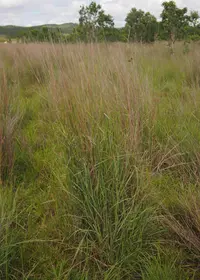
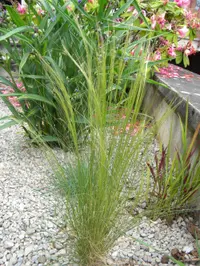
Mow High, Infrequently
Maintain a mowing height of 5–7 cm and avoid cutting more than 1/3 of the leaf blade at a time to support dense groundcover and reduce weed invasion.

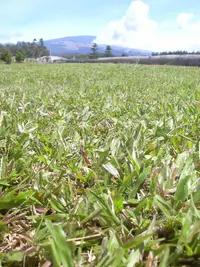
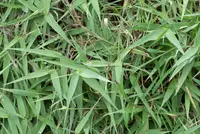
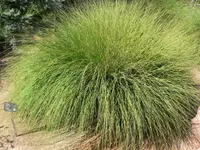
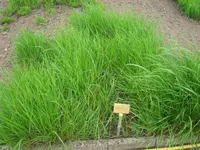
Broadleaf carpetgrass, Axonopus compressus, is a warm-season perennial grass commonly used as a low-maintenance lawn or groundcover in warm, humid regions. It forms a dense, coarse-textured mat with broad, flat leaves that naturally suppress many weeds.
This species is native to tropical and subtropical areas of the Americas and is now widely naturalized in parts of the southern United States and other warm climates. It tolerates poor, compacted soils and intermittent neglect, which makes it easier to manage than many finer lawn grasses.
It prefers consistent moisture, mildly acidic soils, and sun to light shade, but has only moderate wear tolerance. Understanding how to care for broadleaf carpetgrass helps keep it dense, green, and less prone to thinning or invasion by other species.

Care Difficulty
Easy Care

Light Preference
Full Sun

Water Requirements
Regular Water

Temperature Preference
Tropical / Frost Sensitive

Hardiness Zone
9–12

Soil Texture
Sandy, Loamy, Organic-rich

Soil pH
Acidic (5.5–6.5), Slightly acidic (6.5–7.0)

Soil Drainage
Moist but well-drained

Fertilization
Minimal (feed rarely)
Scan your plant to receive care tips personalized for your specific plant
Available on iOS and Android
This warm-season grass prefers consistent light but tolerates some shade in hot climates.
This species favors evenly moist conditions but reacts quickly to both drought and soggy soil.
This warm-season turf grass grows best in stable, mild-to-hot conditions without frost exposure.
This grass prefers moderately humid air but usually adapts well outdoors in most temperate and subtropical yards.
Soil for Axonopus compressus should be moisture-retentive yet still allow steady drainage.
This species can be grown in containers, mainly for groundcover displays or temporary lawn patches.
This warm-season grass needs only light feeding to stay healthy in most soils.
Axonopus compressus benefits mainly from height control and removal of weak growth rather than detailed pruning.
This grass is usually grown as a lawn or groundcover, so focus on transplanting plugs or sod rather than repotting.
This species is commonly multiplied by division of sod pieces or rooted runners.
In mild, frost-free climates, this warm-season grass needs little special winter care.

Plant Health Check
Not sure what's wrong with your plant? Check your plant's health inside the app.
This species grows with creeping, above-ground stems (stolons) that root at the nodes, forming a dense, low carpet that can outcompete many small weeds in warm, humid climates.
Compared with many warm-season turfgrasses, this grass maintains growth and green color under relatively low light, which is why it is often used under trees or between buildings in tropical and subtropical landscapes.
Axonopus compressus can persist and spread in strongly acidic, nutrient-poor soils where more demanding turf species decline, making it useful for stabilizing degraded or compacted ground in tropical regions.

This grass is considered an invasive or potentially invasive species in some non-native regions, because its vigorous stolon growth and dense mat formation allow it to spread into disturbed habitats and displace local ground flora when conditions are favorable.
This species spreads steadily by stolons, forming a dense mat over time. It is not as aggressive as some running grasses but can slowly overtake weaker turf in warm, moist areas if not edged or contained.
Keep your plants happy and healthy with plant identification, disease detection, and easy care guidance.