Espalier Training
Train young stems along horizontal wires or a trellis in late winter, gently tying new growth with soft garden ties to create a flat, well-ventilated wall of foliage that flowers more evenly.

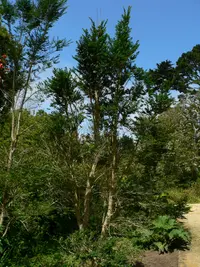
The vanilla tree, Azara microphylla, is an evergreen shrub or small tree from Chile and Argentina. It is often grown for its fine texture and unusual vanilla-scented winter flowers. The plant has many small, glossy leaves and a dense, twiggy habit that suits sheltered gardens or mild coastal areas. In suitable climates it forms a narrow, upright shape that works well as a screen or background shrub. It is generally moderate in difficulty and prefers mild temperatures, consistent moisture, and well-drained soil. Gardeners who care for Vanilla tree should pay attention to protection from harsh frost and very hot, dry wind.

Care Difficulty
Moderate Care

Light Preference
Partial Shade

Water Requirements
Moderate Water

Temperature Preference
Cool Climate

Hardiness Zone
7–10

Soil Texture
Loamy, Sandy, Organic-rich

Soil pH
Acidic (5.5–6.5), Slightly acidic (6.5–7.0)

Soil Drainage
Moist but well-drained

Fertilization
Minimal (feed rarely)
Scan your plant to receive care tips personalized for your specific plant
Available on iOS and Android
Azara microphylla prefers bright conditions with gentle sun exposure rather than harsh midday rays.
Watering for Azara microphylla focuses on steady soil moisture without long periods of saturation or drought.
This shrub performs best in mild, frost-sheltered climates with stable, cool to warm temperatures.
This shrub manages in 40–60% humidity but benefits from the higher end in centrally heated homes.
Azara microphylla prefers evenly moist, well-aerated, loamy soil that drains freely but does not dry out rapidly.
This species is suitable for container growing when the pot is chosen to support its eventual height and root spread.
Azara microphylla benefits from modest, consistent feeding rather than heavy fertilization.
Azara microphylla responds well to light, targeted pruning to maintain a natural, layered form.
This shrub is usually grown in the ground, so focus on careful transplanting rather than frequent repotting.
Azara microphylla is most often propagated from semi-ripe cuttings rather than seed.
This shrub is generally hardy in mild to cool climates but benefits from some winter protection in colder areas.

Plant Health Check
Not sure what's wrong with your plant? Check your plant's health inside the app.
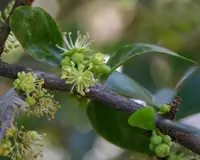
In late winter to early spring, its small yellow flowers release a strong vanilla or white chocolate-like fragrance, noticeable even at a distance on still days.
The flowers are most fragrant in the evening and at night, which suggests adaptation to attract nocturnal pollinators in its native South American range.
It has very small, glossy, evergreen leaves arranged densely along slender stems, giving the shrub a fine-textured, almost fern-like appearance even in mild winters.

The plant is native to temperate rainforests of Chile and Argentina, where it often grows at the forest edge or under taller trees, contributing scented winter bloom to woodland ecosystems when few other shrubs are flowering.
Growth is moderate. In good outdoor conditions, it typically adds about 20–40 cm of height per year, forming a small tree over several years. Growth slows in poor soil, dry sites, or exposed, windy positions.
Keep your plants happy and healthy with plant identification, disease detection, and easy care guidance.