mule-fat Care (Baccharis salicifolia)

mule-fat

About mule-fat

Mule-fat (Baccharis salicifolia) is a fast-growing, evergreen shrub native to riparian areas and dry washes in the southwestern United States and northern Mexico. It often forms dense thickets along streams, drainage channels, and disturbed sites.

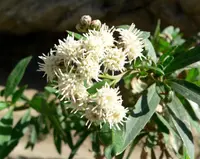
Plants have narrow, willow-like leaves and many small, fluffy white to cream flower clusters that attract a wide range of pollinators. Stems can become woody over time, giving the shrub a rugged, upright form.

This species is adapted to hot, dry climates yet naturally occurs where groundwater or seasonal moisture is available. Once established, it tolerates drought, poor soils, and pruning well, which makes it relatively easy to care for mule-fat in suitable climates.

Main Plant Requirements

Care Difficulty

Easy Care

Light Preference

Full Sun

Water Requirements

Regular Water

Temperature Preference

Warm Climate

Hardiness Zone

7–11

Soil Texture

Sandy, Loamy, Clay

Soil pH

Slightly acidic (6.5–7.0), Neutral (7.0)

Soil Drainage

Waterlogged tolerant

Fertilization

Minimal (feed rarely)

Get Personalized Care Plan

Scan your plant to receive care tips personalized for your specific plant

Available on iOS and Android

How to Care for the mule-fat

This riparian shrub prefers bright, open conditions to maintain dense, healthy growth.

  • Provide full sun for 6–8 hours daily; light afternoon shade is helpful in very hot, inland sites.
  • Mule-fat tolerates partial shade, but plants in less than 4–5 hours of direct sun become lanky and flower less.
  • In winter, low-angle sun is usually sufficient; in summer, avoid strong reflected heat from walls or pavement that can scorch foliage.

This species evolved along streams, so it prefers steady moisture but not stagnant, waterlogged soil.

  • Outdoors in the ground, water when the top 5–8 cm of soil feels dry, then soak the root zone deeply and let excess drain away.
  • During hot, dry periods, increase frequency; in cool or rainy seasons, reduce watering to avoid chronically saturated soil and root rot.
  • Wilting, crisp leaves, and poor new growth suggest underwatering, while yellowing leaves and soft stems indicate excess moisture around Baccharis salicifolia roots.

This hardy shrub tolerates a wide range of temperatures once established.

  • Optimal growth occurs around 65–85°F (18–29°C), typical of mild to warm coastal and inland valleys.
  • Established plants generally survive down to about 20–25°F (-6 to -4°C), though young shoots can be damaged by sudden hard frosts.
  • Heat tolerance is high up to about 100–105°F (38–41°C) if soil moisture is adequate; during heatwaves, drought stress increases leaf drop and dieback.

This species tolerates a wide humidity range and rarely needs special humidity management.

  • Typical outdoor humidity of 20–70% is acceptable, making caring for mule-fat simple in most climates.
  • Leaves may curl, brown at the tips, or shed early if exposed to prolonged hot, extremely dry wind.
  • In very arid sites, group plants near other shrubs or along water features to slightly raise local humidity and reduce stress.

This shrub prefers moist, well-drained, alluvial-type soils but adapts to several textures if drainage and aeration are adequate.

  • Use a sandy or loamy mix with 20–40% coarse sand plus fine gravel to mimic naturally alluvial conditions and prevent compaction.
  • In containers or amended beds, combine native soil with compost at up to 30% volume to increase structure without creating heavy, waterlogged conditions.
  • Aim for slightly acidic to neutral pH around 6.0–7.5, avoiding strongly alkaline or saline sites that reduce nutrient availability and vigor.
  • For poorly drained ground, build raised berms or plant on a mound to keep the crown above standing water while roots access deeper moisture.

This species can be grown in containers, but it needs careful attention to root space and stability as it matures.

  • Choose a deep, heavy pot to counteract the tall, woody top growth and reduce tipping in strong wind.
  • Select a mineral-heavy mix with added sand or fine gravel so the substrate drains quickly yet stays evenly moist after thorough watering.
  • Elevate the container slightly off the ground so drainage holes clear freely and excess irrigation water escapes without pooling under the base.

This tough native shrub usually needs little feeding in garden soil, but light fertilization can support container or stressed mule-fat.

  • Use a balanced slow-release fertilizer (for example 10-10-10) or thin layer of compost in early spring.
  • Feed once at the start of the growing season; repeat mid-summer only if growth is weak or soil is poor.
  • Apply at 1/2 label strength for container plants to avoid salt buildup and root burn.
  • Skip feeding in late fall and winter to allow natural dormancy and prevent soft, frost-tender growth.

Pruning helps maintain size, density, and flowering performance in Baccharis salicifolia.

  • Carry out main pruning in late winter or very early spring before strong new growth starts.
  • Remove dead, diseased, crossing, or wind-damaged stems back to healthy wood.
  • Thin crowded interior branches to improve air flow and light penetration, keeping a loose, natural outline.
  • Use clean, sharp bypass pruners and make angled cuts just above a bud or side branch.

This shrub is usually landscape-grown, so focus on careful transplanting rather than frequent repotting.

  • Transplant in late fall or early spring when temperatures are mild and rainfall helps establishment.
  • Look for slow growth, roots circling the container, or quick drying soil as signs a potted plant needs a larger container.
  • Move up only 1–2 pot sizes, using a fast-draining mix; loosen circling roots gently without tearing.
  • Water deeply after planting, then keep soil evenly moist for several weeks to limit transplant shock.

Baccharis salicifolia is commonly propagated from both seeds and semi-hardwood cuttings.

  • Collect semi-hardwood cuttings in late spring–summer; choose non-flowering shoots 8–12 cm long.
  • Strip lower leaves, dip the base in rooting hormone, and place in a moist, well-drained medium under bright, indirect light.
  • Keep humidity high and temperature around 68–75°F until roots form, usually in several weeks.
  • Sow seeds on the surface of sandy, free-draining soil in fall or early spring and keep lightly moist.

This species is moderately cold hardy in much of its range and usually needs minimal winter care.

  • Tolerates light frosts; foliage damage may occur with extended freezes below about 20°F.
  • In colder areas, apply a 5–8 cm mulch layer around the root zone, keeping it slightly away from stems.
  • For container plants in frost-prone climates, move pots to a sheltered, unheated but frost-free location.

Care Tips

Establish deep roots

During the first growing season, give the shrub an occasional long soak rather than frequent light watering to encourage deep roots that improve drought tolerance and bank stabilization.

Renewal pruning cycle

Every 3–4 years, remove 1/3 of the oldest stems at ground level in late winter to keep growth vigorous, reduce woodiness, and maintain a dense, wildlife-friendly form.

Bank erosion control

On slopes or along drainage swales, plant in staggered rows and lightly mulch between plants to create a living barrier that slows runoff and captures sediment.

Manage natural spread

Check surrounding areas at least once a year and pull or dig out unwanted seedlings before they develop woody stems to prevent uncontrolled thickets, especially near irrigation channels.

Support beneficial insects

When planning how to take care of mule-fat in a landscape, avoid broad-spectrum insecticides near its flowers so that the abundant nectar and pollen can support native pollinators and predatory insects that help control pests in the wider garden.

Common Pests and Diseases

Aphids

These insects cluster on young stems and flower buds, sucking sap and causing distorted new growth and sticky honeydew on foliage.

Solution

Spray stems and undersides of leaves with a strong stream of water to dislodge colonies, then use insecticidal soap or a light horticultural oil if populations remain high; encourage natural predators such as lady beetles by avoiding broad-spectrum insecticides.

Leaf beetles

These insects chew irregular holes in leaves and can skeletonize foliage on young or stressed plants in riparian areas.

Solution

Hand-pick beetles in the early morning, shake branches over a tray to remove them, and, if damage is significant, use a targeted spinosad or pyrethrin-based product applied in the evening to reduce impact on pollinators.

Powdery mildew

This disease produces a white, powdery coating on leaves, especially in crowded, shaded, or humid sites, which can lead to yellowing and reduced vigor.

Solution

Prune to improve air circulation, avoid overhead watering, remove heavily infected shoots, and, if needed, apply a sulfur or potassium bicarbonate fungicide labeled for ornamental shrubs according to Baccharis salicifolia care guidelines.

Rust

This disease causes orange to brown pustules on the undersides of leaves, sometimes with yellowing or premature leaf drop on plants growing in moist sites.

Solution

Remove and dispose of affected leaves, thin dense stands to improve airflow, avoid wetting foliage during irrigation, and apply a copper-based fungicide if the disease recurs over several seasons.

Scale insects

These pests appear as small, rounded or oval bumps on stems and older branches, producing honeydew and sometimes leading to sooty mold and branch dieback on stressed shrubs.

Solution

Prune and discard heavily infested twigs, gently scrape scale from stems or wipe with a cloth dipped in diluted horticultural oil, and treat remaining populations with a horticultural oil spray during the crawler stage, repeating as needed according to label directions.

Interesting Facts

Riparian habitat specialist

This shrub naturally occurs along streams, washes, and seeps in arid and semi-arid regions of the southwestern US and northern Mexico, where its dense root system helps stabilize banks and reduce erosion.

Key insect resource

Its numerous small, nectar-rich flowers provide an important food source for native bees, butterflies, and hoverflies, making it a significant support plant in desert and riparian pollinator networks.

Resprouting after disturbance

After cutting or fire, it often resprouts from its base and root crown, an adaptation that helps it persist in dynamic floodplains and frequently disturbed desert washes.

Botan icon

Did you know?

This species is dioecious, meaning individual plants are either male or female, so only female shrubs produce the fluffy, wind-dispersed seed heads that often give whole stands a pale, hazy appearance after flowering.

FAQs about mule-fat

This shrub is generally fast-growing, often adding 30–90 cm per year once established. In suitable conditions it can reach 2–4 m tall and 2–3 m wide, forming a dense, upright clump over time.

Grow Healthy Plants with Botan Care

Keep your plants happy and healthy with plant identification, disease detection, and easy care guidance.

Botan plant care app — identify plants on mobile

Explore More Plants