Boehmeria sieboldiana Care

About Boehmeria sieboldiana

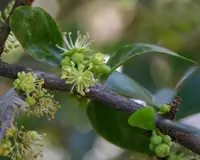
Boehmeria sieboldiana is a deciduous perennial from the nettle family, grown mainly for its textured foliage rather than flowers. It forms low, bushy clumps with softly serrated, sometimes slightly hairy leaves that give it a delicate, layered look.

In nature it occurs in woodland and shaded mountain areas in East Asia, often along moist slopes or stream edges. This background makes it generally adapted to partial shade and evenly moist, humus-rich soil.

Gardeners usually find it moderate in difficulty. It dislikes drying out completely and can sulk in hot, exposed spots, but stays reliable when its light and moisture needs are met. Understanding how to care for Boehmeria sieboldiana starts with replicating its cool, sheltered woodland conditions.

Main Plant Requirements

Care Difficulty

Moderate Care

Light Preference

Partial Shade

Water Requirements

Keep Soil Moist

Temperature Preference

Cool Climate

Hardiness Zone

6–9

Soil Texture

Loamy, Silty, Organic-rich

Soil pH

Acidic (5.5–6.5), Slightly acidic (6.5–7.0)

Soil Drainage

Moist but well-drained

Fertilization

Minimal (feed rarely)

Get Personalized Care Plan

Scan your plant to receive care tips personalized for your specific plant

Available on iOS and Android

How to Care for the Boehmeria sieboldiana

This woodland perennial prefers bright, gentle light rather than harsh, exposed sun.

  • Provide 3–5 hours of soft morning sun with light shade or dappled light for the rest of the day for Boehmeria sieboldiana.
  • Site the plant in partial shade, especially protected from strong midday and afternoon sun that can scorch leaves and dry soil quickly.
  • In hotter summers, increase shade or filtered light, while in cooler or northern climates allow a bit more morning sun to maintain compact growth.

This species needs steadily moist but not waterlogged soil for healthy growth.

  • Water when the top 2–3 cm of soil feels dry, aiming to keep the root zone evenly moist during active spring and summer growth.
  • Use loose, well-drained soil; persistent wetness, sour smell, or yellowing soft leaves indicate overwatering and poor aeration.
  • In cooler months, let the top 3–5 cm dry a little more between waterings; wilting, crisp leaf edges, and light soil color suggest underwatering.

This plant grows best in mild, temperate conditions without temperature extremes.

  • Aim for 60–77°F (16–25°C) during the growing season for steady foliage production and root activity.
  • The plant tolerates brief drops to about 25–28°F (-4 to -2°C) once established but new shoots and young plants are more frost-sensitive.
  • In hotter regions above 86°F (30°C), provide extra shade and consistent moisture, and avoid planting in heat-reflecting sites near walls or pavement.

This species prefers moderate air moisture and reacts if conditions become too dry.

  • Aim for 50–60% humidity to keep foliage turgid and growth steady.
  • Tolerates short spells of drier air but prolonged <40% humidity can cause leaf edge browning and finer leaves to crisp.
  • Increase humidity with a nearby pebble tray or grouped plants rather than misting, which dries quickly and can spot leaves.

Boehmeria sieboldiana performs best in evenly moist, well-aerated, humus-rich ground.

  • Use a loamy mix with 40–60% compost or leaf mold, plus perlite or coarse sand to keep the structure open.
  • Ensure fast drainage so water does not pool around roots; the soil should feel springy, not compacted, when pressed.
  • Target slightly acidic to neutral pH around 6.0–7.0, which supports nutrient uptake and healthy root function.
  • Avoid heavy clay, waterlogged sites, or soil crusting; incorporate coarse materials to improve aeration and prevent root suffocation.

This species adapts well to container culture when moisture and stability are managed carefully.

  • Choose a pot wide enough to accommodate its clumping habit so stems do not crowd and topple outward.
  • Select a heavier material such as ceramic when grown tall, as light plastic pots may tip in wind or with uneven growth.
  • Raise the container slightly on feet or blocks to let drainage holes clear quickly and prevent the base sitting in runoff.

This woodland perennial grows well in reasonably fertile soil and needs only light feeding in cultivation.

  • Use a balanced, diluted liquid fertilizer (such as 10-10-10 at 1/2 strength) for Boehmeria sieboldiana in active growth.
  • Feed every 4–6 weeks from mid-spring to late summer if soil is poor or plant is container-grown.
  • Favor compost or a thin layer of well-rotted organic matter around the root zone once per year.
  • Stop feeding in fall and winter to allow natural dormancy and prevent weak, soft growth.

Pruning is mainly used to keep Boehmeria sieboldiana tidy and to remove weak growth.

  • Carry out light pruning in late winter or early spring before strong new growth starts.
  • Remove dead, damaged, or crossing stems with clean, sharp hand pruners to limit disease entry.
  • Thin crowded shoots at the base to improve air flow and maintain an open, upright habit.
  • Lightly shorten overly long stems to control spread without cutting back into very old, woody tissue.

This species is usually grown in the ground, with transplanting needed only when clumps outgrow their space or soil becomes depleted.

  • Plan transplanting or repotting in early spring or early fall when temperatures are mild and soil is workable.
  • Look for crowded clumps, slow growth, or roots circling a container as signs Boehmeria sieboldiana needs more space.
  • Lift with a wide root ball, keep roots shaded and moist, and replant at the same depth in well-drained, humus-rich soil.
  • Water thoroughly after moving, then keep soil evenly moist for 2–3 weeks to limit transplant shock and support re-establishment.

This plant is most often propagated vegetatively to maintain desirable forms and speed establishment.

  • Divide mature clumps in early spring, cutting sections with several shoots and healthy roots, then replant promptly.
  • Take 8–10 cm softwood or semi-ripe stem cuttings in late spring to summer and root in a moist, free-draining mix.
  • Maintain high humidity and bright, indirect light around cuttings, avoiding strong sun and waterlogging.
  • Sow fresh seed in spring on the surface of a fine, moist seed mix and keep at 65–70°F for even germination.

In most temperate climates this hardy perennial needs only modest winter attention once established.

  • Boehmeria sieboldiana tolerates typical garden frosts where soil drainage is good.
  • After the first hard frost, allow stems to die back naturally, then cut them close to ground level.
  • Add a 5–8 cm layer of leaf mold or compost mulch over the root zone in late fall, keeping it off the crown.
  • In colder regions or containers, move pots into a sheltered, unheated space and keep soil just slightly moist.

Care Tips

Stolon control

Check for and cut back surface and shallow stolons in late spring to keep the clump dense and prevent the plant from spreading into nearby beds or paths.

Gentle wind exposure

Site plants where they receive light, regular air movement, which helps strengthen stems and reduce fungal problems without exposing them to strong, drying winds.

Leaf refresh rinse

Once or twice each growing season, hose down the foliage with a soft, wide spray to remove dust and mites, doing this early in the day so leaves dry before evening.

Targeted slug management

In early spring, place rough barriers such as grit or diatomaceous earth around young shoots and use iron phosphate slug pellets if needed to protect tender new growth.

Autumn clean-up

After the first hard frost, cut back spent stems close to the ground and remove old debris to reduce overwintering pests and diseases, supporting healthier regrowth next year when caring for Boehmeria sieboldiana.

Common Pests and Diseases

Leaf spot fungi

This disease causes small water-soaked or dark brown spots on leaves that may merge into larger patches, especially in warm, humid conditions. Symptoms include yellowing around the spots and premature leaf drop on older foliage.

Solution

Remove and discard affected leaves, avoid overhead watering, and improve air circulation around plants. If spotting continues in prolonged wet weather, apply a copper-based or chlorothalonil fungicide labeled for ornamental foliage, following directions carefully and keeping spray off nearby edible crops.

Rust

This disease produces orange to rust-brown powdery pustules on the undersides of leaves, with pale or yellow areas visible on the upper surface. Symptoms include gradual weakening of the plant if many leaves are affected over time.

Solution

Prune and discard heavily infected leaves to reduce spore spread and avoid wetting foliage when watering. In recurrent cases, use a sulfur or myclobutanil fungicide labeled for rust on ornamentals and space plants to maintain good airflow, which supports practical Boehmeria sieboldiana care instructions in damp climates.

Spider mites

These pests create fine webbing on stems and leaf undersides and cause tiny pale speckles that can make foliage look dull or bronzed. This pest thrives in hot, dry conditions, especially on container or indoor plants.

Solution

Shower plants with a firm stream of water to wash off mites and webbing, then increase humidity around the plant and avoid letting soil stay bone dry for extended periods. For persistent infestations, treat leaf undersides with insecticidal soap or neem oil every 5–7 days for several cycles, keeping plants out of direct hot sun after spraying.

Aphids

These insects cluster on young stems and leaf undersides, sucking sap and causing curling or distortion of new growth. This pest also leaves sticky honeydew that can attract sooty mold on leaves and nearby surfaces.

Solution

Wipe or rinse colonies off with water or a damp cloth, and pinch back heavily infested shoot tips. If numbers stay high, apply insecticidal soap or a light horticultural oil thoroughly to all tender growth, repeating after 7–10 days as needed and monitoring for new colonies during flushes of soft new leaves.

Root-knot nematodes

These microscopic worms damage roots, leading to stunted growth, reduced vigor, and frequent wilting despite adequate watering. Symptoms include poorly developed or knobbly roots with small galls when plants are lifted from infested ground beds.

Solution

Remove and discard severely affected plants and avoid replanting Boehmeria in the same soil for several years, using resistant or non-host species instead. Improve soil with organic matter, consider raised beds or containers with fresh, clean potting mix, and use solarization (covering moist soil with clear plastic in the hottest part of summer) to help reduce nematode populations outdoors.

Interesting Facts

Shade-tolerant forest nettle

This species is a non-stinging nettle native to shaded mountain forests in Japan and nearby regions, where it typically grows on moist slopes and stream banks under taller trees.

Textured, two-tone foliage

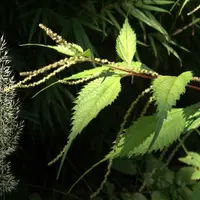
Its leaves are ovate with sharply toothed margins and a distinct texture, often showing a subtle two-tone effect where the paler underside contrasts with the darker green upper surface.

Important understory component

In its native range it forms part of the forest understory layer, contributing to ground cover, soil moisture retention, and habitat structure for small invertebrates.

FAQs about Boehmeria sieboldiana

Growth is generally moderate. In good garden conditions, stems lengthen steadily through the warm season, forming a low, bushy clump rather than racing upward. Consistent moisture, organic-rich soil, and partial shade support faster, denser development without excessive legginess.

Grow Healthy Plants with Botan Care

Keep your plants happy and healthy with plant identification, disease detection, and easy care guidance.

Botan plant care app — identify plants on mobile

Explore More Plants