swamp banksia Care (Banksia littoralis)

Also known as: swamp oak, river banksia, seaside banksia, western swamp banksia, pungura, boongura, gwangia
swamp banksia

About swamp banksia

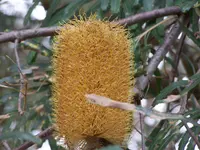
Swamp banksia, Banksia littoralis, is an evergreen tree or large shrub from southwestern Australia, often found along watercourses, wetlands, and seasonally damp areas. It has dark, deeply fissured bark, narrow serrated leaves, and striking cylindrical flower spikes that attract birds and pollinators.

In gardens it is usually grown as an ornamental feature tree, valued for its textured bark and long-lasting flowers. It tolerates poor, sandy soils but needs good drainage and does best in a sunny, open position.

Understanding how to care for swamp banksia starts with recognizing its preference for low-phosphorus soils, moderate moisture, and protection from prolonged waterlogging in heavier landscapes.

Main Plant Requirements

Care Difficulty

Moderate Care

Light Preference

Full Sun

Water Requirements

Regular Water

Temperature Preference

Warm Climate

Hardiness Zone

9–11

Soil Texture

Sandy, Loamy

Soil pH

Acidic (5.5–6.5), Slightly acidic (6.5–7.0)

Soil Drainage

Moist but well-drained

Fertilization

Minimal (feed rarely)

Get Personalized Care Plan

Scan your plant to receive care tips personalized for your specific plant

Available on iOS and Android

How to Care for the swamp banksia

This species prefers bright locations with plenty of direct sun but can handle light shade in hot regions.

  • Provide 6–8 hours of direct sun daily, ideally full morning sun with lighter exposure after 2–3 pm in hotter climates.
  • Allow light or open shade in the afternoon; swamp banksia tolerates dappled shade but becomes sparse and produces fewer flowers in deep shade.
  • Watch for stress: scorching or bleached foliage in very hot, reflective sites indicates too much sun, while long, weak shoots and small flower spikes suggest insufficient light.

This plant is naturally adapted to seasonally moist conditions but still needs good drainage.

  • Water when the top 3–5 cm of soil feel dry, giving a deep soak so moisture reaches the root zone but excess can drain away.
  • In winter, reduce watering once rainfall increases, while in hot, dry summers, increase frequency if new growth wilts or the soil dries within 1–2 days.
  • Avoid constantly saturated soil; signs of overwatering in Banksia littoralis include blackened new growth and a sour smell, while crisp leaf edges indicate underwatering.

This species prefers mild to warm conditions and tolerates brief cool spells once established.

  • Aim for active growth in 65–80°F (18–27°C); flowering and root development are strongest in this range with good air movement.
  • Protect plants when temperatures approach 28–30°F (-2 to -1°C); light frosts may burn new tips, while harder or repeated frosts can kill young plants.
  • Mature plants handle dry heat up to about 95°F (35°C) if soil moisture is stable, but prolonged heat with hot, dry winds increases leaf scorch risk.

Humidity is not a major factor for Banksia littoralis if soil drainage and light are appropriate.

Banksia littoralis prefers very free-draining, sandy soil with low nutrients and excellent aeration.

  • Use a mix of roughly 60–70% coarse sand, 20–30% sandy loam, and 10–20% fine gravel or scoria to keep roots oxygenated.
  • Aim for slightly acidic to neutral pH around 6.0–7.0; avoid strongly alkaline mixes that can limit nutrient uptake.
  • Do not add rich compost or manures, which raise phosphorus levels and increase the risk of root damage in this species.
  • If existing soil is heavy or clay-based, build a raised mound and incorporate coarse sand and fine gravel to improve drainage.

This species can be grown in containers long term only if the pot is prepared for its deep, spreading root system.

  • Choose a deep, heavy pot (e.g., thick-walled terracotta) to balance the plant’s eventual height and reduce tipping in wind.
  • Raise the pot on feet or blocks so drainage holes stay clear and water exits quickly after heavy rain or watering.
  • Fill the base with a coarse mineral layer (gravel or large scoria) to prevent the lower root zone from staying saturated.

Nutrient needs are low, so swamp banksia in the ground often grows well with minimal feeding in poor, sandy soils.

  • On young or container plants, use a very low-phosphorus, native-plant slow-release fertilizer once in early spring.
  • Choose a product labeled safe for Australian natives; excess phosphorus can damage proteoid roots that absorb nutrients efficiently.
  • Apply at 25–50% of the manufacturer’s recommended rate to avoid fertilizer burn and lush, weak growth.
  • Do not feed in winter or during heat or drought stress, when root uptake is reduced.

Pruning helps Banksia littoralis maintain a sturdy structure and supports safe flowering wood.

  • Carry out light structural pruning in late winter or immediately after flowering to avoid removing next season’s buds.
  • Remove dead, damaged, crossing, or inward-growing branches to improve airflow and reduce fungal problems.
  • Shorten overly long shoots to shape the crown, keeping cuts above healthy outward-facing buds.
  • Use clean, sharp bypass pruners or loppers, disinfecting blades between plants to limit disease spread.

Most plants are grown in the ground, so transplanting timing and method matter more than container repotting for Banksia littoralis.

  • Look for circling roots, water running straight through the pot, or slowed growth as signals a container plant needs a larger space.
  • Plan transplanting for late winter to early spring, when soil is moist and temperatures are mild, reducing shock.
  • Disturb roots as little as possible, keeping the root ball intact and planting at the same depth in free-draining, sandy soil.
  • Water in gently to settle soil, then keep evenly moist but not waterlogged for several weeks while new roots establish.

New Banksia littoralis plants are most reliably raised from seed rather than vegetative cuttings.

  • Collect ripe cones, then extract seeds after drying; some growers apply gentle heat to encourage release.
  • Sow fresh seed in late winter to early spring in a gritty, very free-draining mix with good airflow.
  • Maintain bright light, 60–70°F temperatures, and lightly moist, never sodden, substrate to reduce damping-off disease.
  • Use deep containers to accommodate the developing taproot and transplant carefully to avoid root damage.

Mature plants are moderately frost tolerant but young or container-grown Banksia littoralis benefit from some winter protection in colder regions.

  • In climates with light frost, apply a 5–8 cm mulch layer around the root zone, keeping it clear of the trunk.
  • In areas below about 25°F, grow in large containers and overwinter in a bright, cool, frost-free space.
  • Shelter young plants from cold, drying winds using windbreak cloth or nearby shrubs until established.

Care Tips

Fire-safe placement

Site plants away from buildings and dry fuel loads because mature shrubs can be flammable in wildfires, and keep a cleared mineral mulch or gravel strip around the base in fire-prone areas.

Salt and wind management

In coastal gardens expose plants gradually to sea winds by starting them in a slightly sheltered position, then pruning lightly on the windward side to encourage a dense, wind-tolerant framework.

Moisture table monitoring

In low-lying or riparian sites, install a simple observation tube or use a narrow soil auger seasonally to ensure the root zone stays damp but not permanently flooded below about 30–40 cm.

Root zone protection

Avoid deep cultivation, edging tools, or heavy foot traffic within the drip line, and instead control weeds by hand-pulling or applying a thin, low-phosphorus mulch to protect the shallow, sensitive proteoid roots.

Targeted dieback checks

Twice a year inspect for Phytophthora dieback by looking for sudden wilting or darkened stem bases, and if suspected, improve drainage, reduce overhead wetting, and use dedicated footbaths or tool disinfection between sites when caring for swamp banksia.

Common Pests and Diseases

Banksia boring moth

This pest is the larval stage of a moth that tunnels into older wood and larger branches, disrupting water and nutrient flow. Symptoms include frass (sawdust-like material), dieback of branches, and hollow stems.

Solution

Prune out and destroy affected branches back to healthy wood, sterilizing tools between cuts. Reduce plant stress with appropriate watering and avoid heavy nitrogen fertilization; in severe cases, consult a local arborist about timing and suitability of a targeted systemic insecticide for Banksia littoralis care.

Banksia leaf miner

These insects are small larvae that feed between the upper and lower leaf surfaces, creating winding or blotchy tunnels. Symptoms include distorted new growth and leaves with pale mines that may turn brown over time.

Solution

Remove and dispose of heavily mined leaves to break the life cycle and reduce reinfestation. Encourage natural predators, avoid broad-spectrum insecticides, and use a targeted horticultural oil or spinosad spray on young foliage if damage is extensive, applying in the cool part of the day to reduce leaf burn.

Phytophthora dieback

This disease is caused by soil-borne water moulds such as Phytophthora cinnamomi that attack fine roots, leading to poor water uptake. Symptoms include gradual wilting, leaf bronzing or dulling, tip dieback, and eventual plant decline, especially in poorly drained or frequently wet soils.

Solution

Improve drainage, avoid overwatering, and keep mulch and organic matter thin around the root zone to reduce prolonged soil saturation. Remove and dispose of severely affected plants and soil, restrict movement of contaminated soil on tools or shoes, and where permitted use a registered phosphite (phosphonate) trunk or foliar treatment as a protective measure under professional guidance.

Banksia canker

This disease is usually caused by canker-forming fungi that infect through wounds on stems and branches. Symptoms include sunken or cracked bark lesions, exudates (sap or gum), and dieback of shoots beyond the infected area.

Solution

Prune out infected wood at least 10–15 cm below visible lesions and destroy all removed material, sterilizing tools between each cut. Avoid wounding the trunk and main branches, improve airflow by maintaining proper spacing, and keep plants healthy with appropriate watering and minimal high-nitrogen fertilization to reduce susceptibility.

Scale insects

This pest group includes small, immobile insects that attach to stems and leaf midribs, sucking sap and excreting honeydew. Symptoms include sticky leaves, sooty mold growth on honeydew, leaf yellowing, and general decline in vigor on stressed or sheltered plants.

Solution

Physically remove light infestations by gently scraping or wiping scales off stems with a cloth dipped in soapy water. For heavier infestations, apply horticultural oil thoroughly to coat the insects, repeat as directed, and improve plant vigor by ensuring full sun exposure and avoiding overwatering, which can predispose banksias to scale problems.

Interesting Facts

Swamp-adapted trunk lignotubers

This species often develops a lignotuber, a woody swelling at the base of the stem, allowing it to resprout after fire and tolerate episodes of flooding in its swampy habitats.

Nocturnal mammal pollination

Its strongly scented, nectar-rich flower spikes open and produce most nectar at night, attracting nocturnal mammals such as possums that act as important pollinators.

Peat swamp specialist

In nature it is strongly associated with waterlogged peat and seasonally inundated swamps in southwestern Western Australia, where its roots tolerate low oxygen levels that would stress many other tree species.

Botan icon

Did you know?

Fossil evidence from southwestern Western Australia indicates that close relatives of this species have occupied similar swampy habitats for millions of years, suggesting a long evolutionary history of adaptation to waterlogged, nutrient-poor environments.

FAQs about swamp banksia

Poor flowering usually relates to age, pruning, or stress. Young plants may need several years to flower. Avoid heavy pruning of flowering wood, minimize root disturbance, and protect from severe drought or nutrient-poor conditions to support bud formation.

Grow Healthy Plants with Botan Care

Keep your plants happy and healthy with plant identification, disease detection, and easy care guidance.

Botan plant care app — identify plants on mobile

Explore More Plants