Encourage Bushy Habit
Pinch back soft shoot tips in spring and early summer to stimulate side branching and keep shrubs compact rather than leggy when growing camwood in containers or small spaces.

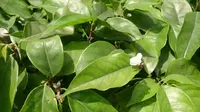
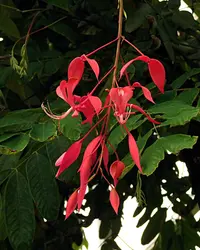
Camwood, Baphia nitida, is an evergreen shrub or small tree valued for its dense foliage and reddish heartwood used as a traditional dye. It typically has glossy, dark green leaves and a compact, branching habit that suits hedges, screens, or specimen planting in warm climates.
This species is native to West and Central African forests, where it grows in humid, lowland environments. In cultivation, it prefers warm conditions, bright light, and well-drained soil.
Its moderate growth rate, tolerance of pruning, and general toughness make it manageable for growers who understand how to care for camwood, though it is not suited to cold regions.

Care Difficulty
Moderate Care

Light Preference
Partial Shade

Water Requirements
Moderate Water

Temperature Preference
Tropical / Frost Sensitive

Hardiness Zone
10–11

Soil Texture
Sandy, Loamy, Organic-rich

Soil pH
Acidic (5.5–6.5), Slightly acidic (6.5–7.0)

Soil Drainage
Moist but well-drained

Fertilization
Minimal (feed rarely)
Scan your plant to receive care tips personalized for your specific plant
Available on iOS and Android
This species prefers bright, gentle light similar to a high forest edge.
Baphia nitida prefers evenly moist but never waterlogged soil.
This plant thrives in consistently warm, frost-free conditions.
This species prefers moderate indoor humidity and benefits from slightly increased moisture in dry homes.
Baphia nitida grows best in loose, airy, slightly acidic to neutral soil that drains quickly yet retains some moisture.
This shrub is suitable for container growing when provided with stable, well-drained pots.
Baphia nitida benefits from modest feeding when actively growing but does not require heavy fertilization for healthy development.
Baphia nitida benefits from light, targeted pruning to maintain a compact canopy and healthy framework.
This species is more often grown in the ground than in pots, so focus on careful transplanting rather than frequent repotting.
Baphia nitida is commonly propagated from semi-ripe cuttings and seeds under warm, controlled conditions.
Baphia nitida is frost sensitive and needs protection in climates where temperatures drop near or below freezing.

Plant Health Check
Not sure what's wrong with your plant? Check your plant's health inside the app.
This species produces a red heartwood that has been historically ground and used as a durable dye and body coloring across West and Central Africa, often referred to as camwood or African sandalwood.
As a member of the legume family, it forms symbioses with root bacteria that fix atmospheric nitrogen, which can enrich and stabilize nutrient levels in the surrounding soil.
In its native lowland rainforests, it often grows as a small to medium understory tree, adapted to filtered light beneath taller canopy species.

In some West African communities, finely ground heartwood of this species has long been incorporated into cosmetic preparations such as soaps and skin powders, valued for its stable red coloration rather than for fragrance.
Growth is moderate. Young plants typically add about 20–40 cm of height per year under warm, frost-free conditions, slowing as they mature. Rate depends on light, moisture, soil fertility, and space for root development.
Keep your plants happy and healthy with plant identification, disease detection, and easy care guidance.