Encourage Strong Framework
In the first 2–3 years, select 3–5 well-spaced primary branches and remove competing low or crossing shoots to build a stable framework that resists wind damage as the tree matures.

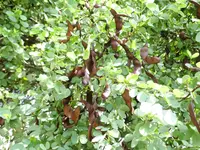
Bauhinia rufescens is a small deciduous tree or large shrub from arid regions of tropical Africa and the Sahel. It belongs to the legume family and can fix nitrogen in the soil. The plant has small, deeply bilobed leaves that look like tiny camel hoof prints and produces modest pale flowers followed by slender seed pods.
It naturally grows in hot, dry climates and tolerates drought, poor soils, and high heat, which can make it relatively resilient in suitable conditions. For gardeners who want to learn how to care for Bauhinia rufescens, it generally prefers full sun, well-drained soil, and only occasional supplemental water once established.

Care Difficulty
Easy Care

Light Preference
Full Sun

Water Requirements
Low Water

Temperature Preference
Warm Climate

Hardiness Zone
10–12

Soil Texture
Sandy, Loamy, Rocky

Soil pH
Slightly acidic (6.5–7.0), Slightly alkaline (7.0–7.5)

Soil Drainage
Well-drained

Fertilization
Minimal (feed rarely)
Scan your plant to receive care tips personalized for your specific plant
Available on iOS and Android
This drought-tolerant shrub prefers strong light and benefits from direct sun in most climates.
This species is adapted to arid conditions and performs best with deep but infrequent watering.
This shrub thrives in hot, dry climates and dislikes prolonged cold or frost.
This species is adapted to arid climates and usually does not require elevated humidity indoors or outdoors.
This drought-adapted tree prefers mineral, fast-draining soil that mimics its native semi-desert habitats.
This species can be grown in containers when given ample root space and excellent stability for its woody growth.
This drought-adapted tree needs only modest feeding in most garden soils.
Pruning is useful to maintain structure, clearance, and safety for this small tree.
This species is usually grown in the ground, so focus on careful transplanting rather than frequent repotting.
Propagation is most commonly done from seed, with semi-hardwood cuttings used less often.
This heat-adapted species is not reliably hardy in cold climates and needs protection from freezing conditions.

Plant Health Check
Not sure what's wrong with your plant? Check your plant's health inside the app.
This species is widely planted across the Sahel as a living fence and windbreak, because its dense, thorny branching helps reduce wind speed and trap drifting sand around fields and homesteads.
Its small, bilobed leaves are deeply notched so they look like two separate leaflets, a trait that inspired the genus name Bauhinia, honoring twin botanists Johann and Gaspard Bauhin.
In its native arid zones of West and Central Africa, the tree develops a deep, extensive root system that helps it survive on low and erratic rainfall by accessing moisture stored deeper in the soil.

In some Sahelian regions, livestock herders deliberately manage natural stands of this tree, lopping branches during the dry season so goats and camels can browse the protein-rich leaves and young twigs when other forage has already disappeared.
This species can be grown in large, deep containers, especially while young. Use a very free-draining, gritty mix and a pot with ample drainage holes. Root pruning and periodic repotting are needed to prevent it from becoming pot-bound.
Keep your plants happy and healthy with plant identification, disease detection, and easy care guidance.