Chinese Red Birch Care (Betula utilis subsp. albosinensis)

Chinese Red Birch

About Chinese Red Birch

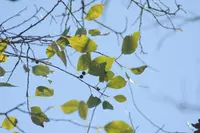
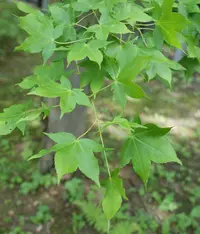
Chinese red birch, Betula utilis subsp. albosinensis, is a medium to large deciduous tree valued for its smooth peeling bark in shades of copper, pink, and cream. It forms a graceful, upright crown with fine branches and small, serrated green leaves that turn warm yellow in autumn.

This birch is native to western China, where it grows in cool, mountainous forests. In gardens it is chosen mainly for bark color and elegant winter structure, rather than flowers or fruit.

The tree is generally considered moderately easy to grow if given moist, well-drained soil and full sun to light shade. Understanding how to care for Chinese Red Birch starts with providing cool roots, consistent moisture, and protection from very hot, dry sites.

Main Plant Requirements

Care Difficulty

Moderate Care

Light Preference

Full Sun

Water Requirements

Regular Water

Temperature Preference

Cold Hardy

Hardiness Zone

4–8

Soil Texture

Loamy, Sandy, Clay

Soil pH

Acidic (5.5–6.5), Slightly acidic (6.5–7.0)

Soil Drainage

Moist but well-drained

Fertilization

Minimal (feed rarely)

Get Personalized Care Plan

Scan your plant to receive care tips personalized for your specific plant

Available on iOS and Android

How to Care for the Chinese Red Birch

This species prefers bright outdoor conditions with consistent daily sun exposure for strong growth and good bark color.

  • Provide 6–8 hours of direct sun daily, with morning sun and light afternoon shade ideal to protect bark and foliage in hotter regions.
  • Tolerates light to moderate partial shade, but too much shade leads to reduced growth, sparse branching, and less intense stem color in Chinese Red Birch.
  • In hot summers, offer dappled shade after midday; in cooler climates, full sun all day is suitable if soil moisture is maintained.

This tree prefers evenly moist, well-drained soil and reacts quickly to both drought and standing water.

  • Check soil to a depth of 5–8 cm; water only when this layer feels slightly dry, aiming for moist but not saturated conditions around the root zone.
  • Increase watering frequency in the first 2–3 years and during hot, dry spells; reduce in cool, wet seasons while still preventing the soil from fully drying out.
  • Ensure soil drains freely; yellowing leaves and dieback may indicate waterlogging, while crisp edges and drooping leaves suggest drought stress in Betula utilis subsp. albosinensis.

This hardy deciduous tree is adapted to cool to temperate climates with cold winters and mild to warm summers.

  • Active growth is strongest around 50–75°F (10–24°C), which supports healthy leaf development and good bark coloration.
  • Mature trees tolerate winter lows down to about -20°F (-29°C); young trees benefit from mulch to buffer rapid freeze–thaw cycles.
  • Heat tolerance is moderate; above 86°F (30°C) provide deep soil moisture and, where possible, light afternoon shade to limit stress and leaf scorch.

This birch tolerates a wide humidity range and usually does not need special humidity management outdoors.

  • Performs well at 30–60% humidity typical of most temperate outdoor sites.
  • Dry air combined with heat and drought may cause marginal leaf browning and early leaf drop.
  • In unusually dry, hot periods, light mulching and consistent soil moisture reduce apparent humidity stress.

This birch prefers cool, moist, well-structured mineral soil that drains freely yet retains consistent moisture.

  • Use a deep, loamy soil rich in organic matter, with a mix of garden loam, leaf mold or compost, and sharp sand for structure.
  • Aim for slightly acidic to neutral pH, roughly 5.5–7.0, which supports root health and micronutrient availability for Betula utilis subsp. albosinensis.
  • Improve drainage and aeration on heavy clay by incorporating coarse sand, fine gravel, and plenty of well-rotted compost through the top 30–40 cm.
  • Avoid compacted, waterlogged, or very shallow soils, as prolonged saturation or poor rooting depth leads to root decline and trunk dieback.

This species can be grown in containers for a limited period, mainly when young or in dwarf selections.

  • Choose a heavy, wide-based pot to counteract wind rock and the naturally upright, sometimes top-heavy crown.
  • Select a deep container that allows a strong taproot and lateral roots to develop without circling tightly.
  • Use a thick-walled or insulated container material in colder regions to moderate root temperature fluctuations around the fine feeder roots.

This birch grows well in average soil but benefits from light feeding during active growth.

  • Apply a balanced slow-release fertilizer (about 10-10-10) in early spring at half the label rate around the dripline.
  • Use a thin layer of compost over the root zone once a year to support soil structure and microbes.
  • Avoid additional fertilizer after midsummer so growth hardens before winter; do not feed dormant trees.
  • Chinese Red Birch in poor or sandy soils may need a light granular feed again in late spring if growth is weak.

Pruning Betula utilis subsp. albosinensis focuses on safety, structure, and showcasing the bark.

  • Carry out structural pruning in late summer to early autumn to reduce sap bleeding, avoiding late winter cuts.
  • Remove dead, diseased, crossing, or storm-damaged branches first, cutting back to the branch collar with clean, sharp tools.
  • Thin congested interior shoots lightly to improve airflow and light, maintaining a natural, upright crown shape.
  • Limit large cuts; instead, guide form when the tree is young to reduce stress and decay risk in mature specimens.

This birch is usually grown in the ground, so focus on careful transplanting rather than frequent repotting.

  • Transplant young trees in late autumn or early spring when soil is workable and the tree is dormant.
  • Look for signs such as roots circling a container, poor drainage, or slowed growth in nursery stock as cues to move it.
  • Dig a wide planting hole, loosen circling roots gently, and set the tree at the same depth as in the pot.
  • Water deeply after planting, mulch 5–8 cm away from the trunk, and keep soil evenly moist to limit transplant shock.

Propagation of this birch is possible but slower and more technical than many garden shrubs.

  • Sow stratified seed in late winter to early spring in a cold frame; cold stratification mimics natural winter conditions.
  • Use semi-ripe cuttings in mid to late summer with rooting hormone and high humidity, though success rates vary.
  • Grafting selected clones onto compatible Betula rootstocks is common in nurseries to maintain bark and form traits.
  • Provide bright, indirect light and consistently moist, well-drained medium to reduce stress while young plants establish.

This species is generally cold hardy in temperate climates and needs only modest winter care once established.

  • Young or newly planted trees benefit from a 5–8 cm mulch layer over the root zone to moderate freeze–thaw cycles.
  • Keep mulch slightly away from the trunk to prevent rot and rodent damage during wet, cold periods.
  • Container-grown specimens in colder zones should be moved to a sheltered, unheated area or insulated to prevent root freezing.

Care Tips

Trunk bark cleaning

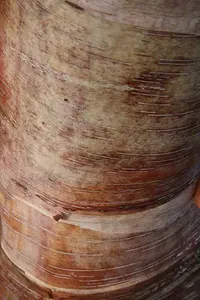
Lightly brush the trunk each late winter with a soft, dry brush to remove loose, peeling bark and lichens so the decorative red bark is more visible and air circulation around the trunk improves.

Thoughtful underplanting

Use shallow‑rooted groundcovers instead of lawn directly under the canopy to reduce competition for moisture and avoid repeated soil compaction from mowing when growing Chinese Red Birch.

Root zone protection

Create and maintain a wide mulch ring, at least to the drip line, and keep foot traffic, heavy pots, and equipment off this area to prevent root compaction and stress in later years.

Summer heat mitigation

In regions with hot summers, provide temporary shade cloth on the west side or use nearby taller shrubs as a living screen to reduce leaf scorch and bark overheating during heat waves.

Snow and ice management

After heavy snow or ice, gently knock accumulation off flexible young branches with a soft broom from below to reduce the risk of splitting or tearing at branch unions.

Common Pests and Diseases

Bronze birch borer

This pest is a wood-boring beetle whose larvae tunnel under the bark, causing canopy thinning, dieback, and eventual branch death, especially on stressed trees.

Solution

Promote vigor by watering during dry spells and mulching the root zone, avoid trunk injury, and prune out and destroy heavily infested branches. In high-risk areas, consider a certified arborist to apply systemic insecticides timed to adult emergence, and avoid planting new trees in hot, dry, exposed sites where borers thrive.

Birch leafminer

These insects are sawfly larvae that feed between the upper and lower leaf surfaces, creating pale, blotchy mines that can make the canopy appear scorched.

Solution

Rake and dispose of fallen leaves to reduce overwintering pupae and encourage natural predators by avoiding broad-spectrum insect sprays. On small trees, pinch or prune off leaves with early mines, and in recurring infestations consider targeted systemic treatments in early spring under guidance from a tree-care professional.

Aphids

These insects cluster on young shoots and leaf undersides, sucking sap and causing leaf curling, distortion, and sticky honeydew that can lead to sooty mold.

Solution

Spray colonies off with a strong stream of water and encourage beneficial insects such as lady beetles by minimizing broad-spectrum insecticides. For persistent outbreaks, use horticultural soap or neem oil, coating leaf undersides and repeating as needed while avoiding application in high heat above 85°F.

Leaf spot

This disease typically presents as brown or black spots on leaves, sometimes with yellow halos, leading to premature leaf drop in wet seasons.

Solution

Improve airflow by thinning nearby vegetation, avoid overhead watering, and promptly remove and discard fallen leaves to lower inoculum levels. In severe, repeated cases, a copper-based or other labeled fungicide applied at bud break and repeated according to label directions can help protect new foliage as part of broader Betula utilis subsp. albosinensis care instructions.

Canker diseases

These diseases are caused by various fungi that infect stressed bark and branches, forming sunken or discolored areas that can girdle and kill limbs.

Solution

Prune out affected branches several inches below visible symptoms during dry weather, disinfecting tools between cuts with alcohol or a 10% bleach solution. Reduce stress by watering during drought, avoiding trunk wounds, and preventing mulch from touching the bark to lower the chance of new infections.

Interesting Facts

Cinnamon-peeling bark

Mature trees develop rich copper to cinnamon-red bark that peels naturally in thin, curling sheets, a feature especially pronounced in many ornamental cultivars of this subspecies compared with other birches.

High-mountain native

This subspecies originates from high-altitude forests in western China, where it grows on cool, moist mountain slopes, which helps explain its preference for cooler summer conditions in cultivation.

Subspecies with many cultivars

It is the parent of several popular landscape cultivars such as 'Fascination' and 'China Rose', which were selected specifically for their enhanced bark color and ornamental winter interest.

Botan icon

Did you know?

Herbarium and field studies show that this subspecies forms natural hybrid zones with other Himalayan birches, and these hybrid populations have been important for understanding how birch species diversify and adapt along mountain elevation gradients.

FAQs about Chinese Red Birch

This species is generally moderate-growing, adding about 30–45 cm per year once established. Growth is quicker in deep, moist but well-drained soil with good light and shelter, and slower in compacted, dry, or exposed sites.

Grow Healthy Plants with Botan Care

Keep your plants happy and healthy with plant identification, disease detection, and easy care guidance.

Botan plant care app — identify plants on mobile

Explore More Plants