Yellow Fairy Cups Care (Bisporella citrina)

Also known as: Lemon discos
Yellow Fairy Cups

About Yellow Fairy Cups

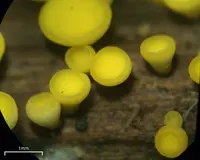
Yellow fairy cups, Bisporella citrina, is a small cup fungus rather than a traditional leafy plant. It forms bright yellow, pinhead-sized discs clustered on damp, decaying wood.

This species is widespread in temperate forests, often appearing on fallen branches, logs, and old stumps after wet weather. It plays an important role in breaking down dead wood and recycling nutrients.

Because it is a specialist decomposer requiring consistently moist, rotting wood and high humidity, it is difficult to maintain indoors or in typical pot culture. For those who want to learn how to care for Yellow Fairy Cups, it is usually best treated as an outdoor curiosity rather than a standard houseplant.

Main Plant Requirements

Care Difficulty

Moderate Care

Light Preference

Partial Shade

Water Requirements

Keep Soil Moist

Temperature Preference

Cool Climate

Hardiness Zone

Unknown

Soil Texture

Loamy, Organic-rich

Soil pH

Acidic (5.5–6.5)

Soil Drainage

Moist but well-drained

Fertilization

Minimal (feed rarely)

Get Personalized Care Plan

Scan your plant to receive care tips personalized for your specific plant

Available on iOS and Android

How to Care for the Yellow Fairy Cups

This small woodland fungus prefers soft, indirect light similar to a shaded forest floor.

  • Provide dappled light or bright shade with only 1–2 hours of gentle morning sun; avoid strong midday or afternoon sun that can dry the substrate too fast.
  • Thrives under deciduous trees or on shaded logs where it receives filtered light for 4–6 hours, mimicking natural canopy cover.
  • In summer, increase shade to prevent desiccation, while in late fall slightly more open light can help Yellow Fairy Cups fruit before frosts arrive.

This species develops on consistently damp, decaying wood or very moist leaf litter.

  • Aim for a substrate that stays evenly moist, never fully drying; the surface should feel cool and slightly spongy, not dusty or cracked.
  • Allow only the top 1–2 cm of surrounding material to start losing surface sheen before rewetting, avoiding standing water or pooling around growths.
  • If Bisporella citrina shrivels, pales, or stops producing cups, the substrate is likely too dry; sour odor or slimy patches indicate chronic over-saturation.

This fungus prefers cool to mild conditions typical of shaded forest floors.

  • Optimal development occurs around 50–65°F (10–18°C), often during cool, moist periods of autumn or early spring.
  • It tolerates roughly 40–70°F (4–21°C) but fruiting declines in warmer, drier spells and during hard freezes.
  • Fruiting bodies are sensitive to repeated frosts below 32°F (0°C) and to hot, dry weather above 77°F (25°C), so stable, cool habitats favor consistent appearance.

This fungus prefers consistently moist, humid conditions similar to a damp forest floor.

  • Aim for 70–90% humidity, such as in shaded, damp garden corners or near decaying wood piles.
  • It declines quickly in prolonged dry air, shrinking and fading when substrates dry out.
  • Signs of low humidity stress include cups shriveling, losing bright color, and failing to produce new fruiting bodies.
  • Increase humidity by keeping its woody substrate evenly moist and partially sheltered from direct wind and sun.

Bisporella citrina develops on decaying wood rather than in standard garden soil.

  • Provide well-rotted hardwood pieces or bark-rich woody debris with a soft, sponge-like texture that holds moisture but still drains.
  • Avoid compacted mineral soils, heavy clay, or fully submerged, stagnant conditions that limit oxygen around the wood surface.
  • Maintain slightly acidic to neutral conditions around the substrate, roughly pH 5.5–7, by using leaf litter and untreated bark mulch.
  • Improve aeration and drainage by elevating wood on coarse gravel or slats so excess water can drain while surfaces remain evenly damp.

This species can be grown in containers by cultivating it on decaying wood kept in a moist, shaded pot.

  • Use a wide, shallow container so the wood pieces sit stably and receive even surface moisture without deep waterlogging.
  • Line the bottom with coarse gravel to allow fast runoff when watering, preventing persistent standing water around the wood.
  • Choose a heavier pot material, such as ceramic, to keep the container stable when the wood becomes waterlogged and more top-heavy.

This tiny saprophytic fungus grows on decaying wood and typically needs no fertilization in garden or natural settings.

Pruning is not required for this minute cup fungus, as it completes its life cycle naturally on dead wood.

Transplanting Yellow Fairy Cups is rarely appropriate, as this fungus is tightly linked to decaying hardwood substrates outdoors.

  • If moving wood with colonies, do so in cool, moist weather to reduce drying stress.
  • Keep bark or logs intact; avoid scraping or cutting the fungal tissue on the surface.
  • Place the wood in a shaded, humid spot with similar exposure and moisture to the original site.
  • Do not expect consistent establishment; many colonies decline once the original wood fully decomposes.

Intentional propagation of Bisporella citrina is uncommon and unreliable outside research or specialized culture conditions.

This species is naturally cold hardy in temperate climates and needs no special winter care in gardens or wild habitats.

Care Tips

Use Decaying Substrate

Establish small culture trays with well-rotted hardwood sticks or bark chips kept evenly moist, as this mimics the natural habitat and makes it easier to observe and manage the fungus in a controlled area.

Avoid Chemical Treatments

Do not apply fungicides, sulfur dusts, or strong disinfectants near colonies, since these products can suppress or kill fruiting bodies and the underlying mycelium.

Promote Gentle Airflow

Maintain light, indirect airflow around the growing site to reduce stagnant, dripping moisture that can physically damage the delicate cups while still keeping the substrate damp.

Manage Competing Fungi

Periodically remove heavily moldy wood pieces and replace them with fresh, well-rotted hardwood to limit aggressive competitor fungi that can overrun Yellow Fairy Cups.

Seasonal Moisture Mimicry

Increase fine misting or gentle watering during cool, damp seasons and reduce it slightly in warmer, drier periods to reflect natural forest-floor conditions and support consistent Bisporella citrina care.

Common Pests and Diseases

wood-decay fungi

This disease reflects competition from other saprotrophic fungi that colonize and digest the same dead wood substrate, often outgrowing or replacing Yellow Fairy Cups. Symptoms include shrinking or disappearance of yellow cups as tougher crusts, brackets, or dark molds take over the wood surface.

Solution

Manage by adjusting moisture and exposure of the substrate: remove heavily colonized wood, provide fresh, moderately decayed hardwood, and avoid constant waterlogging that favors aggressive wood-decay competitors. Maintaining varied pieces of wood and moderate shade increases the chance that Bisporella citrina can re-establish on new material.

mold overgrowth

This disease occurs when fast-growing molds or sooty fungi spread as a dark or fuzzy film across the cups and surrounding wood in persistently wet, stagnant air. Symptoms include dulled color, deformation, or collapse of the tiny cups under a gray, black, or whitish coating.

Solution

Improve airflow and reduce continuous saturation by allowing the substrate to dry slightly between waterings or misting events. Remove and discard heavily overgrown sections of wood, and if possible relocate the habitat to a spot with gentle air movement and indirect moisture rather than constant splash.

springtails

These insects are tiny, moisture-loving arthropods that may graze on fungal tissue when populations are very high, especially on constantly damp wood or in closed terraria. Symptoms include pitted or nibbled cup surfaces and visible swarms of small jumping insects when the substrate is disturbed.

Solution

Reduce excessive moisture and organic debris to bring populations down naturally, and open enclosed containers periodically to improve ventilation. If damage is persistent, gently rinse the substrate with dechlorinated water and introduce more ventilation; avoid insecticidal sprays, which disrupt the whole micro-ecosystem needed for growing Yellow Fairy Cups.

fungus gnats

These insects may breed in very wet, organic-rich substrates used to maintain dead wood and indirectly stress the fungal colony through constant disturbance and altered moisture balance. Symptoms include small black flies hovering near the substrate surface and larvae in the top layer of moist debris or soil around the wood.

Solution

Allow the surface around the wood to dry slightly between waterings, remove excess decaying plant matter, and use fine mesh or sticky traps to reduce adult populations. In container setups, a thin top layer of coarse sand or small gravel can discourage larvae while still keeping the wood itself evenly moist.

Interesting Facts

Tiny cup anatomy

This species forms minute, bright yellow disc- to cup-shaped fruiting bodies, usually only 0.5–2 mm across, with a smooth, glossy upper surface that is actually the exposed spore-producing layer (hymenium).

Bispore spore production

Unlike many ascomycete fungi that typically produce 8 spores per ascus, this fungus characteristically forms only 2 large spores per ascus, which is the basis for its genus name Bisporella (two-spored).

Wood decay specialist

The fungus commonly colonizes well-rotted, bark-free hardwood such as fallen branches and logs, forming dense groups that contribute to the final stages of decomposition and nutrient recycling in temperate forests.

Botan icon

Did you know?

Molecular studies have shown that this visually simple yellow cup fungus is part of a diverse lineage within the Helotiales, and historical taxonomy has shifted it between several genera (including Peziza, Calycina, and Hymenoscyphus) before DNA evidence helped clarify its placement in Bisporella.

FAQs about Yellow Fairy Cups

This fungus performs best outdoors on decaying, damp hardwood or fallen branches. It relies on natural moisture cycles and cool, shaded conditions. Indoors, stable dry air and lack of wood substrate make long‑term cultivation unreliable.

Grow Healthy Plants with Botan Care

Keep your plants happy and healthy with plant identification, disease detection, and easy care guidance.

Botan plant care app — identify plants on mobile

Explore More Plants