American Brown Fomitopsis Care (Fomitopsis ochracea)

American Brown Fomitopsis

About American Brown Fomitopsis

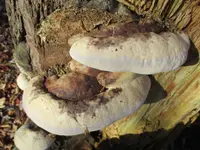
American Brown Fomitopsis (Fomitopsis ochracea) is a perennial bracket fungus, not a leafy houseplant. It forms hard, shelf-like structures on dead or living conifer wood, often layered and brown with lighter edges. The surface is woody and tough rather than soft or fleshy. In nature it occurs mainly in northern temperate forests, especially across North America on spruce, fir, and other conifers. This species is adapted to cool, forested conditions and decaying wood, so it is not simple to cultivate indoors or in gardens. Anyone wanting to learn how to care for American Brown Fomitopsis should understand that it requires stable moisture, shaded conditions, and suitable dead wood rather than regular potting soil.

Main Plant Requirements

Care Difficulty

Moderate Care

Light Preference

Shade

Water Requirements

Keep Soil Moist

Temperature Preference

Cool Climate

Hardiness Zone

Unknown

Soil Texture

Organic-rich, Peaty, Loamy

Soil pH

Strongly acidic (4.5–5.5), Acidic (5.5–6.5)

Soil Drainage

Moist but well-drained

Fertilization

Minimal (feed rarely)

Get Personalized Care Plan

Scan your plant to receive care tips personalized for your specific plant

Available on iOS and Android

How to Care for the American Brown Fomitopsis

This wood-decay fungus is adapted to forest light conditions rather than direct open-sun exposure.

  • Provide dappled or filtered light similar to a mixed woodland, with 2–4 hours of gentle morning sun and bright shade the rest of the day.
  • Avoid strong midday and afternoon sun; prolonged direct exposure can dry host wood, slow Fomitopsis ochracea colonization, and crack fruiting bodies.
  • Site on the shaded side of logs or stumps; in summer increase shade cover, while in winter low-angle sun through trees is usually acceptable.

This bracket fungus depends on consistent ambient moisture and suitable wood hydration rather than direct surface watering.

  • Use well-drained but moisture-retentive woody substrate; host logs should feel firm and slightly damp, not saturated or spongy when pressed.
  • Allow outer 2–5 cm of surrounding soil or forest litter to dry slightly between rains or misting; persistent pooling water promotes competing molds and decay imbalance.
  • Reduce supplemental misting in cool, wet seasons and increase light misting or local humidity during hot, dry spells to limit cracking or premature hardening of fruiting bodies.

This species is adapted to cool-temperate forest climates with broad seasonal temperature swings.

  • Optimal activity usually occurs around 50–70°F (10–21°C), with steady colonization of host wood and stable fruiting body development.
  • The fungus often survives down to about 5–10°F (-15 to -12°C) when embedded in wood, but repeated freeze–thaw may damage exposed tissue.
  • Growth slows above 80°F (27°C); extended heat over 86°F (30°C) combined with low humidity can dry and fissure brackets, so shaded, humid microsites are beneficial in midsummer.

This wood-decaying bracket fungus prefers consistently moist, humid conditions to fruit well in cultivation.

  • Aim for 70–90% humidity around fruiting logs or blocks, avoiding prolonged drops below 60%.
  • Dry air causes hardened, cracked, and stalled conks, and pale, shrunken pore surfaces.
  • Increase humidity with plastic tenting, frequent fine misting of the substrate surface, or a humidifier placed near the fruiting setup when caring for American Brown Fomitopsis.

In cultivation, Fomitopsis ochracea grows on woody substrate rather than true soil, but similar principles guide substrate preparation.

  • Use a structure similar to coarse, organic-rich, well-aerated material, such as hardwood sawdust blended with 20–30% wood chips or shredded bark.
  • Ensure rapid drainage so the substrate stays moist but never waterlogged, allowing free air movement between particles.
  • Keep the substrate slightly acidic, roughly pH 5.0–6.0, by using non-limed hardwood-based materials and avoiding alkaline amendments.
  • Improve aeration by including coarse particles (chips, bark) and avoiding compacting the mix, which would limit oxygen and favor contamination.

This fungus is reasonably suitable for container-style culture on logs or blocks rather than traditional pots.

  • Choose a stable, low, wide tray or tub to prevent tipping as conks grow outward from the substrate mass.
  • Raise the substrate block on small spacers so excess water can drain and air can circulate beneath it.
  • Use opaque or dark-sided containers to reduce light on the substrate surface while still allowing humid air space above for fruiting.

This wood-decaying bracket fungus develops on nutrient-rich host trees and does not benefit from direct fertilization.

Fomitopsis ochracea forms tough, perennial brackets that are not shaped or maintained through conventional pruning.

Transplanting focuses on moving colonized wood rather than handling Fomitopsis ochracea as a potted plant.

  • Shift sections of colonized, decaying wood only if necessary, keeping the fungus on its original substrate intact.
  • Work during cool, moist weather to reduce desiccation stress on exposed mycelium.
  • Cut host wood cleanly with a saw, avoiding crushing or shattering the colonized area.
  • Reposition the wood where it will stay shaded, stable, and undisturbed so the fungal network can re-establish.

This species is usually left to spread naturally in forests, and deliberate propagation is rarely practical for general growers.

This fungus is naturally cold hardy across much of its range and does not require active winter care.

Care Tips

Log selection

Choose freshly cut, disease-free conifer logs 10–25 cm in diameter with intact bark, as older or rotting wood often carries competing fungi that will outcompete the mycelium.

Controlled inoculation

Drill evenly spaced holes in a staggered pattern along the log, insert spawn with clean tools, then seal each hole and the log ends with food-grade wax to protect against contamination and moisture loss.

Stacking for airflow

Stack inoculated logs off the ground on bricks or pallets in a loose crib formation, leaving gaps for air movement to reduce mold growth while still protecting from direct sun and wind.

Moisture management

During dry periods, soak logs in clean, non-chlorinated water for 12–24 hours, then allow excess water to drain so the wood stays uniformly moist but not waterlogged, which supports stable colonization.

Monitoring colonization

Mark inoculation date on each log and check under the bark margin every few months for white mycelial growth, adjusting shade and moisture if colonization appears patchy when caring for American Brown Fomitopsis.

Common Pests and Diseases

Bark-boring beetles

These insects tunnel into the woody conk and underlying wood, creating galleries that weaken the bracket and disturb normal growth. Symptoms include small round exit holes, frass (fine wood dust), and brittle, crumbling tissue.

Solution

Remove and discard heavily bored brackets to reduce beetle habitat, and avoid stacking freshly cut conks or infested logs near healthy host trees. Maintain good forest hygiene by promptly removing heavily infested deadwood and, where appropriate, encourage natural predators such as birds by leaving some coarse woody debris away from valued trees.

Wood-decay competition fungi

This disease complex involves other wood-decaying fungi colonizing the same log or stump, competing with the conks and sometimes overgrowing or deforming them. Symptoms include unusual color zones, mixed textures, or different fruiting bodies emerging from the same substrate.

Solution

When growing Fomitopsis ochracea on cut logs, select fresh, sound wood and inoculate promptly to give it a head start over competitors. Remove and destroy sections overrun by other fungi and keep culture logs off the ground on racks or blocks to limit contact with wild inoculum.

Mollusk grazing

This pest pressure comes from slugs and snails feeding on young or moist brackets, creating ragged edges, pits, and surface scraping. Symptoms include silvery slime trails around the base and chewed margins on new growth.

Solution

Hand-pick slugs and snails during damp evenings and reduce hiding places such as dense ground litter around culture logs. Where necessary, use iron phosphate slug baits placed away from the fruiting bodies and maintain some airflow and drier conditions around the base to make the area less attractive to mollusks.

Wood-boring larvae

These insects, often moth or fly larvae, develop inside the brackets or underlying wood, causing internal tunneling that can hollow or collapse portions of the conk. Symptoms include soft spots, sagging areas, and fine dust or frass emerging from tiny holes.

Solution

Cut away and remove brackets with heavy internal damage to break the life cycle, and avoid keeping stored conks or logs in warm, stagnant air where adults can emerge and reinfest. For culture situations, rotate older, heavily tunneled logs out of production and keep newer inoculated logs on raised supports with good airflow.

Interesting Facts

North American specialist

This species is native to North America and is most often found on dead or dying conifers, especially spruce and fir, rather than broadleaf trees, which helps distinguish it from some similar bracket fungi.

Distinctive pore pattern

Its underside shows relatively large, angular to slightly elongated pores (commonly 2–3 per mm) that darken with age, a microscopic and field character mycologists use to separate it from closely related brown-rot polypores.

Brown-rot wood decay

It causes brown rot, a type of wood decay where cellulose and hemicellulose are broken down while lignin remains, leaving wood dry, crumbly, and brown and contributing significantly to carbon cycling in coniferous forests.

Botan icon

Did you know?

This species was once grouped within a broad concept of Fomitopsis pinicola, but detailed morphological and molecular studies over the last two decades separated it as a distinct taxon, helping clarify species boundaries in a complex of visually similar bracket fungi.

FAQs about American Brown Fomitopsis

This bracket fungus is not considered edible. The fruiting body is woody, tough, and lacks culinary value. It is sometimes studied for medicinal compounds, but should not be eaten or used internally without professional guidance.

Grow Healthy Plants with Botan Care

Keep your plants happy and healthy with plant identification, disease detection, and easy care guidance.

Botan plant care app — identify plants on mobile

Explore More Plants