Deep root training
During the first 2–3 years, water less frequently but very thoroughly so moisture penetrates at least 40–60 cm, which encourages the taproot to grow deep and improves long-term drought tolerance.

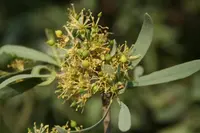
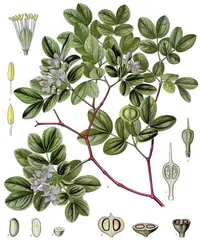
Shepherds tree, Boscia albitrunca, is a drought-adapted tree native to arid and semi-arid regions of southern Africa. It often grows as a small, rounded tree with a pale, almost white trunk and dense, fine foliage.
This species has very deep roots and naturally tolerates heat, poor soils, and long dry periods. It is slow growing and not commonly used as a houseplant, so care for Shepherds tree is easier in warm outdoor climates than indoors.
In cultivation it prefers full sun, well-drained, sandy or rocky soil, and infrequent but deep watering, making it suitable for xeriscapes and dry gardens in frost-free areas.

Care Difficulty
Moderate Care

Light Preference
Full Sun

Water Requirements
Low Water

Temperature Preference
Warm Climate

Hardiness Zone
10–12

Soil Texture
Sandy, Loamy, Rocky

Soil pH
Neutral (7.0), Slightly alkaline (7.0–7.5)

Soil Drainage
Well-drained

Fertilization
Minimal (feed rarely)
Scan your plant to receive care tips personalized for your specific plant
Available on iOS and Android
This drought-adapted tree thrives in strong sun but benefits from gradual exposure in cultivation.
This species is highly drought tolerant and should be managed with a dry-leaning watering approach.
This arid-climate tree prefers sustained warmth and is sensitive to prolonged cold and frost.
Boscia albitrunca handles very dry air and usually does not need special humidity control.
Boscia albitrunca prefers very fast-draining, sandy soil that mimics arid, desert-like conditions.
This species can be grown in containers when managed as a slow, drought-tolerant specimen.
Boscia albitrunca is adapted to very poor soils and usually needs minimal fertilization in cultivation.
Boscia albitrunca requires only light structural pruning to maintain health and safe form.
This deep-rooted tree is rarely container-grown and transplanting Boscia albitrunca requires careful handling of the taproot.
Propagation of Boscia albitrunca is usually done from seed and can be slow and unpredictable.
This species is adapted to warm, arid climates and has low tolerance for prolonged hard frost.

Plant Health Check
Not sure what's wrong with your plant? Check your plant's health inside the app.
The shepherds tree develops an exceptionally deep root system in arid regions, often tapping groundwater tens of meters below the surface and indicating the presence of underground water to local people and wildlife.
In very dry conditions, this species may reduce or shed its small leaves and photosynthesize through its green twigs and branches, an adaptation that helps reduce water loss while still producing energy.
In southern African savannas, the shepherds tree provides shade, browse, and shelter for many herbivores and birds, making it an important structural and nutritional resource in otherwise sparse landscapes.

Traditional communities in southern Africa have long used the thick roots of the shepherds tree, after careful processing, as an emergency food source during times of severe drought, highlighting its importance as a famine reserve plant rather than a routine staple.
Growth is slow. In its native habitat, young plants may add only 10–30 cm per year, sometimes less in cultivation. Deep root development is prioritized over height, so visible top growth can appear very modest for several years.
Keep your plants happy and healthy with plant identification, disease detection, and easy care guidance.