

yellow bluestem Identification (Bothriochloa ischaemum)

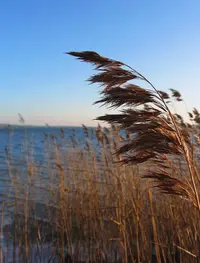
Recognize yellow bluestem by its tight clumps of upright stems, narrow flat leaves spaced alternately along the stems, and paired flower branches that form a distinct V shape near the tip.

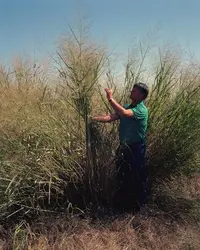
Plants are usually about 1 to 3 feet (30 to 90 cm) tall, with short, bristly racemes held close together.

Bothriochloa ischaemum Identification

Identify Your Plant with Botan

Check your plant ID by uploading a clear photo to Botan.

Clear images work best. Avoid photos taken too close or too far away

  • 1 free identification
  • No sign-up
  • 30,000+ plants in database

Check the grass’s overall form and seedheads first.

  • Bothriochloa ischaemum grows in dense clumps, usually about 1-3 feet (30-90 cm) tall.
  • Leaves are narrow, flat to slightly folded, often 4-12 inches (10-30 cm) long, and mostly arise from the base.
  • Flowering stems end in several slender branches held close together near the tip.
  • Each branch carries paired spikelets with obvious silky hairs, giving the seedhead a soft, feathery look.

Look for the clumping habit plus the hairy, narrow seedhead branches.

Bothriochloa ischaemum shows clear visual shifts from leafy tufts to distinctive flowering stems.

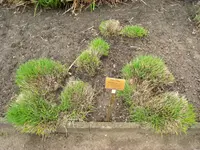
  • Juvenile plant: Begins as a low basal tuft with narrow, flat blades and short shoots, lacking the taller, openly branched flowering stems seen later.
  • Mature plant: Forms dense clumps about 1-3 feet (30-90 cm) tall, with many upright culms and a more strongly tufted outline than juvenile plants.
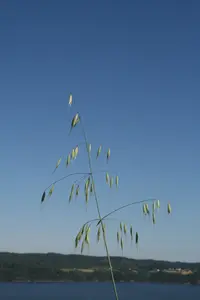
  • Flowering stage: The upper stems carry paired, fingerlike racemes with silky hairs, giving the plant a noticeably feathery, more open top unlike purely leafy stages.

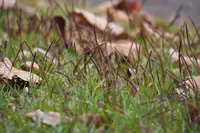
From late spring into summer, yellow bluestem becomes easier to spot when the seed heads emerge above the leaves. The flowering stems carry paired, narrow racemes, giving the plant a more open, airy look than when it is only leafy. By late fall and winter, plants often turn tan to straw-colored and remain as dry clumps. That dormant, pale appearance can still make stands recognizable after green color is gone.

Several warm-season grasses are mistaken for yellow bluestem.

Caucasian bluestem(Bothriochloa bladhii)

Often confused because both have narrow leaves and paired, feathery seed heads. Caucasian bluestem is usually more robust, with denser, more branched seed heads and a bushier clump.

silver bluestem(Bothriochloa laguroides)

Similar in overall form and silvery flower clusters. Silver bluestem usually has paler, silkier seed heads and a more distinctly tufted habit, while yellow bluestem is coarser and less silky-looking.

little bluestem(Schizachyrium scoparium)

Confusion happens when plants are not in full flower. Little bluestem forms finer, upright bunches, and its flowering stems are usually narrower and less obviously paired than those of yellow bluestem.

Bothriochloa ischaemum is native from southern and central Europe east through western and central Asia. It is a grass of open, dry ground, especially steppe, hillsides, roadsides, rocky slopes, and disturbed grassland. That setting helps with identification because this species is more likely in sunny, exposed places than in wetlands, forest shade, or rich meadow vegetation. Seeing it on dry, often calcareous ground can help narrow it from similar pasture and roadside grasses.

Not Sure About the ID?

Use Botan to compare a photo and confirm the plant so you can make a more confident decision.

FAQ

Yes. Its fruits are tiny grass grains enclosed by hairy flowering parts. For yellow bluestem identification, the paired racemes and the dense silky hairs around the spikelets are usually more useful than the grain itself.

More Plant Identification Guides

One Photo. More About Your Plant.

Identify a plant from a photo with Botan, then review plant details, care information, and common problems for that species.

Botan app identifying a plant from a photo
Best Time to Mow Lawn – A Complete Guide

5 min read · 10 Aug 2026

Best Time to Mow Lawn – A Complete Guide

Explore when to mow your lawn for its health and a pleasant green color. Find out the best time for this task during the summer heat, and follow practical tips for correctly cutting the grass, and learn common mistakes to avoid.

Plant Care
Best Time to Mow Lawn – A Complete Guide
Top 15 Plants That Don’t Need Sunlight

8 min read · 17 Sept 2026

Top 15 Plants That Don’t Need Sunlight

Some plants thrive in dim rooms, shaded corners, and places with indirect light. In this guide, you’ll explore the top 15 species best suited to low-light conditions and how to care for them.

Plant Recommendations
Top 15 Plants That Don’t Need Sunlight
Thorny Plants: A Comprehensive Guide

10 min read · 25 Aug 2026

Thorny Plants: A Comprehensive Guide

Many plants defend themselves with sharp thorns. This guide explores over 20 examples among flowers, shrubs, trees, and vines. You'll learn what each plant looks like, why it grows thorns, and how to quickly identify them.

Plant Recommendations
Thorny Plants: A Comprehensive Guide