

Common Reed Identification (Phragmites australis)

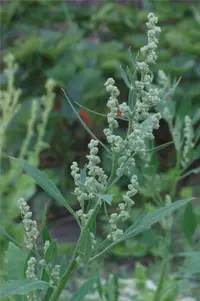
Recognize Common Reed by its tall, cane-like hollow stems, long flat leaves arranged alternately along the stem, and large, feathery flower plumes held above the foliage.

Mature plants often form dense stands, with leaves about 1 to 2 inches (2.5 to 5 cm) wide and stems reaching several feet tall.

Phragmites australis Identification

Identify a Plant by Photo

Upload a clear image to check whether your plant ID is correct.

Clear images work best. Avoid photos taken too close or too far away

Check the plant’s height, leaf shape, and seed head form first.

  • Phragmites australis grows in tall, dense stands, often 6 to 15 feet (1.8 to 4.6 m) high.
  • Leaves are long, narrow, and flat, usually 8 to 20 inches (20 to 50 cm) long, attached alternately along the stem.
  • Stems are upright, stiff, and cane-like, with clear joints and a mostly unbranched look below the flower head.
  • The top carries a large, feathery plume made of many fine branches, forming a broad, tapering cluster.

Use the full plant outline, not a single leaf, for a more reliable visual check.

Common Reed shows clear structural changes from short shoots to tall flowering cane-like stems.

  • Young plant: New shoots appear as a few upright, unbranched stems with narrow flat leaves arising alternately, forming a sparse clump before the dense reed bed develops.
  • Mature plant: Established plants form tall, cane-like culms often 6-12 feet (1.8-3.7 m) or more, with many long arching leaves and a dense colony from spreading rhizomes.
  • Flowering stage: Stem tips carry large, open, feathery panicles that project above the leaves, making the plant look broader and more plume-topped than sterile shoots.
  • Fruiting stage: After flowering, the panicles become duller and more contracted, filled with many small dry grains while the feathery branchlets still outline the seed head.

In spring, new green shoots and narrow leaves rise from old tan stalks. By late summer to fall, Phragmites australis shows large, feathery flower plumes above the leaves, making stands easy to spot. Through late fall and winter, leaves dry to tan and often drop, leaving tall, stiff, pale stems topped with persistent plume remnants.

Several tall wetland grasses can be mistaken for Phragmites australis.

giant reed(Arundo donax)

Both are tall reeds with big plume-like flower heads. Giant reed has much broader leaves, often 1 to 3 inches (2.5 to 7.5 cm) wide, and thicker cane-like stems. Its plumes are denser and more feathery.

ravenna grass(Tripidium ravennae)

This forms tall clumps with showy plumes, so it is often mistaken at a distance. Ravenna grass grows as a fountain-shaped tuft, not a spreading reed bed, and its flowering stems are usually woolly or hairy near the plume.

Phragmites australis has a very broad native range across parts of Europe, Asia, Africa, and North America, so geography alone is not a reliable identifier. Habitat is more useful. It is strongly associated with wetlands such as marshes, lake edges, pond margins, riverbanks, ditches, and coastal brackish areas. Finding a tall reed in standing water or saturated ground helps narrow identification far more than region does.

Not Sure About the ID?

Use Botan to identify or confirm the plant from a photo, which can help avoid mix-ups with similar species.

FAQ

The large, feathery flower plume is the clearest feature. It can reach about 16 inches (40 cm) long, and it sits above tall, stiff stems with broad, flat leaves that sheath the stem.

More Plant Identification Guides

Know Your Plant Better

Identify it from a photo with Botan, then review plant details, care information, and common problems for that species.

Botan app identifying a plant from a photo
How to Winterize Your Garden in 6 Steps

5 min read · 28 Sept 2026

How to Winterize Your Garden in 6 Steps

Learn how to prepare your garden for winter with a practical six-step checklist covering cleanup, tender plant care, watering, mulching, winter protection, and winterizing equipment and containers.

Plant Care
How to Winterize Your Garden in 6 Steps
How to Use a Moisture Meter for Plants

5 min read · 4 Sept 2026

How to Use a Moisture Meter for Plants

Watering by feel kills plenty of houseplants. A moisture meter checks the soil for you, and takes the guesswork out of it. This guide will show you how to use it correctly, from the first touch to the final reading.

Beginner Guides
How to Use a Moisture Meter for Plants
How to Mist Plants – Proper Technique and Common Mistakes

7 min read · 30 Jul 2026

How to Mist Plants – Proper Technique and Common Mistakes

Find out when misting works well and when to avoid it. Here, you’ll find detailed information about compatible and incompatible species, tips on how often to mist plants and do it correctly, and some great alternatives for raising humidity.

Beginner Guides
How to Mist Plants – Proper Technique and Common Mistakes