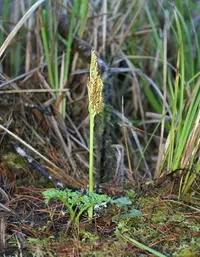
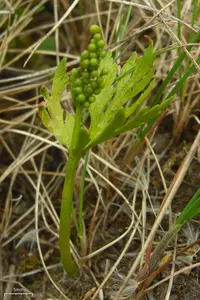
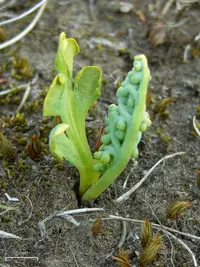
austral moorwort Care (Botrychium australe)

Also known as: parsley fern
austral moorwort

About austral moorwort

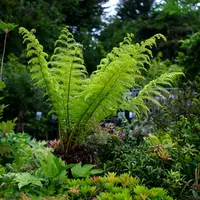
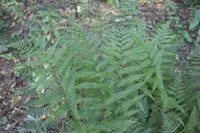
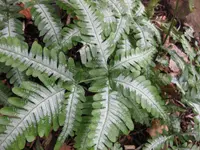
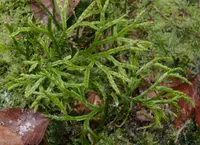
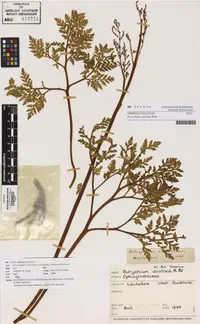
Austral moorwort, Botrychium australe, is a small, primitive fern relative from the moonwort group. It produces a single frond that divides into a sterile leafy section and a fertile, spore-bearing spike. Growth is low and discreet, often partly hidden among grasses and leaf litter.

This species is native to parts of Australasia, usually found in moist, cool, and undisturbed habitats such as open woodland or grassland. It can be challenging to grow because it has a short above-ground season, relies on specific soil fungi, and dislikes disturbance. Gardeners who care for austral moorwort usually focus on mimicking its natural, lightly shaded, consistently moist, and well-drained site conditions.

Main Plant Requirements

Care Difficulty

Hard Care

Light Preference

Partial Shade

Water Requirements

Keep Soil Moist

Temperature Preference

Cool Climate

Hardiness Zone

7–10

Soil Texture

Loamy, Silty, Organic-rich

Soil pH

Acidic (5.5–6.5), Slightly acidic (6.5–7.0)

Soil Drainage

Moist but well-drained

Fertilization

Minimal (feed rarely)

Get Personalized Care Plan

Scan your plant to receive care tips personalized for your specific plant

Available on iOS and Android

How to Care for the austral moorwort

This fern prefers cool, shaded conditions that mimic moist forest floors.

  • Provide bright, dappled shade with 1–2 hours of soft morning sun and no direct midday or afternoon sun.
  • Site austral moorwort under open woodland canopy, on the north or east side of buildings, or among taller plants that filter light.
  • Watch fronds for stress: pale, crispy tips indicate too much sun, while lanky, stretched growth suggests light is too dim or heavily blocked.

This species thrives in consistently moist but not waterlogged soil.

  • Maintain evenly moist soil, allowing only the top 1–2 cm to dry slightly before the next watering in active growth.
  • Use deep, well-drained, humus-rich soil so excess water can move away from the roots and avoid standing puddles after rain or irrigation.
  • Reduce watering in cooler months when growth slows, and watch for signs: yellowing, soft fronds suggest overwatering, while drooping, crisp edges suggest underwatering.

This fern favors mild, cool conditions without temperature extremes.

  • Aim for 50–70°F (10–21°C) during the growing season for steady frond development.
  • Botrychium australe tolerates brief drops to around 25–28°F (-4 to -2°C) once established, but young plants are more sensitive and benefit from mulch protection.
  • Protect from prolonged heat above 85°F (29°C) by providing deep shade and ample soil moisture, as sustained high temperatures can cause fronds to scorch and die back early.

This fern prefers consistently moist air and struggles in dry indoor environments.

  • Aim for 60–80% humidity, as austral moorwort naturally grows in cool, damp habitats.
  • Tolerates brief dips to 40–50%, but prolonged dry air causes browning frond tips and crisping edges.
  • Increase humidity with a pebble tray, grouping moisture-loving plants, or using a small humidifier near the pot.

This species needs a moist, loose, and humus-rich substrate that mimics a cool forest floor.

  • Use a mix of 50% fine compost or leaf mold, 30% loam, and 20% fine grit or perlite for structure and drainage.
  • Keep the soil evenly moist but never waterlogged; excess standing water quickly damages the delicate underground structures.
  • A slightly acidic to neutral pH around 5.5–7 suits Botrychium australe best and supports nutrient availability.
  • Incorporate fine bark or coarse sand to improve aeration and avoid dense clay, peat-only, or compacted garden soil.

This species can be grown in containers but is sensitive and requires careful moisture management.

  • Choose a deep pot to provide a cool, stable root zone and protect underground parts from temperature swings.
  • Select unglazed terracotta only if close monitoring of moisture is possible, since it speeds evaporation in warm or windy sites.
  • Sit the container inside a shaded outer cachepot or mulch around the rim to keep the root zone cool and reduce surface drying.

This fern-like species grows in nutrient-poor habitats and usually needs no fertilizer in garden or container culture.

Botrychium australe requires almost no pruning beyond simple cleanup of old fronds.

  • Carry out any pruning at the end of the growing season, once fronds have yellowed and dried.
  • Use clean, sharp scissors or small snips to cut dead or damaged fronds at the base.
  • Limit removal to clearly dead, diseased, or badly tattered tissue to avoid stressing the small crown.

This species is rarely grown in pots and resents disturbance, so transplant only when clearly necessary.

  • Consider transplanting only if growth declines, the site will be disturbed, or soil conditions are clearly unsuitable.
  • Schedule moves in early spring or early fall, when temperatures are mild and soil moisture is stable.
  • Lift with a wide soil clump to preserve fine roots and associated soil fungi as much as possible.
  • Replant at the original depth, water gently, then keep the site evenly moist and shaded to limit transplant shock.

Botrychium australe is difficult to propagate because its spores rely on specific soil fungi for successful establishment.

This fern is generally cold hardy in temperate climates and needs minimal winter care once established in the ground.

  • Allow fronds of austral moorwort to die back naturally; they can help insulate the crown.
  • In very exposed or marginally cold areas, apply a thin mulch layer over the root zone after the ground cools.
  • Avoid moving or dividing plants in winter, as root disturbance during dormancy can reduce survival.

Care Tips

Protect dormant crowns

Mark the exact spots of the underground crowns with small labels or pebbles after fronds die back, so you do not disturb or damage them during weeding or soil work in the off-season.

Use leaf-litter mulch

Apply a very thin, loose layer of deciduous leaf litter around the plant each autumn to mimic its native forest floor, stabilizing moisture and temperature without smothering emerging fronds.

Gentle competition control

Hand-weed only the closest 10–15 cm around the plant and clip nearby groundcovers rather than pulling them out, so the shallow roots and crown remain undisturbed.

Sporeling protection barrier

If young plants are present, place a low, open mesh or wire frame around the area to protect emerging fronds and sporelings from trampling while still allowing air flow and rain penetration.

Site microclimate testing

Trial 2–3 nearby planting spots with divisions or spore-raised plants and observe frond vigor over 2–3 seasons, then favor the micro-site where growing austral moorwort produces the strongest, longest-lived fronds.

Common Pests and Diseases

Fern aphids

This pest feeds on the soft rachis and young frond tissue, causing pale, distorted growth and sticky honeydew on the foliage. Symptoms include reduced vigor in newly emerging fronds, especially in sheltered, moist sites.

Solution

Rinse colonies off with a firm stream of water and remove heavily infested frond sections. If needed, apply an insecticidal soap or ready-to-use neem oil to the undersides of fronds, repeating every 7–10 days until new growth appears clean and vigorous.

Fern scale

These insects form small, flat, brown to gray bumps along the rachis and lower frond surfaces, slowly extracting sap. Symptoms include yellowing pinnae, patchy dieback, and a general decline in clump density.

Solution

Gently scrape or wipe individual scales off with a cotton pad dipped in 70% isopropyl alcohol, then remove badly affected fronds. Improve air movement around the plant and, for persistent infestations, use horticultural oil sprays targeted to the undersides of fronds during the crawler stage, avoiding application during high heat or direct midday sun.

Rhizoctonia crown rot

This disease affects the underground crown and lower stipe bases, leading to sudden collapse of fronds and brown, dry rot at the crown in overly warm, wet conditions. Symptoms include stunted new fronds that fail to fully unfurl and easy separation of rotting crown tissue.

Solution

Excavate and discard severely affected plants along with surrounding soil, then replant only into well-drained, cool, humus-rich substrate and avoid waterlogging. In early cases, remove and destroy all symptomatic fronds and affected crown portions, reduce irrigation, and use a fungicide labeled for Rhizoctonia on ferns if available locally, combined with improved drainage and reduced organic debris around the crown.

Pythium damping-off

This disease attacks very young sporophytes and gametophytes in propagation trays, causing water-soaked bases, collapse, and rapid loss of prothalli or tiny fronds. Symptoms include a thinning stand in moist, stagnant propagation conditions, with seedlings toppling and rotting at the substrate line.

Solution

Discard heavily affected propagation trays and use only sterilized, free-draining media for sowing spores or raising young plants. Reduce watering, improve airflow, avoid overhead misting late in the day, and where permitted use a preventive drench labeled for Pythium on fern propagation under controlled conditions.

Interesting Facts

Southern hemisphere specialist

This moonwort is naturally found in the southern hemisphere, including parts of Australia, New Zealand, and some subantarctic islands, rather than the northern temperate zones where many other Botrychium species occur.

Two-part frond structure

Its fronds are distinctly divided into a sterile, leafy segment and a fertile, spore-bearing segment on the same stalk, giving it a characteristic appearance compared with many other small ferns.

Subterranean life strategy

Much of its life cycle is spent below ground as a small perennial plant attached to a gametophyte and associated soil fungi, so the above-ground frond can be absent in some years even though the plant is still alive.

Botan icon

Did you know?

Botrychium australe is considered rare or of conservation concern in parts of its range, and its small, easily overlooked fronds mean that populations are often under-recorded, complicating accurate assessment of its true conservation status.

FAQs about austral moorwort

This fern is naturally slow-growing. New fronds typically appear once a year from the underground tuber-like structure, and visible size increases are modest. Stable, cool, moist conditions over several seasons are needed before noticeable clump expansion occurs.

Grow Healthy Plants with Botan Care

Keep your plants happy and healthy with plant identification, disease detection, and easy care guidance.


Botan plant care app — identify plants on mobile

Explore More Plants