Protect subterranean buds
Mark the plant’s location with a discreet stake or tag so underground buds and roots are not disturbed by digging, mulching, or foot traffic during dormancy.

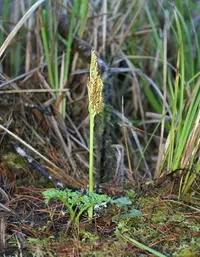
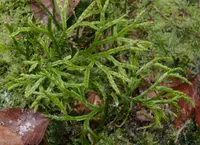
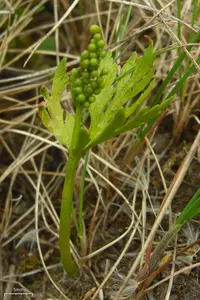
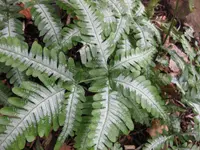
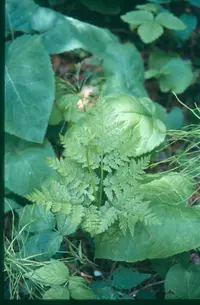
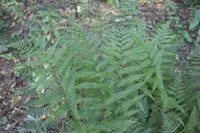
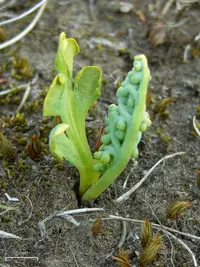
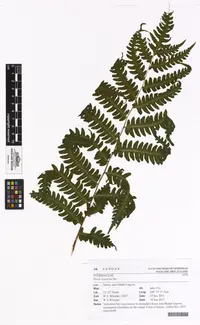
Leathery grapefern, Botrychium multifidum, is a small perennial fern in the moonwort group, valued more for its unusual form than for showy foliage. It produces a single, thick, leathery sterile frond and a separate fertile frond that carries bead-like spore clusters resembling tiny grapes.
This species is native to cool temperate regions of North America and parts of Europe and Asia, where it grows in meadows, open woods, and sometimes along roadsides. It stays low to the ground and can be hard to spot.
Botrychium multifidum can be challenging to grow because it prefers undisturbed soil, consistent moisture, and specific fungal partners in the root zone. Gardeners who want to care for leathery grapefern usually focus on mimicking a cool, lightly shaded natural habitat with moist, well-drained soil.

Care Difficulty
Hard Care

Light Preference
Partial Shade

Water Requirements
Keep Soil Moist

Temperature Preference
Cold Hardy

Hardiness Zone
3–7

Soil Texture
Loamy, Silty, Organic-rich

Soil pH
Acidic (5.5–6.5)

Soil Drainage
Moist but well-drained

Fertilization
Minimal (feed rarely)
Scan your plant to receive care tips personalized for your specific plant
Available on iOS and Android
This fern prefers cool, low to medium light resembling a shaded woodland edge.
This species prefers consistently moist but not waterlogged soil, similar to a damp forest floor.
This fern is cold-hardy and adapted to cool, temperate climates with distinct seasons.
This fern prefers consistently moist, cool air similar to a shaded woodland floor.
This species grows best in cool, moist, humus-rich soil that stays evenly damp but not waterlogged.
This fern can be grown in containers, but it performs best in deep, cool, stable pots that protect its roots.
This native woodland fern usually needs little to no fertilizer, especially when grown in humus-rich soil.
Botrychium multifidum needs almost no pruning, but light cleanup keeps plants healthier and easier to observe.
This species is best left undisturbed, but careful transplanting is sometimes possible in cultivated settings.
Botrychium multifidum is difficult to propagate at home because it needs a close partnership with specific soil fungi and slow spore development.
This fern is cold hardy in much of its native range and usually needs minimal winter care once established in the ground.

Plant Health Check
Not sure what's wrong with your plant? Check your plant's health inside the app.
Each frond has a sterile, leafy segment and a fertile, spore-bearing segment that branches like a tiny grape cluster, a structure that inspired the common name leathery grapefern.
In many parts of its range, the leathery leaf blade can overwinter under snow and remain photosynthetically active during mild periods, giving the plant a longer functional growing season than many other small ferns.
Like other moonworts, this species relies heavily on symbiosis with arbuscular mycorrhizal fungi in its roots, which supply nutrients and may allow it to survive for years with very limited above-ground growth.

Many populations of Botrychium multifidum are scattered and highly localized, and because the plant often remains small or hidden among grasses and mosses, it is frequently under-recorded and can be difficult for botanists to survey accurately in the field.
This species performs best outdoors in cool, moist, shaded sites that mimic woodland conditions. It can be kept in a shaded cold frame, but long-term leathery grapefern indoor care is difficult because it relies on complex soil fungi relationships.
Keep your plants happy and healthy with plant identification, disease detection, and easy care guidance.