Leaf litter mulch
Maintain a thin, loose layer of shredded leaf litter around the plant to mimic its natural forest floor habitat and keep the shallow, fine roots cool and evenly moist without smothering the crown.

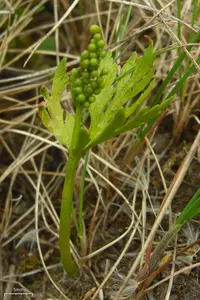
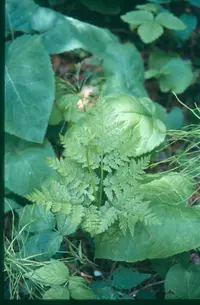
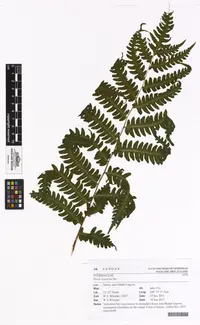
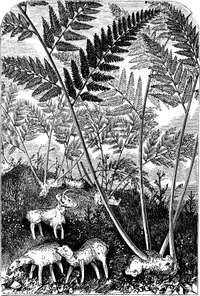
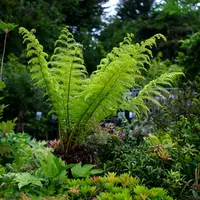
Lanceleaf grapefern, Botrychium lanceolatum, is a small, short-lived perennial fern in the moonwort group. It has a single upright leaf divided into narrow, lance-shaped segments. This species usually grows in cool, moist habitats such as open woods, meadows, and mountain slopes across parts of North America and northern Europe. It tends to appear in scattered, often sparse populations. Because it is sensitive to disturbance and prefers stable, undisturbed soils, it can be challenging to cultivate. Those who want to learn how to care for lanceleaf grapefern should know it favors cool conditions, consistent moisture, and humus-rich, well-drained soil.

Care Difficulty
Hard Care

Light Preference
Partial Shade

Water Requirements
Keep Soil Moist

Temperature Preference
Cold Hardy

Hardiness Zone
3–8

Soil Texture
Loamy, Silty, Organic-rich

Soil pH
Strongly acidic (4.5–5.5), Acidic (5.5–6.5)

Soil Drainage
Moist but well-drained

Fertilization
Minimal (feed rarely)
Scan your plant to receive care tips personalized for your specific plant
Available on iOS and Android
This woodland fern prefers low to moderate, filtered light that mimics a shaded forest floor.
This fern prefers consistently moist, cool soil without becoming waterlogged.
This cool-climate fern grows best in moderate temperatures and tolerates significant cold when dormant.
This fern prefers consistently moist air and reacts to very dry conditions.
This fern needs loose, humus-rich soil that stays evenly moist yet drains freely.
This species can be grown in containers, but only if moisture and depth needs are carefully managed.
This woodland fern is adapted to low-nutrient soils and usually needs no fertilizer when planted in suitable ground.
Pruning needs for Botrychium lanceolatum are minimal and focus on hygiene rather than shaping.
Botrychium lanceolatum is best grown in the ground or naturalistic beds, with only occasional transplanting.
Propagation of Botrychium lanceolatum is specialized and seldom practical for home growers, so most plants are obtained from reputable nurseries.
This fern is cold hardy in much of its native range and usually requires little specific winter care outdoors.

Plant Health Check
Not sure what's wrong with your plant? Check your plant's health inside the app.
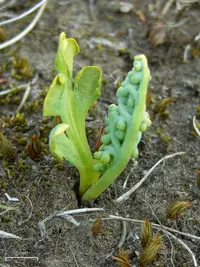
This fern produces a single frond that is divided into a sterile, leaflike segment and a fertile, spore-bearing segment, giving it a distinctive grape-like cluster of sporangia at the top.
It is naturally adapted to cool, often boreal or montane habitats and is found in northern regions of North America and Eurasia, where it grows in moist meadows, open woods, and along forest edges.
The plant spends much of its life as an underground structure closely associated with mycorrhizal fungi, and only a small aboveground frond appears during the growing season when conditions are favorable.

Lanceleaf grapefern is considered uncommon or rare in several parts of its range, and its small, inconspicuous aboveground frond means populations are easily overlooked during botanical surveys.
This species spreads slowly through spores and underground structures, usually forming small, scattered clumps rather than dense colonies. In typical garden or restoration settings, it is not considered aggressive and rarely crowds out neighboring plants.
Keep your plants happy and healthy with plant identification, disease detection, and easy care guidance.