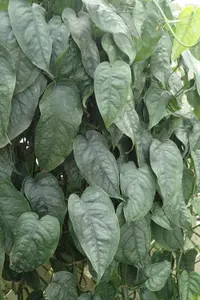
American buckwheat vine Care (Brunnichia ovata)

American buckwheat vine

About American buckwheat vine

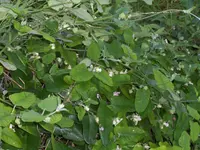
American buckwheat vine, Brunnichia ovata, is a vigorous woody vine native to the southeastern United States, often found along rivers, swamps, and wet woodlands. It naturally twines over shrubs, fences, or trees and can form dense, leafy cover.

The plant has heart-shaped leaves and small, greenish flowers that mature into decorative, reddish-brown, buckwheat-like fruits. It grows quickly and can become large, so it suits spacious gardens or naturalized areas better than tight spaces.

This species prefers sun to light shade, consistent soil moisture, and fertile, well-drained soil. Understanding how to care for American buckwheat vine starts with planning enough room and providing steady moisture without prolonged drought.

Main Plant Requirements

Care Difficulty

Moderate Care

Light Preference

Full Sun

Water Requirements

Regular Water

Temperature Preference

Warm Climate

Hardiness Zone

6–9

Soil Texture

Loamy, Clay, Organic-rich

Soil pH

Acidic (5.5–6.5), Slightly acidic (6.5–7.0)

Soil Drainage

Moist but well-drained

Fertilization

Minimal (feed rarely)

Get Personalized Care Plan

Scan your plant to receive care tips personalized for your specific plant

Available on iOS and Android

How to Care for the American buckwheat vine

This vigorous vine prefers strong light to fuel fast growth and flowering outdoors.

  • Provide 6–8 hours of sun daily, with morning sun and light afternoon shade ideal to reduce leaf scorch in hot summers.
  • American buckwheat vine tolerates partial shade (4–5 hours), but flowering and vigor decrease as shade increases.
  • In hotter regions, protect from intense afternoon sun with dappled or filtered light, especially in late spring–summer, to prevent leaf burn and excessive drying.

This plant prefers consistently moist, well-drained soil rather than extremes of drought or saturation.

  • Irrigate when the top 3–5 cm of soil feels dry, letting water soak deeply so the entire root zone is moistened, especially in the first growing seasons.
  • Reduce watering in fall and winter, watching for limp, dull leaves as a sign of underwatering and yellowing, soft foliage as a sign of overwatering.
  • Plant Brunnichia ovata in soil with good drainage; avoid standing water around roots to reduce root rot risk, especially in heavy clay.

This hardy vine tolerates a wide temperature range but responds best to moderate warmth during the growing season.

  • Active growth is strongest around 70–85°F (21–29°C); sustained heat above 95°F (35°C) can cause temporary wilting and slowed growth unless soil moisture is stable.
  • The vine is cold hardy to about 0°F (−18°C) once established, with top growth dying back in colder climates and resprouting from the crown in spring.
  • Protect young plants from late spring frost; repeated freezes below 28°F (−2°C) can damage new shoots and delay seasonal growth.

Humidity is not a critical factor for this species when grown outdoors in typical US climates.

This vigorous vine prefers deep, moisture-retentive but well-drained soil to support extensive root and shoot growth.

  • Use a loamy or sandy-loam soil enriched with organic matter such as compost or well-rotted leaf mold.
  • Aim for slightly acidic to neutral pH around 6.0–7.0, which suits Brunnichia ovata nutrient uptake.
  • Improve drainage and aeration by incorporating coarse sand or fine grit in heavier clay-based sites.
  • Avoid compacted, waterlogged, or extremely shallow soils that restrict root penetration and increase rot risk.

This species can be grown in large containers, but only with careful attention to support and moisture management.

  • Choose a deep, heavy container that resists tipping once the vine climbs and produces dense foliage.
  • Provide a strong trellis or external support firmly anchored in or behind the pot to manage vigorous, twining stems.
  • Use a slightly heavier, organic-rich mix that drains freely yet does not dry out rapidly in summer heat for growing American buckwheat vine.

This vigorous native vine usually manages in average soil, but light feeding supports stronger growth in poor sites.

  • Apply a balanced slow-release fertilizer (e.g., 10-10-10) at half strength once in early spring as new growth starts.
  • In lean soils, supplement with a thin layer of compost around the root zone, keeping it away from the stem.
  • Avoid summer overfeeding; excess nitrogen can cause rank growth and fewer flowers on American buckwheat vine.
  • Stop feeding by late summer and do not fertilize during winter dormancy.

Thoughtful pruning keeps Brunnichia ovata manageable and encourages healthy, controlled vine growth.

  • Prune in late winter or very early spring before new buds swell, when the structure is easiest to see.
  • Remove dead, damaged, crossing, or congested stems first to improve light penetration and air movement.
  • Shorten overly long vines to maintain size and guide the plant along trellises, fences, or arbors.
  • Use sharp bypass pruners, making clean angled cuts just above a healthy bud or side shoot.

This vine is more often transplanted in landscapes than grown long term in containers.

  • Transplant in early spring or fall when temperatures are mild and the plant is not in peak growth.
  • Look for signs such as roots circling the pot, stunted growth, or soil drying out very quickly before moving a container plant.
  • Plant into a larger hole or container with well-drained soil, keeping the root flare at the same depth as before.
  • Reduce root stress by watering thoroughly before and after planting, firming soil gently, and shading new transplants for a few days.

Brunnichia ovata is usually propagated by seed or semi-ripe cuttings in controlled conditions.

  • Collect ripe seeds in late summer or fall and sow in a well-drained seed mix, keeping it lightly moist and warm (68–75°F).
  • Take semi-ripe stem cuttings in late spring to midsummer, using non-flowering shoots 10–15 cm long.
  • Remove lower leaves, dip the cut base in rooting hormone, and place in a sterile, moist, free-draining medium.
  • Provide bright, indirect light, high humidity, and gentle bottom warmth to support rooting over several weeks.

This hardy, deciduous vine needs minimal winter attention in most climates within its native range.

  • Established plants tolerate typical frosts once dormant, with top growth dying back naturally.
  • Apply a 5–8 cm layer of mulch around the root zone in late fall, keeping it a few cm away from the main stem.
  • For container plants in colder regions, move pots into an unheated garage or sheltered porch to prevent root freezing.

Care Tips

Sturdy trellis choice

Install a heavy-duty, weather-resistant trellis, fence, or arbor at planting time, as this vigorous vine can become woody and heavy within a few seasons and needs long-term structural support.

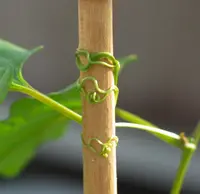
Early vine training

As new shoots emerge in spring, loosely tie them to the support with soft garden ties every 20–30 cm to guide direction and prevent stems from kinking or pulling away in strong wind.

Root zone management

Maintain a wide, weed-free mulch ring 5–8 cm deep around the base but keep material a few cm away from the stem to protect shallow feeder roots, conserve moisture, and reduce mechanical damage from mowing or trimming.

Floodplain-style siting

Where possible, plant in a spot that mimics its native floodplain habitat, such as near a pond edge or low swale with good drainage, to maximize vigor and simplify growing American buckwheat vine in landscapes with fluctuating moisture.

Regular structural inspection

Once or twice a year, especially after storms, check that supports, ties, and any adjacent structures are not being pulled, lifted, or deformed by the vine’s weight, and reset or reinforce hardware before stems become too thick to redirect.

Common Pests and Diseases

Leaf-feeding caterpillars

This pest chews irregular holes along leaf margins and can skeletonize new growth on vigorous vines. Symptoms include ragged leaves, frass pellets, and damage that appears rapidly during warm months.

Solution

Hand-pick caterpillars in the early morning or evening and prune out heavily infested shoots. If damage is extensive, spot-treat foliage with a biological product containing Bacillus thuringiensis (Bt), following label directions, and encourage birds and predatory insects by avoiding broad-spectrum insecticides nearby.

Japanese beetles

These insects feed in groups on foliage, leaving lacy, skeletonized leaves and sometimes stripping sections of the vine. Damage is most common in mid-summer when adults are active.

Solution

Shake beetles off vines into a container of soapy water in the early morning when they are sluggish, and repeat daily during peak flight. For severe pressure, use targeted traps placed away from the vine and consider covering valued sections of the plant with fine mesh during the heaviest feeding period.

Powdery mildew

This disease appears as a white or gray powdery film on the upper leaf surface, often starting on shaded or crowded parts of the vine. Symptoms include distorted new growth and premature yellowing or drop of older leaves in humid, stagnant air conditions.

Solution

Improve air circulation by thinning congested stems and avoid overhead watering, especially late in the day. Remove and discard badly affected leaves, and if needed apply a labeled fungicide such as a sulfur or potassium bicarbonate product at the first sign of infection, repeating according to instructions as long as conducive conditions persist.

Leaf spot

Symptoms include small tan to brown spots that may develop darker borders and merge into larger blotches, often following periods of warm, wet weather. Severely affected leaves may yellow and drop early, leaving the vine thin in the lower or inner canopy.

Solution

Prune to increase airflow and avoid wetting the foliage when irrigating, directing water to the soil instead. Collect and dispose of fallen leaves, and if spotting recurs each year, use a preventive fungicide labeled for ornamental vines at the start of wet periods, focusing on the lower and inner foliage where moisture lingers longest.

Interesting Facts

Specialist floodplain climber

This species is native to floodplain forests and swamp margins in the southeastern United States, where it climbs trees and shrubs using its twining stems to escape periodic flooding and reach light above the waterline.

Distinctive buckwheat fruits

After flowering, it produces dangling chains of small, hard, 3-angled fruits that resemble miniature buckwheat grains, a trait that reflects its close relationship to cultivated buckwheat within the Polygonaceae family.

Host for wetland insects

In its native range, the vine’s dense foliage and long-lasting fruits provide shelter and food for various wetland-associated insects, which in turn support birds and other wildlife in bottomland ecosystems.

Botan icon

Did you know?

This vine is considered a characteristic species of rich alluvial bottomlands along large rivers such as the Mississippi, where its presence can indicate relatively undisturbed, seasonally flooded hardwood forests.

FAQs about American buckwheat vine

This species can spread vigorously by long twining stems and self-seeding in favorable conditions. In mild climates it may overwhelm smaller shrubs or structures, so use strong supports, prune regularly, and remove unwanted seedlings to keep it contained.

Grow Healthy Plants with Botan Care

Keep your plants happy and healthy with plant identification, disease detection, and easy care guidance.

Botan plant care app — identify plants on mobile

Explore More Plants